✨ How To Get White Clothes White Again

Beginner-friendly templates, step-by-step guides,
and weekly project ideas in your inbox.
Do your once-bright white clothes now look dull, dingy, or even yellowed? It’s a common laundry challenge that can leave you frustrated.
Restoring that crisp, clean brilliance is absolutely achievable with the right techniques. I’ve personally experimented with countless methods, and I’m here to share what truly works.
This guide will walk you through proven strategies to bring your whites back to life, making them look new again.

Quick Overview
This guide will empower you to confidently tackle yellowing, graying, and stained white garments, restoring their pristine appearance. You’ll learn effective methods for deep cleaning and ongoing maintenance.
- Time needed: 1-3 hours (including potential soaking time)
- Difficulty: Beginner
- What you’ll need: Laundry detergent, oxygen bleach, chlorine bleach (optional), baking soda, white vinegar, lemon juice, stain remover, large basin/bucket, rubber gloves.
Step-by-Step Instructions
Step 1: Sort Your Whites Meticulously
This initial step is non-negotiable for successful whitening. Separate your white garments from all other colors, even very light pastels. Color bleeding is a primary cause of dingy whites.
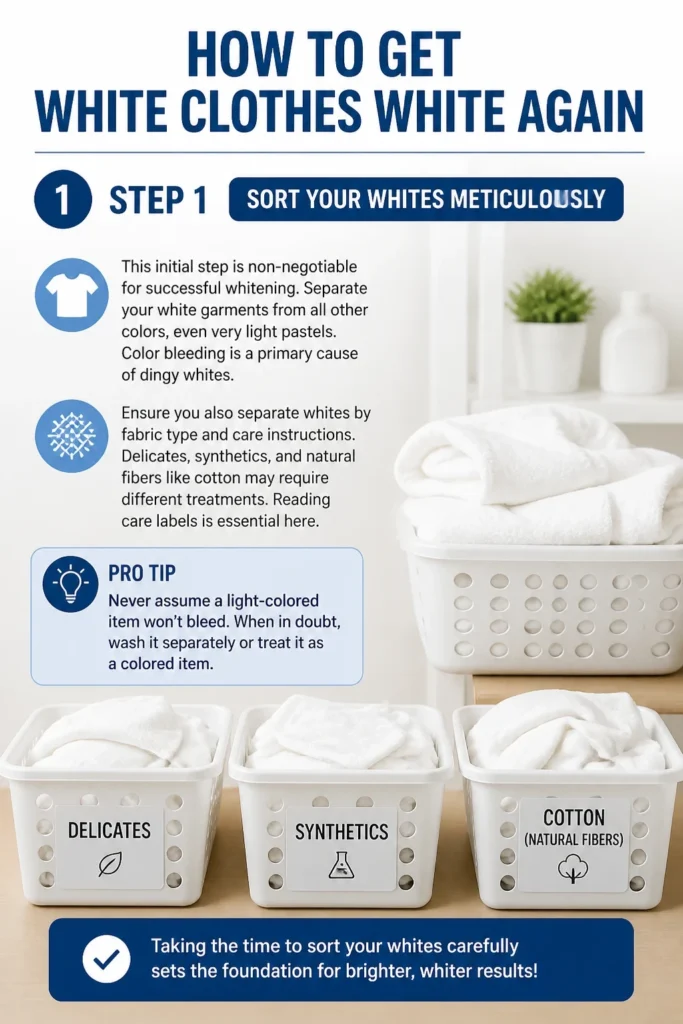
Ensure you also separate whites by fabric type and care instructions. Delicates, synthetics, and natural fibers like cotton may require different treatments. Reading care labels is essential here.
Pro Tip: Never assume a light-colored item won’t bleed. When in doubt, wash it separately or treat it as a colored item.
Step 2: Pre-Treat Stubborn Stains Promptly
Addressing stains before a full wash significantly boosts your chances of success. Identify any visible spots or discoloration on your white items. Different stains respond best to different pre-treatments.
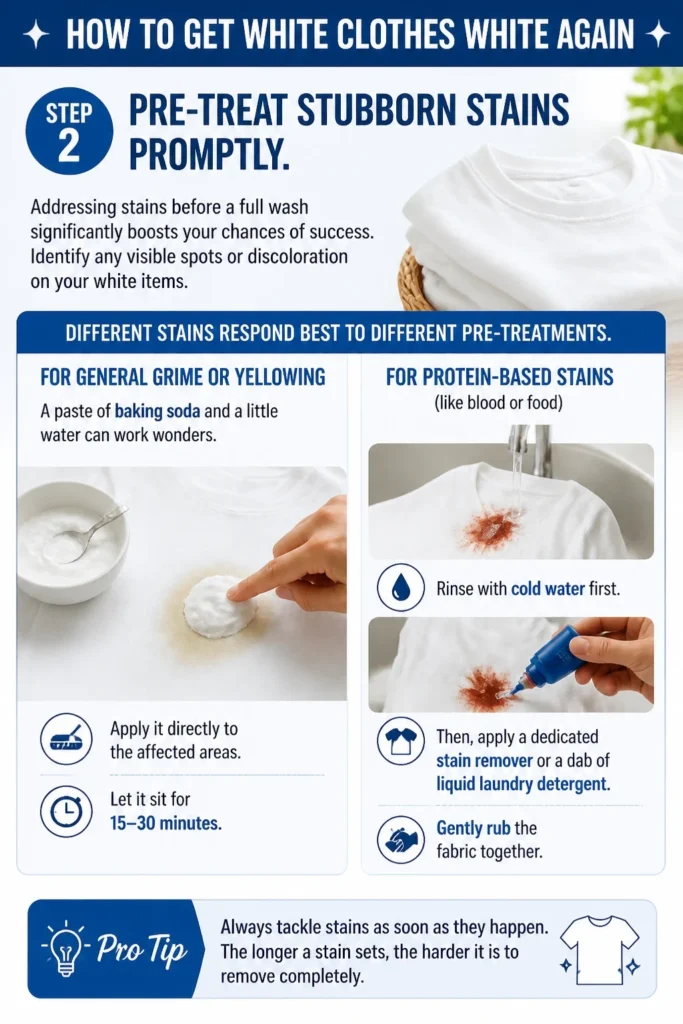
For general grime or yellowing, a paste of baking soda and a little water can work wonders. Apply it directly to the affected areas. Let it sit for 15-30 minutes.
Protein-based stains (like blood or food) should be rinsed with cold water first. Then, apply a dedicated stain remover or a dab of liquid laundry detergent. Gently rub the fabric together.
Pro Tip: Always tackle stains as soon as they happen. The longer a stain sets, the harder it is to remove completely.
Step 3: Choose Your Whitening Agent Wisely
Selecting the right whitener depends on your fabric type and the severity of the dinginess. You have several effective options, each with its own benefits.
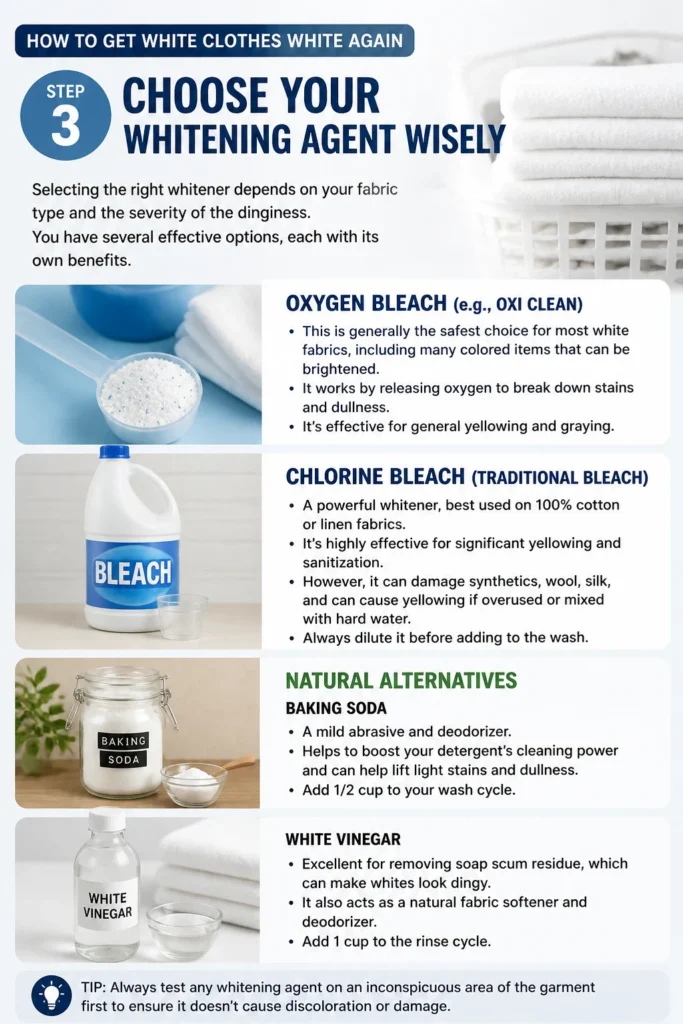
Oxygen Bleach (e.g., OxiClean): This is generally the safest choice for most white fabrics, including many colored items that can be brightened. It works by releasing oxygen to break down stains and dullness. It’s effective for general yellowing and graying.
Chlorine Bleach (Traditional Bleach): A powerful whitener, best used on 100% cotton or linen fabrics. It’s highly effective for significant yellowing and sanitization. However, it can damage synthetics, wool, silk, and can cause yellowing if overused or mixed with hard water. Always dilute it before adding to the wash.
Natural Alternatives:
- Baking Soda: A mild abrasive and deodorizer. Add half a cup to your wash cycle along with detergent.
- White Vinegar: Helps remove detergent residue, brightens, and softens. Add half a cup to the rinse cycle.
- Lemon Juice: Its natural acidity can brighten whites, especially when combined with sunlight.
Pro Tip: Always check your garment care labels before using chlorine bleach. When in doubt, opt for oxygen bleach or a natural alternative.
Step 4: The Soaking Method for Deep Cleaning
For heavily soiled, yellowed, or grayed whites, a pre-soak can be incredibly effective. This allows the whitening agents more time to penetrate and work their magic.
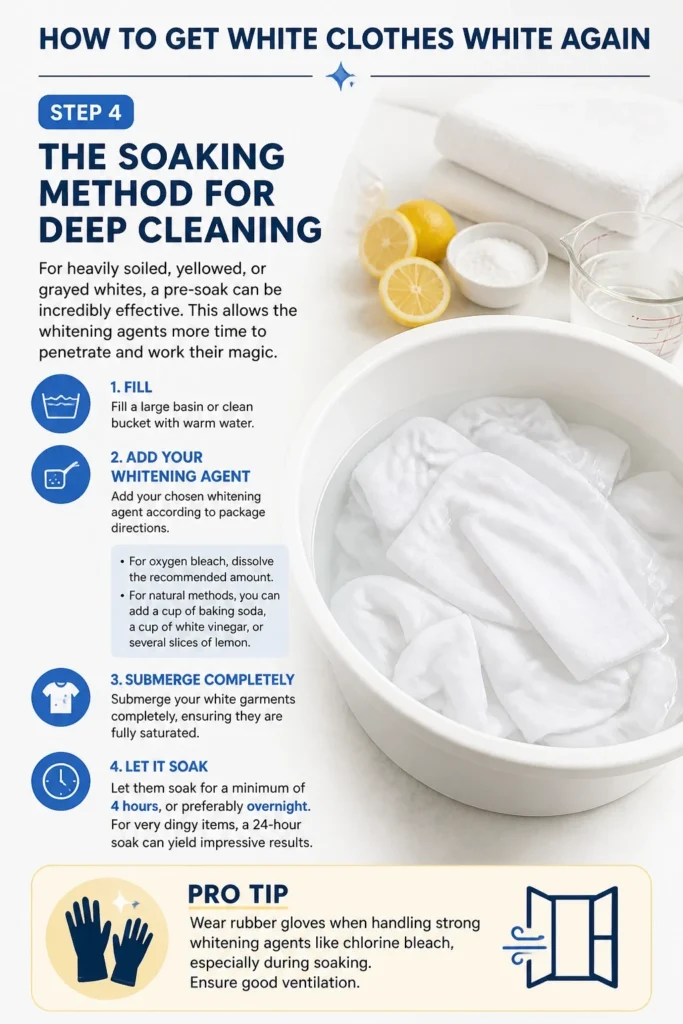
Fill a large basin or clean bucket with warm water. Add your chosen whitening agent according to package directions. For oxygen bleach, dissolve the recommended amount. For natural methods, you can add a cup of baking soda, a cup of white vinegar, or several slices of lemon.
Submerge your white garments completely, ensuring they are fully saturated. Let them soak for a minimum of 4 hours, or preferably overnight. For very dingy items, a 24-hour soak can yield impressive results.
Pro Tip: Wear rubber gloves when handling strong whitening agents like chlorine bleach, especially during soaking. Ensure good ventilation.
Step 5: Wash with the Right Settings and Detergent
Once pre-treated and potentially soaked, it’s time for the main wash cycle. Load your sorted white clothes into the washing machine without overcrowding it. Overloading prevents proper cleaning and rinsing.
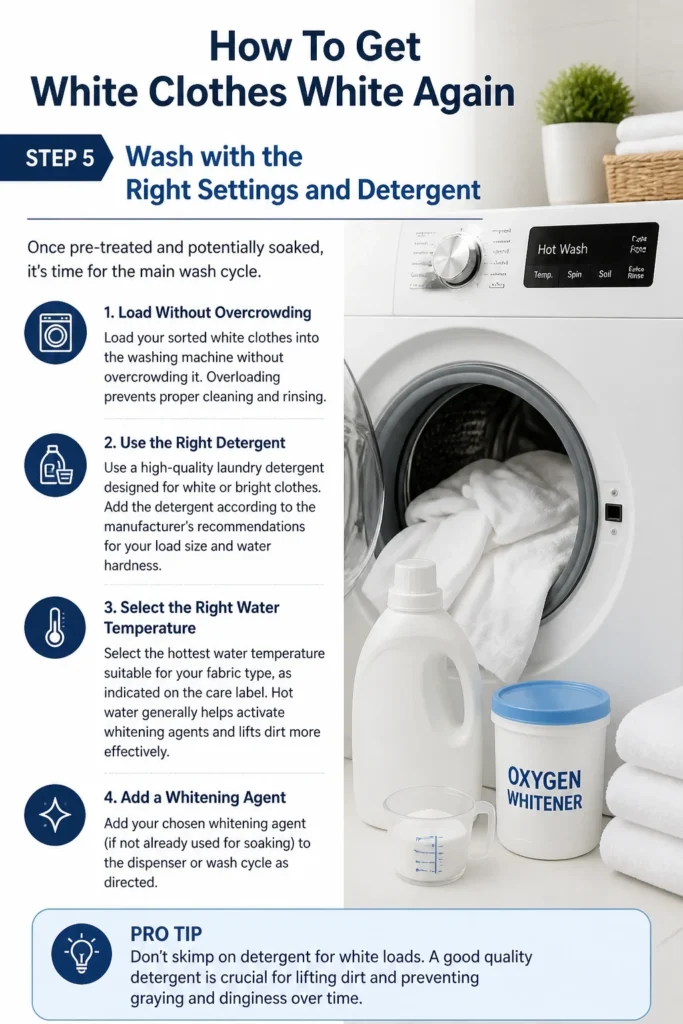
Use a high-quality laundry detergent designed for white or bright clothes. Add the detergent according to the manufacturer’s recommendations for your load size and water hardness.
Select the hottest water temperature suitable for your fabric type, as indicated on the care label. Hot water generally helps activate whitening agents and lifts dirt more effectively. Add your chosen whitening agent (if not already used for soaking) to the dispenser or wash cycle as directed.
Pro Tip: Don’t skimp on detergent for white loads. A good quality detergent is crucial for lifting dirt and preventing redeposition.
Step 6: Rinse Thoroughly to Prevent Residue
A proper rinse cycle is just as important as the wash itself. Insufficient rinsing can leave behind detergent, bleach, or mineral deposits. These residues can actually contribute to a dingy or stiff feel over time.
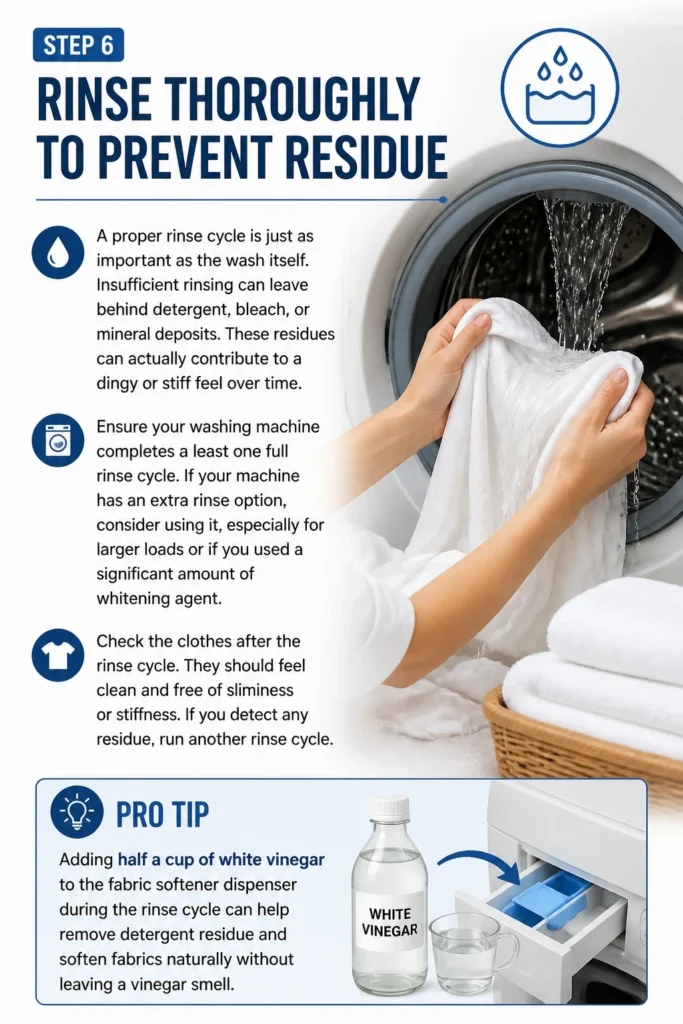
Ensure your washing machine completes at least one full rinse cycle. If your machine has an extra rinse option, consider using it, especially for larger loads or if you used a significant amount of whitening agent.
Check the clothes after the rinse cycle. They should feel clean and free of sliminess or stiffness. If you detect any residue, run another rinse cycle.
Pro Tip: Adding half a cup of white vinegar to the fabric softener dispenser during the rinse cycle can help remove detergent residue and soften fabrics naturally without leaving a vinegar smell.
Step 7: Air Dry or Use Low Heat, Harnessing Sunlight
How you dry your white clothes can significantly impact their brightness. High heat from a dryer can set any remaining stains or dinginess, making them harder to remove later.
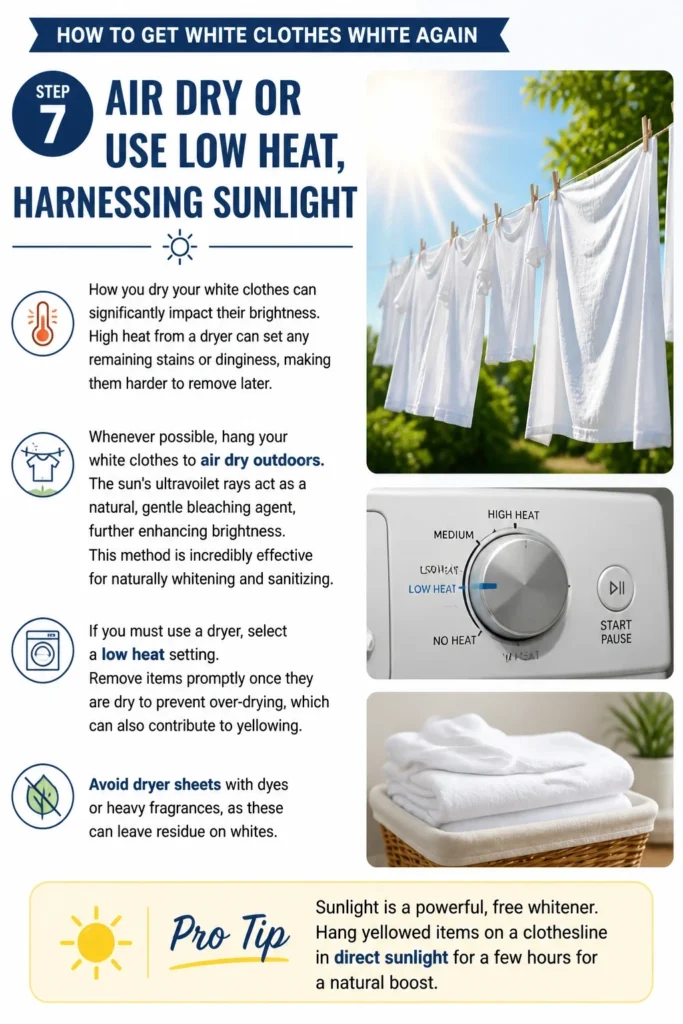
Whenever possible, hang your white clothes to air dry outdoors. The sun’s ultraviolet rays act as a natural, gentle bleaching agent, further enhancing brightness. This method is incredibly effective for naturally whitening and sanitizing.
If you must use a dryer, select a low heat setting. Remove items promptly once they are dry to prevent over-drying, which can also contribute to yellowing. Avoid dryer sheets with dyes or heavy fragrances, as these can leave residue on whites.
Pro Tip: Sunlight is a powerful, free whitener. Hang yellowed items on a clothesline in direct sunlight for a few hours for a natural boost.
Step 8: Implement Regular Maintenance for Lasting Brilliance
Keeping your whites white is an ongoing process, not a one-time fix. Incorporating a few simple habits into your laundry routine will prevent future dullness and yellowing.
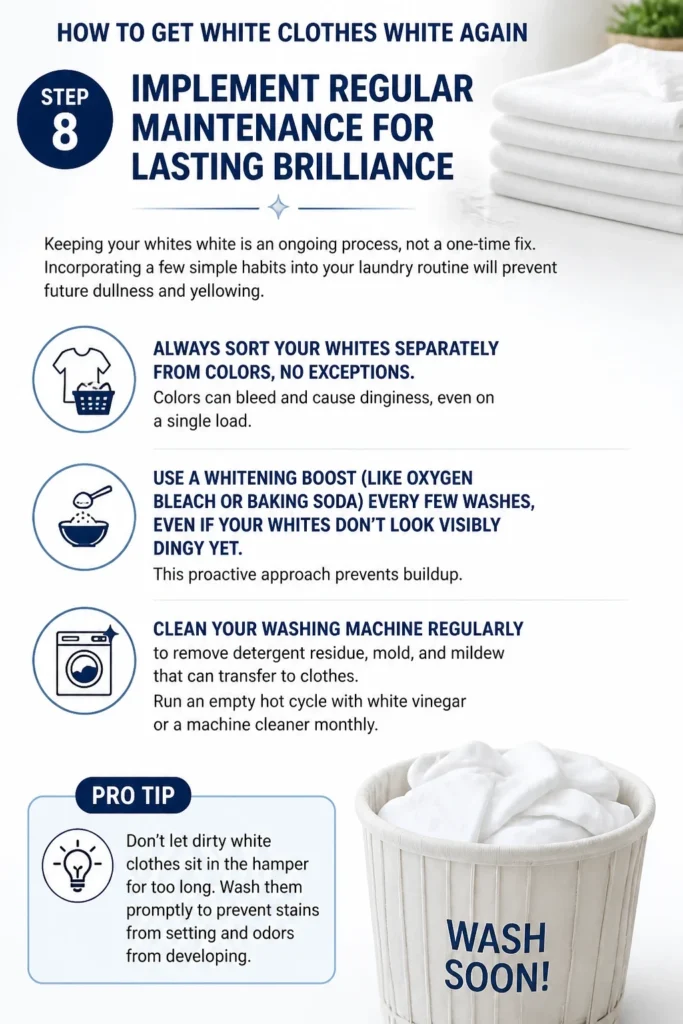
Always sort your whites separately from colors, no exceptions. Use a whitening boost (like oxygen bleach or baking soda) every few washes, even if your whites don’t look visibly dingy yet. This proactive approach prevents buildup.
Clean your washing machine regularly to remove detergent residue, mold, and mildew that can transfer to clothes. Run an empty hot cycle with white vinegar or a machine cleaner monthly.
Pro Tip: Don’t let dirty white clothes sit in the hamper for too long. Wash them promptly to prevent stains from setting and odors from developing.
Common Mistakes to Avoid
Mixing Whites with Colors
This is perhaps the most common and detrimental mistake. Even a single colored item, especially a new one, can bleed dye into your white load. This leads to a dull, grayish, or tinted appearance that is incredibly difficult to reverse. Always dedicate a separate load solely to white garments to safeguard their brightness.
Overloading the Washer
Stuffing too many clothes into the washing machine prevents them from getting properly cleaned. Detergent and water cannot circulate effectively, meaning dirt and grime aren’t fully removed. This results in clothes still looking dingy and can even lead to detergent residue being left behind, contributing to further dullness.
Using Too Much Chlorine Bleach
While effective, excessive use of chlorine bleach can actually cause white fabrics to turn yellow over time. It can also damage the fibers, making them weaker and more prone to tearing. Always measure bleach carefully and dilute it as recommended, or opt for gentler oxygen bleach for routine whitening.
Ignoring Fabric Care Labels
Each garment has specific care instructions designed to protect its fibers and extend its life. Washing a delicate silk blouse with harsh bleach or hot water meant for cotton towels can cause irreversible damage, shrinking, or yellowing. Always check labels for water temperature, bleach suitability, and drying instructions.
Troubleshooting
Clothes Still Look Dingy or Yellow After Washing
If your whites haven’t regained their brightness, the issue might be hard water, insufficient pre-treatment, or the wrong whitening agent. Try a longer, more concentrated soak with oxygen bleach or a mixture of baking soda and vinegar. For hard water, consider adding a water softener to your wash or using a specialized hard water detergent. If yellowing is persistent, it might be mineral buildup, and a professional cleaner could offer specific treatments.
Yellowing Appears After Using Bleach
This is a common problem, often caused by using chlorine bleach on synthetic fibers like polyester, nylon, or spandex, which can react and turn yellow. It can also happen if bleach mixes with iron in hard water. To fix this, try soaking the items in a solution of warm water and an iron-out product (if hard water is the cause) or a non-chlorine bleach. For synthetics, a color remover might be an option, but proceed with caution as it can be harsh.
Bleach Stains or Spots on White Clothes
Accidental bleach spots, especially from concentrated chlorine bleach, can sometimes appear as bright white patches on a previously dingy item, or even light yellow spots if the bleach reacted with something. Unfortunately, these spots are often permanent as the bleach has chemically altered the fabric. For minor spots, an immediate rinse might help, but often, the damage is done. In some cases, a fabric-safe color remover might lessen the contrast, but it’s a risky fix.
Key Takeaways
- Sorting white clothes meticulously is the foundational step for preventing dullness and color transfer.
- Promptly pre-treating stains significantly increases the likelihood of their complete removal.
- Choose your whitening agent (oxygen bleach, chlorine bleach, or natural alternatives) based on fabric type and stain severity.
- A thorough pre-soak, especially overnight, can dramatically improve the brightness of heavily soiled whites.
- Always use the hottest water temperature suitable for your fabric and avoid overloading the washing machine.
- Harness the power of sunlight for natural bleaching and enhanced brightness when air drying.
Frequently Asked Questions
Can I use bleach on all white clothes?
No, you cannot use chlorine bleach on all white clothes. It’s generally safe for 100% cotton and linen. However, it can damage or yellow synthetic fibers (like polyester or spandex), wool, and silk. Always check the care label. Oxygen bleach is a safer, more versatile alternative for most white fabrics.
Why do my white clothes turn yellow?
White clothes can turn yellow for several reasons. Common culprits include hard water mineral buildup, excessive use of chlorine bleach, body oils, sweat, or residues from laundry detergents and fabric softeners. High heat drying can also set these yellow stains permanently.
How often should I whiten my clothes?
The frequency depends on how often you wear and wash your white clothes and their exposure to dirt and body oils. For general maintenance, using a whitening boost like oxygen bleach every 2-3 washes is a good practice. For heavily used or visibly dingy items, a more intensive whitening treatment might be needed every wash.
What’s the best natural whitener for clothes?
Baking soda, white vinegar, and lemon juice are excellent natural whiteners. Baking soda can be added to the wash cycle, while vinegar is effective in the rinse cycle for removing residue and brightening. Lemon juice, especially when combined with sunlight, offers a gentle bleaching effect.
Our Top Recommended Finds
- Oxygen Bleach Powder: A versatile and fabric-safe whitener that tackles stains and brightens whites without the harshness of chlorine bleach.
- Heavy-Duty Laundry Detergent: Essential for lifting deep dirt and grime from white fabrics, ensuring a thorough clean.
- Targeted Stain Remover Spray: Perfect for pre-treating specific spots and stains before washing, increasing removal success.
Embrace the Brilliance: Keep Your Whites Pristine
Restoring your white clothes to their former glory is a rewarding task. By following these practical steps, you’ll not only remove dinginess and stains but also learn how to maintain that crisp, bright look for the long term.
Don’t let dull whites diminish your wardrobe any longer. Take action today and transform your laundry routine. Explore other guides on mastering laundry for all colors or discovering eco-friendly cleaning solutions for a truly sparkling home.
Beginner-friendly templates, step-by-step guides,
and weekly project ideas in your inbox.