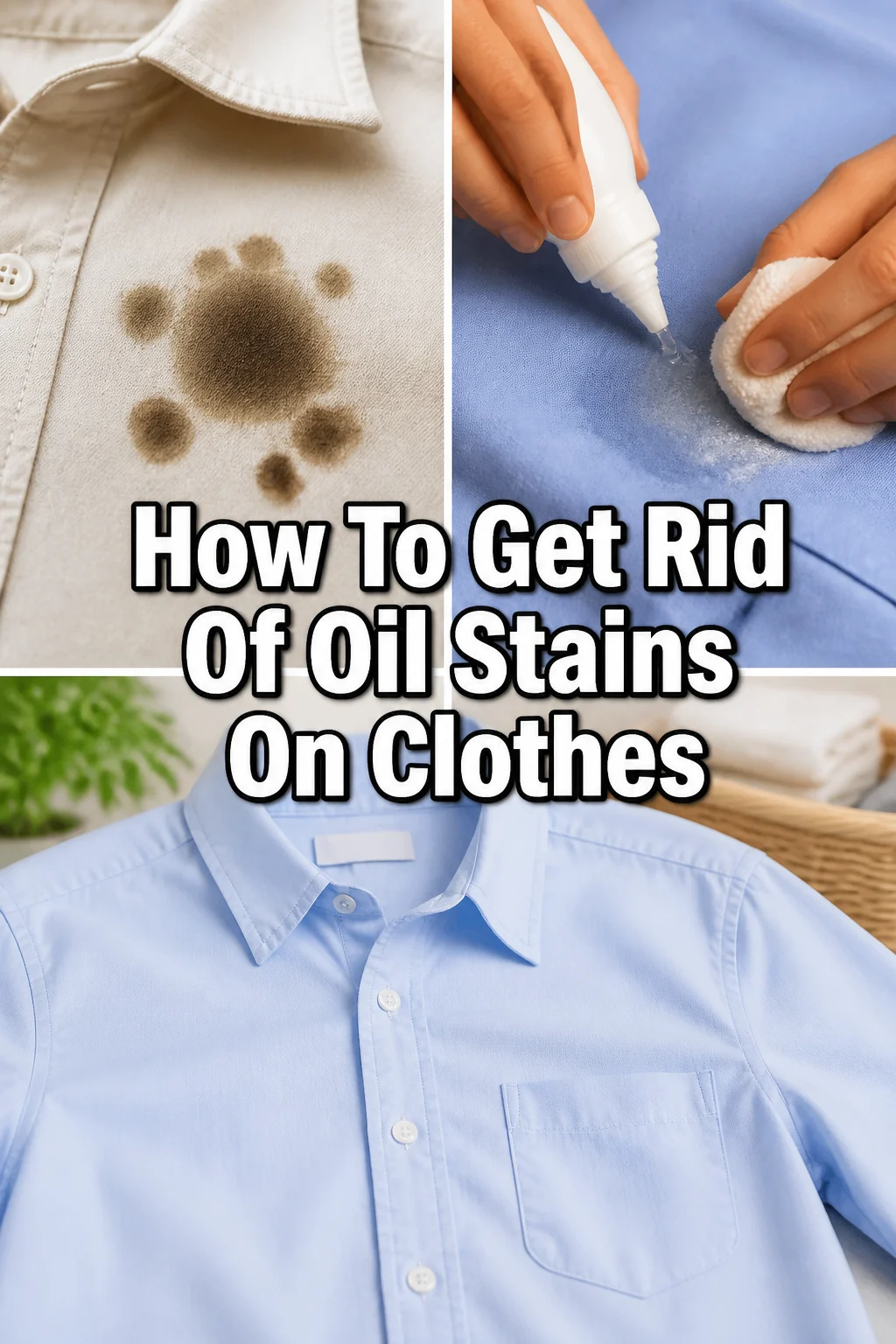
🧼 How To Get Rid Of Oil Stains On Clothes

Beginner-friendly templates, step-by-step guides,
and weekly project ideas in your inbox.
I remember the sinking feeling of seeing a dark, greasy splatter of salad dressing land right in the middle of my favorite light-gray sweatshirt.
After years of trial and error in my own laundry room, I have discovered that oil stains are not a death sentence for your wardrobe if you know the science of breaking them down.
This guide comes from a place of countless saved shirts and a deep understanding of how household cleaners interact with stubborn lipids.

Quick Overview
Oil stains are unique because they are hydrophobic, meaning they repel water and cling tightly to fabric fibers. To remove them, you need to bridge the gap between oil and water using a surfactant.
- Time needed: 30 to 60 minutes (plus drying time)
- Difficulty: Beginner
- What you’ll need: Dish soap, baking soda or cornstarch, a soft toothbrush, and white paper towels.
Step-by-Step Instructions
Step 1: Blot the Excess Oil Immediately
Grab a clean, white paper towel or a microfiber cloth as soon as the spill happens.
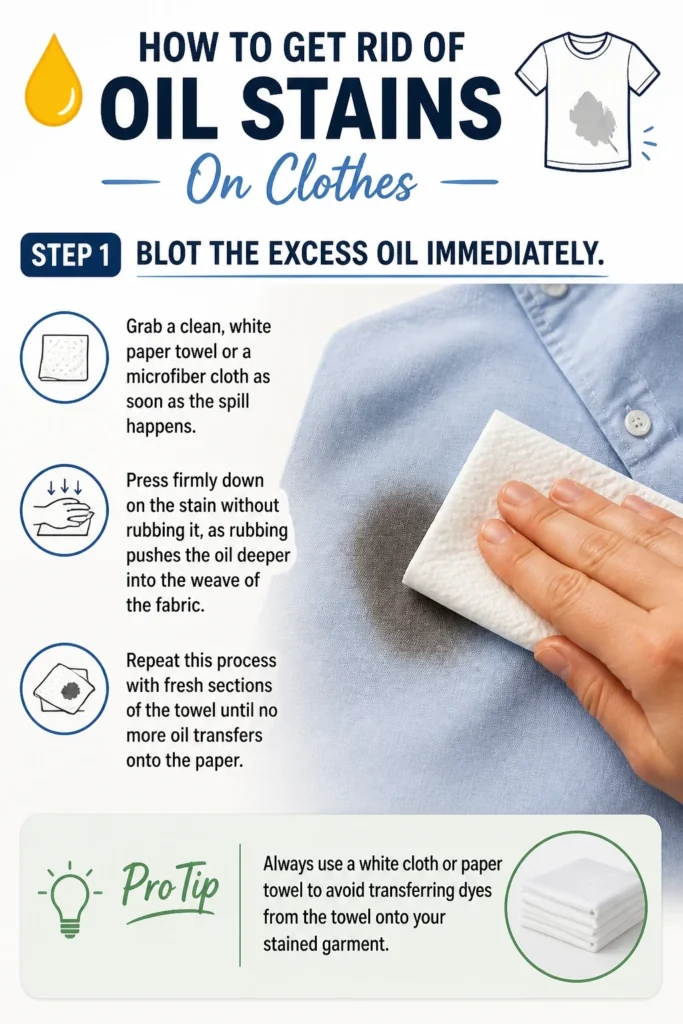
Press firmly down on the stain without rubbing it, as rubbing pushes the oil deeper into the weave of the fabric.
Repeat this process with fresh sections of the towel until no more oil transfers onto the paper.
Pro Tip: Always use a white cloth or paper towel to avoid transferring dyes from the towel onto your stained garment.
Step 2: Apply an Absorbent Powder
Cover the entire oily area with a thick layer of baking soda, cornstarch, or baby powder.
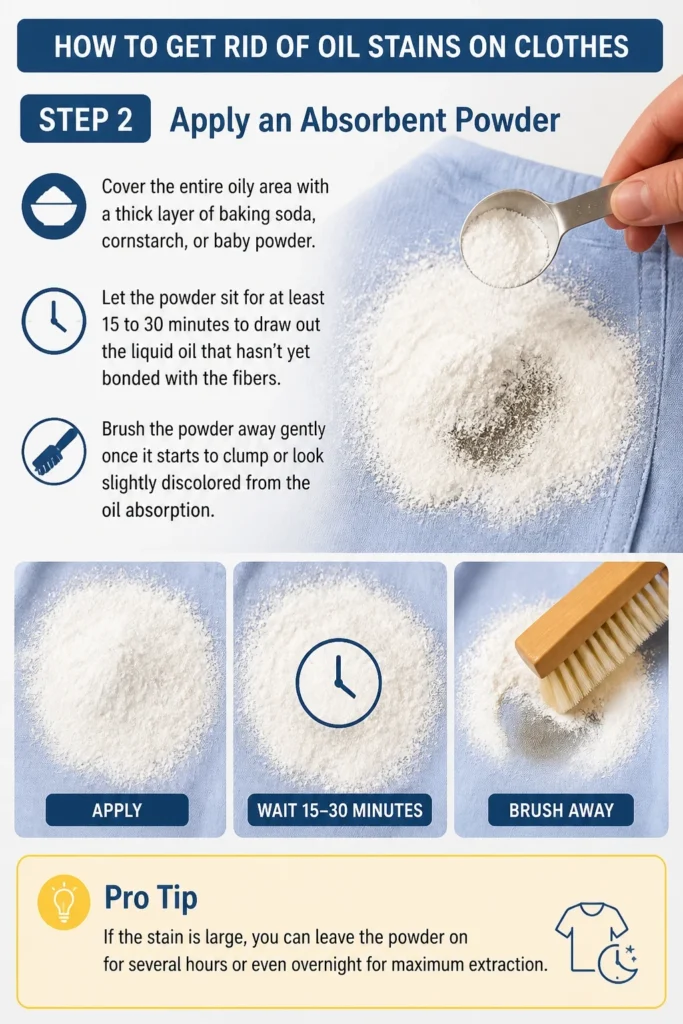
Let the powder sit for at least 15 to 30 minutes to draw out the liquid oil that hasn’t yet bonded with the fibers.
Brush the powder away gently once it starts to clump or look slightly discolored from the oil absorption.
Pro Tip: If the stain is large, you can leave the powder on for several hours or even overnight for maximum extraction.
Step 3: Apply Concentrated Dish Soap
Squirt a small amount of grease-fighting dish soap directly onto the stained area.
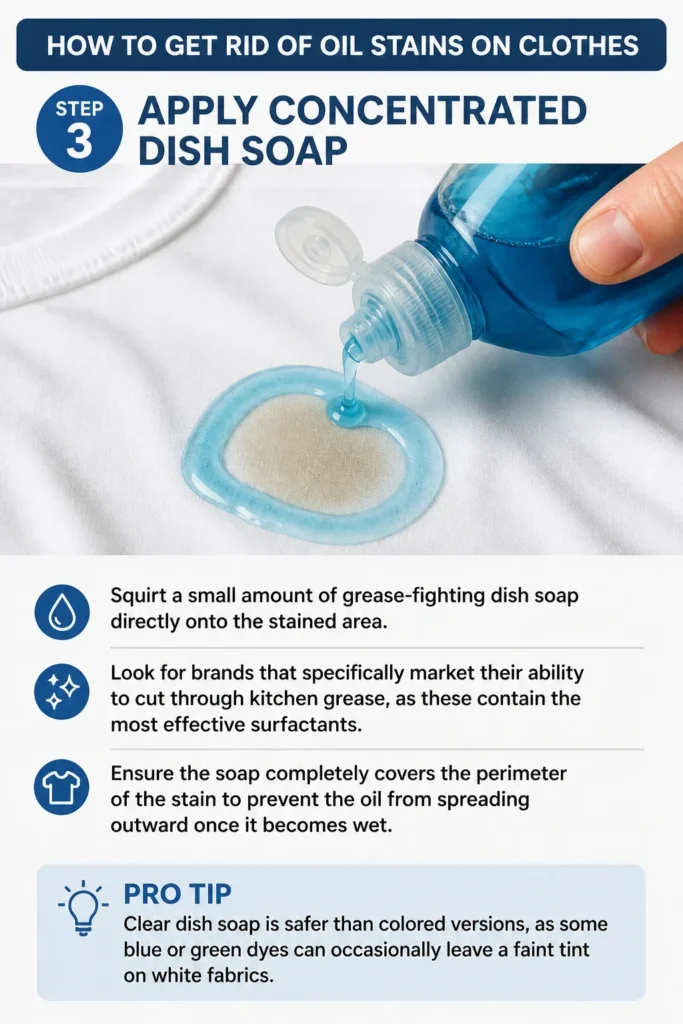
Look for brands that specifically market their ability to cut through kitchen grease, as these contain the most effective surfactants.
Ensure the soap completely covers the perimeter of the stain to prevent the oil from spreading outward once it becomes wet.
Pro Tip: Clear dish soap is safer than colored versions, as some blue or green dyes can occasionally leave a faint tint on white fabrics.
Step 4: Work the Soap into the Fibers
Use a soft-bristled toothbrush or your fingertip to gently massage the soap into the fabric in a circular motion.
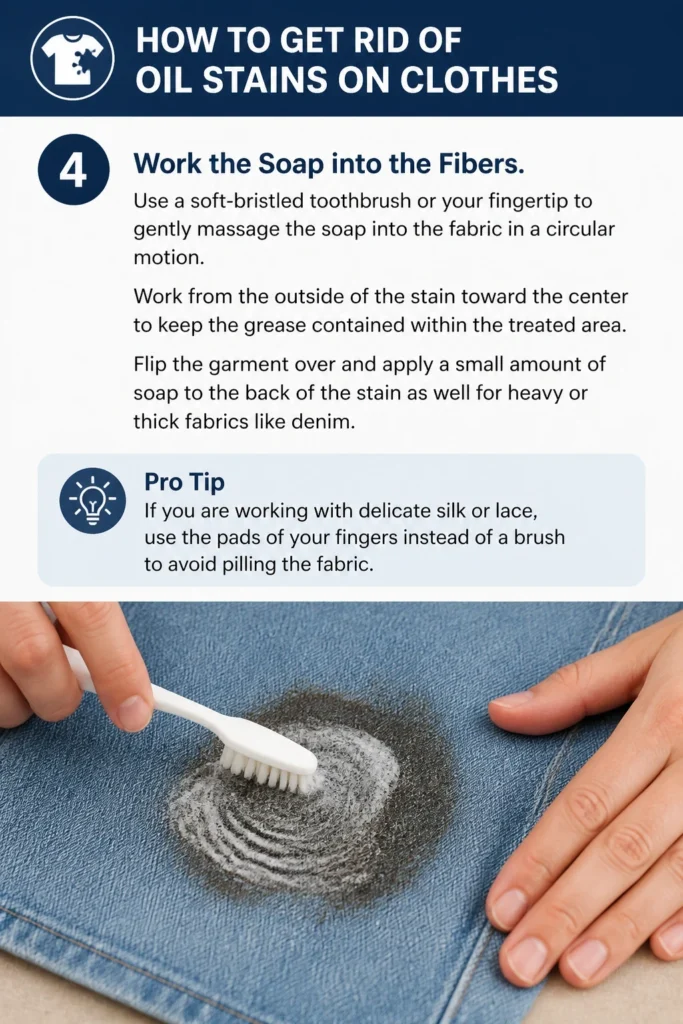
Work from the outside of the stain toward the center to keep the grease contained within the treated area.
Flip the garment over and apply a small amount of soap to the back of the stain as well for heavy or thick fabrics like denim.
Pro Tip: If you are working with delicate silk or lace, use the pads of your fingers instead of a brush to avoid pilling the fabric.
Step 5: Allow the Treatment to Rest
Wait at least 10 to 15 minutes to allow the soap molecules to surround and lift the oil particles.
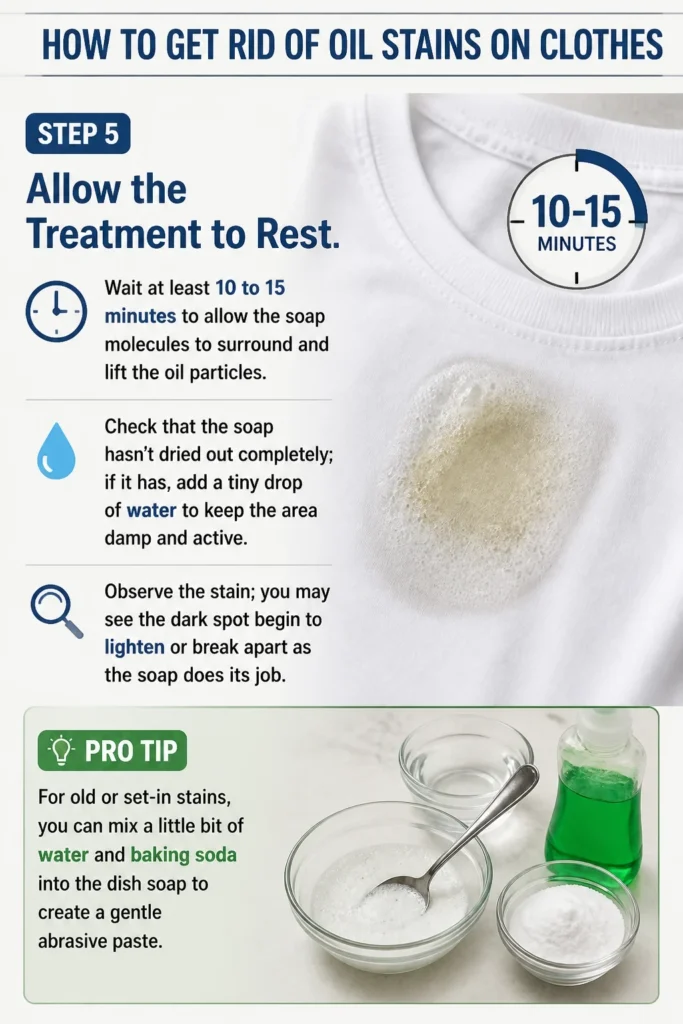
Check that the soap hasn’t dried out completely; if it has, add a tiny drop of water to keep the area damp and active.
Observe the stain; you may see the dark spot begin to lighten or break apart as the soap does its job.
Pro Tip: For old or “set-in” stains, you can mix a little bit of water and baking soda into the dish soap to create a gentle abrasive paste.
Step 6: Rinse with Hot Water
Flush the treated area with the hottest water recommended on the garment’s care label.
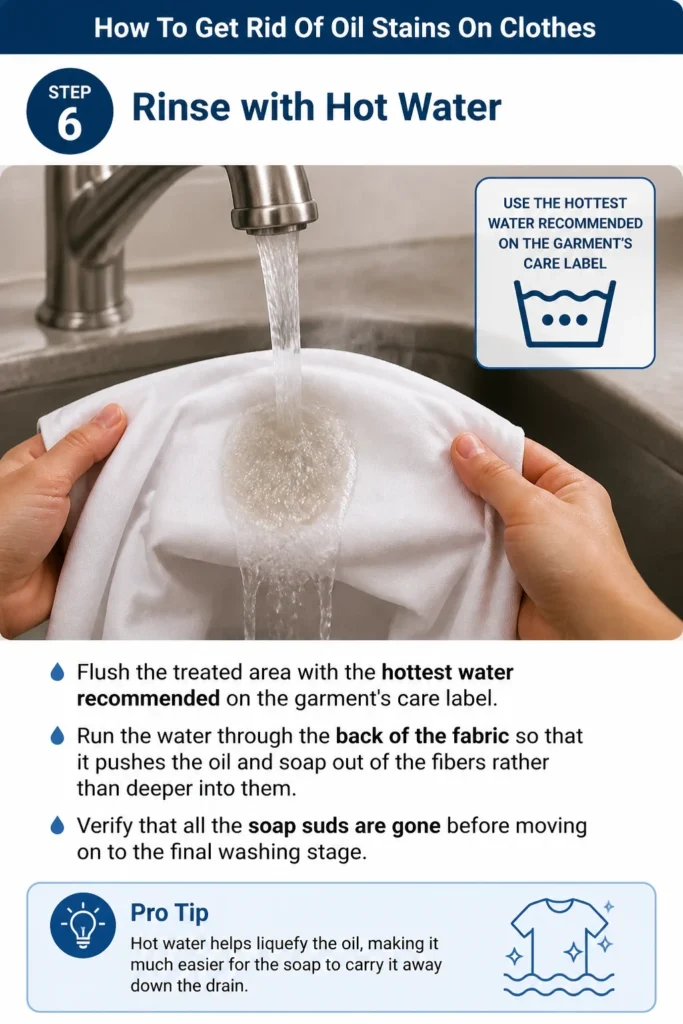
Run the water through the back of the fabric so that it pushes the oil and soap out of the fibers rather than deeper into them.
Verify that all the soap suds are gone before moving on to the final washing stage.
Pro Tip: Hot water helps liquefy the oil, making it much easier for the soap to carry it away down the drain.
Step 7: Machine Wash as Usual
Place the garment in the washing machine by itself or with a very small load to ensure it gets plenty of agitation.
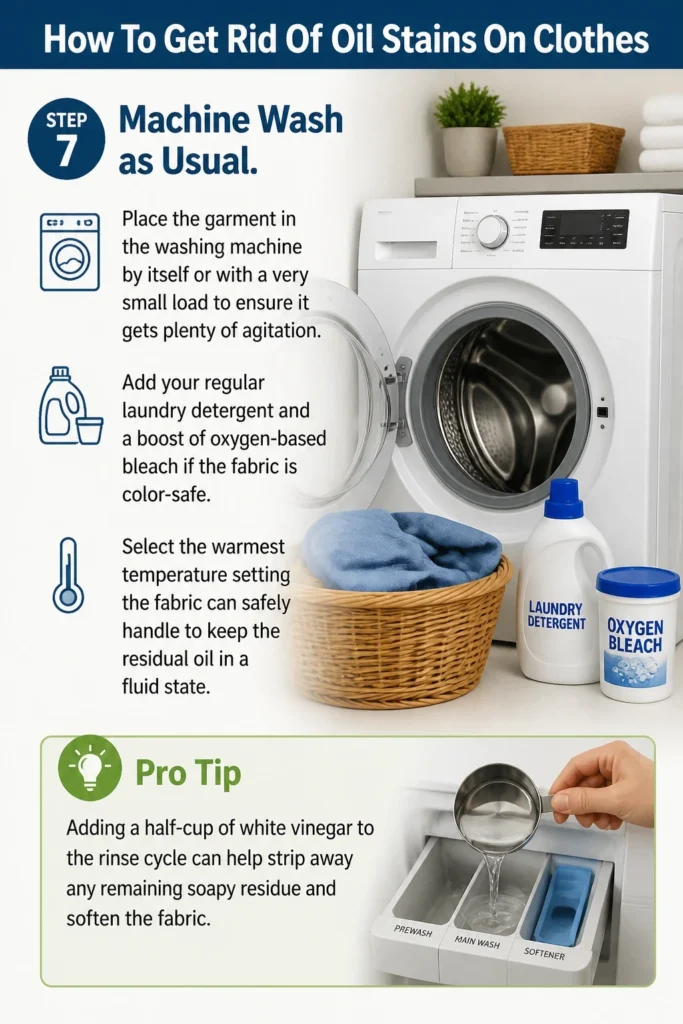
Add your regular laundry detergent and a boost of oxygen-based bleach if the fabric is color-safe.
Select the warmest temperature setting the fabric can safely handle to keep the residual oil in a fluid state.
Pro Tip: Adding a half-cup of white vinegar to the rinse cycle can help strip away any remaining soapy residue and soften the fabric.
Step 8: Inspect Before Drying
Pull the garment out of the washer and inspect the stained area very closely while it is still wet.
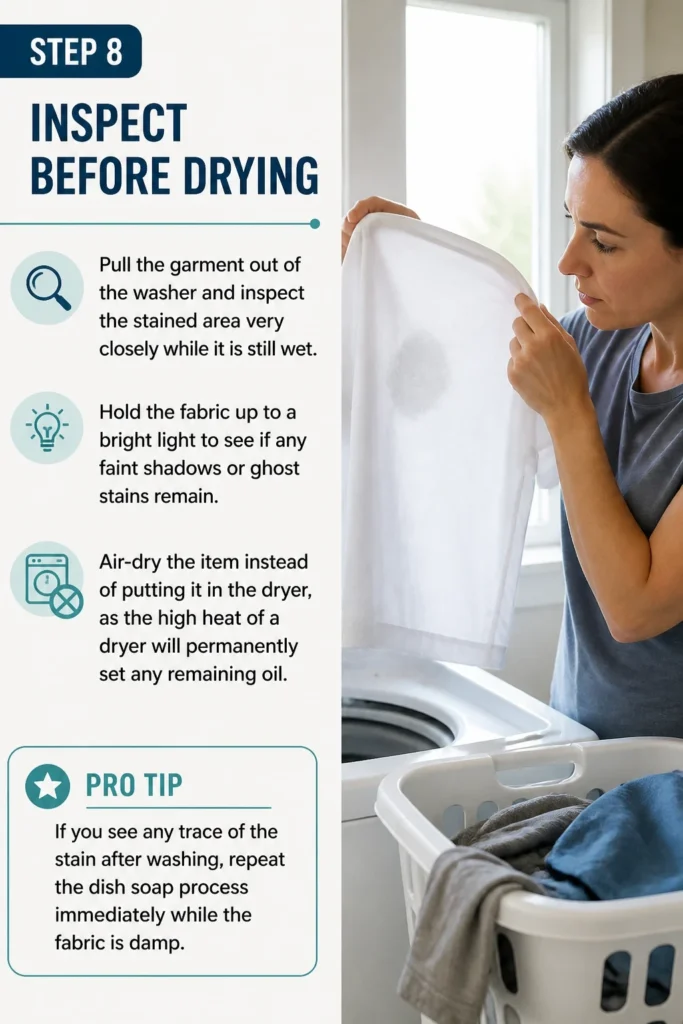
Hold the fabric up to a bright light to see if any faint shadows or “ghost” stains remain.
Air-dry the item instead of putting it in the dryer, as the high heat of a dryer will permanently set any remaining oil.
Pro Tip: If you see any trace of the stain after washing, repeat the dish soap process immediately while the fabric is damp.
Common Mistakes to Avoid
Using Cold Water for the Initial Rinse
Many people instinctively reach for cold water to treat stains, but oil is the exception to this rule. Cold water can cause the oil to solidify and grip the fabric fibers even tighter.
Always use warm or hot water when dealing with grease to keep the lipids loose and movable. This allows the soap to penetrate the oil more effectively.
Rubbing the Stain Vigorously
Scrubbing an oil stain with a lot of force might seem productive, but it usually causes more harm than good. You risk damaging the texture of the fabric and creating a fuzzy patch that looks worse than the stain.
Gentle, circular motions with a soft tool are all you need to help the soap do its work. Let the chemistry of the cleaning agents do the heavy lifting rather than your muscle power.
Trusting the Dryer Too Soon
The dryer is the “point of no return” for most oil stains. Once an oily residue is hit with the intense heat of a drying cycle, it undergoes a chemical change that bonds it to the fabric permanently.
Always wait until the garment is completely air-dried to confirm the stain is gone. If the fabric is still wet, the water can hide the dark shadow of a lingering oil spot.
Troubleshooting
The Stain Is Still Visible After Drying
If you accidentally dried the garment and the stain is still there, don’t throw the item away just yet. You can often “re-activate” a set-in oil stain by applying a small amount of WD-40 or more dish soap to the area.
The fresh oils in the WD-40 help soften the old, hardened oil, making it possible to wash it away with a heavy-duty degreaser or dish soap. Just be sure to test a small, hidden area first to ensure the fabric can handle the treatment.
Dealing with Delicate “Dry Clean Only” Fabrics
Water-based treatments can leave permanent rings on fabrics like silk, rayon, or acetate. If you spill oil on a dry-clean-only item, your best bet is to blot it with a dry cloth and take it to a professional immediately.
Tell the cleaner exactly what caused the stain so they can use the correct solvent. Trying to spot-clean these fabrics at home often results in a watermark that is harder to remove than the original oil.
The Oil Has Spread During Treatment
This usually happens if you apply too much water too early in the process. If you notice the oil ring expanding, stop and apply more absorbent powder (like cornstarch) to the edges of the wet spot.
This will soak up the migrating oil and moisture. In the future, remember to apply your soap or pre-treatment slightly beyond the visible borders of the stain to create a barrier.
Key Takeaways
- Act as quickly as possible to blot up excess oil before it sets into the fabric fibers.
- Use an absorbent powder like baking soda to pull out the “bulk” of the grease before using liquids.
- Dish soap is your best friend for oil stains because it is specifically designed to break down lipids.
- Avoid the dryer at all costs until you are 100% certain the stain has been completely removed.
- Hot water is generally more effective than cold water for rinsing out greasy residues.
- Always check the care label to ensure the fabric can handle the heat and agitation of your chosen method.
Frequently Asked Questions
Can I use hairspray to remove oil stains?
Older hairspray formulas that contained high levels of alcohol used to be a popular hack for breaking down oils. However, many modern hairsprays contain conditioners and oils themselves, which could actually make the stain worse or leave a sticky residue. Stick to dish soap or dedicated laundry pre-treatments for more reliable and safer results.
Does white vinegar work on grease?
Vinegar is an excellent deodorizer and can help remove some mineral deposits, but it isn’t a true degreaser. It lacks the surfactants found in soap that are necessary to encapsulate oil molecules and wash them away. Use vinegar as a final rinse aid to remove soap residue, but don’t rely on it as your primary oil-fighting agent.
What if the oil stain is from motor oil rather than food?
Motor oil is much heavier and more complex than cooking oil, often containing metallic particles and soot. While the dish soap method can work, you might need a dedicated automotive hand cleaner (the kind with pumice) or a heavy-duty laundry degreaser. These products are formulated to handle the specific chemical makeup of petroleum-based lubricants.
Is it okay to use club soda on an oil stain?
Club soda is mostly effective for water-soluble stains like wine or juice because of its carbonation and slight acidity. It does very little to break down oil. In fact, pouring club soda on an oil stain might just spread the oil further across the fabric without actually lifting it out of the weave.
Our Top Recommended Finds
- Grease-Cutting Dish Soap: Look for a concentrated formula that is specifically labeled as “platinum” or “heavy-duty” for the best results on stubborn food oils.
- Soft-Bristled Laundry Brush: A dedicated laundry brush or even a soft toothbrush is essential for working treatments into the fabric without causing structural damage.
- Oxygen-Based Bleach Powder: This is a fantastic additive for the final wash cycle to help brighten the fabric and lift any remaining organic residues that the soap might have missed.
Taking Control Of Your Laundry Room
Once you master the art of breaking down lipids, a kitchen mishap or a garage spill no longer feels like a catastrophe.
You now have the tools and the knowledge to save your wardrobe from the most common type of staining known to man.
If you found this helpful, you might also want to look into how to remove ink stains or how to properly care for delicate wool sweaters to keep your clothes looking brand new for years.
Go ahead and check those garments you thought were ruined—there is a very good chance you can bring them back to life today.
Beginner-friendly templates, step-by-step guides,
and weekly project ideas in your inbox.