👖 How To Cut Jeans That Are Too Long
Beginner-friendly templates, step-by-step guides,
and weekly project ideas in your inbox.
Finding the perfect pair of jeans is a victory, but finding them in the perfect length is a miracle.
I spent years walking on my own hems and ruining expensive denim because I was too intimidated to use a pair of scissors.
After a few trial runs on old work pants, I realized that customizing your own hem is the easiest way to make cheap jeans look like a designer purchase.
Quick Overview
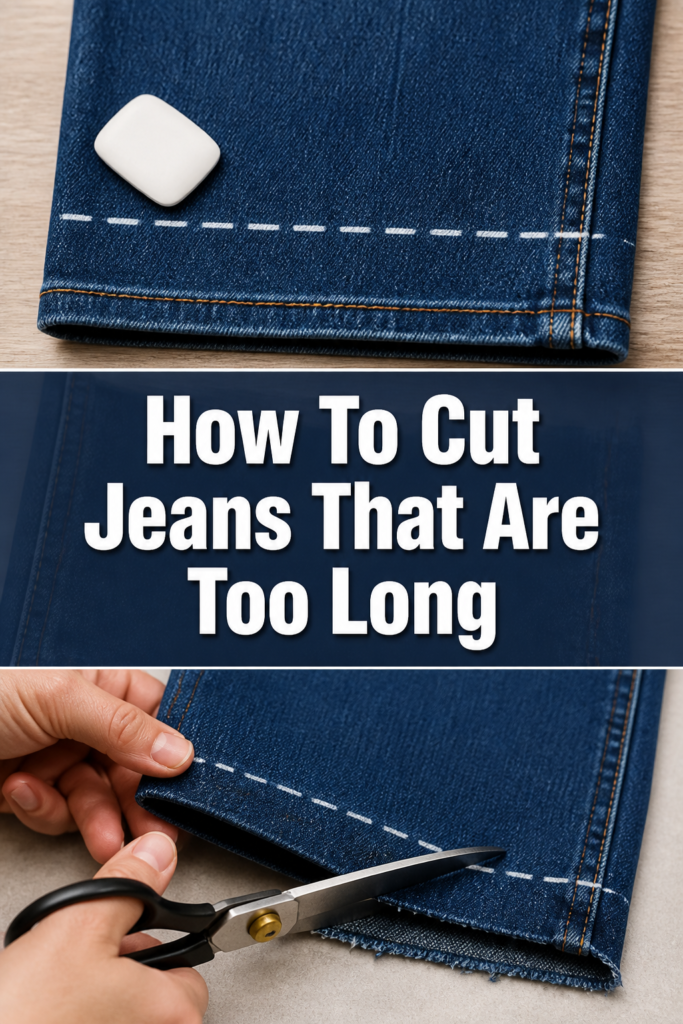
This guide will show you how to achieve a clean, professional-looking raw hem or prep your jeans for a traditional sewn hem.
- Time needed: 20 to 30 minutes
- Difficulty: Beginner
- What you’ll need: Sharp fabric shears, tailor’s chalk or a washable marker, a ruler or measuring tape, and sewing pins.
Step-by-Step Instructions
Step 1: Wash and Dry Your Jeans First
Laundry is your first step because denim is notorious for shrinking after the first few washes.
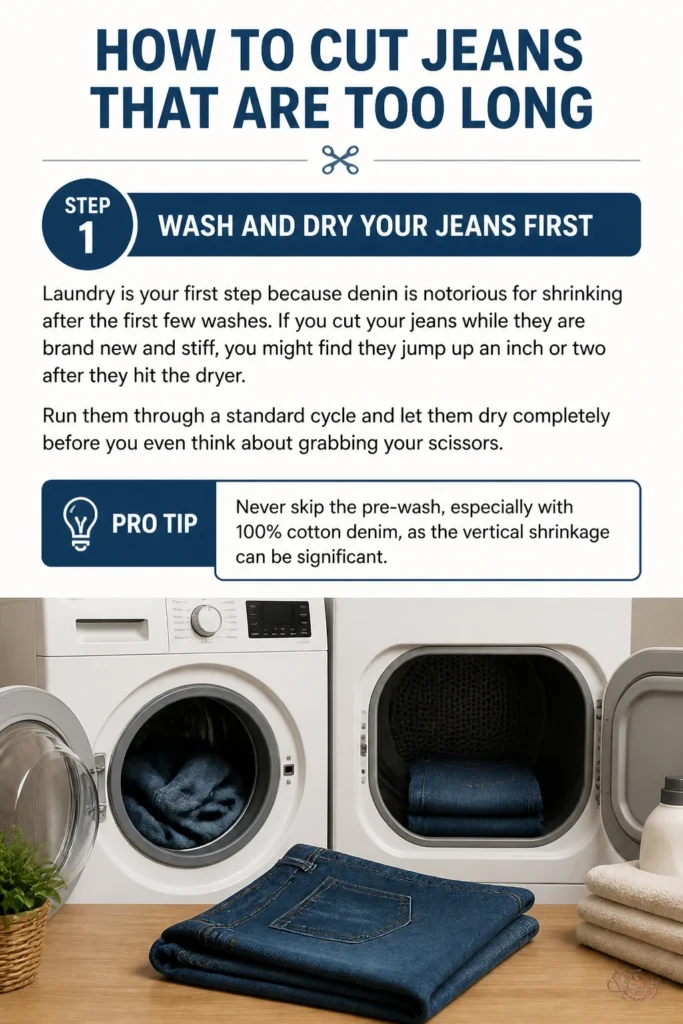
If you cut your jeans while they are brand new and stiff, you might find they jump up an inch or two after they hit the dryer.
Run them through a standard cycle and let them dry completely before you even think about grabbing your scissors.
Pro Tip: Never skip the pre-wash, especially with 100% cotton denim, as the vertical shrinkage can be significant.
Step 2: Put On the Right Shoes
Wear the shoes you plan to pair with these jeans most often during the measuring process.
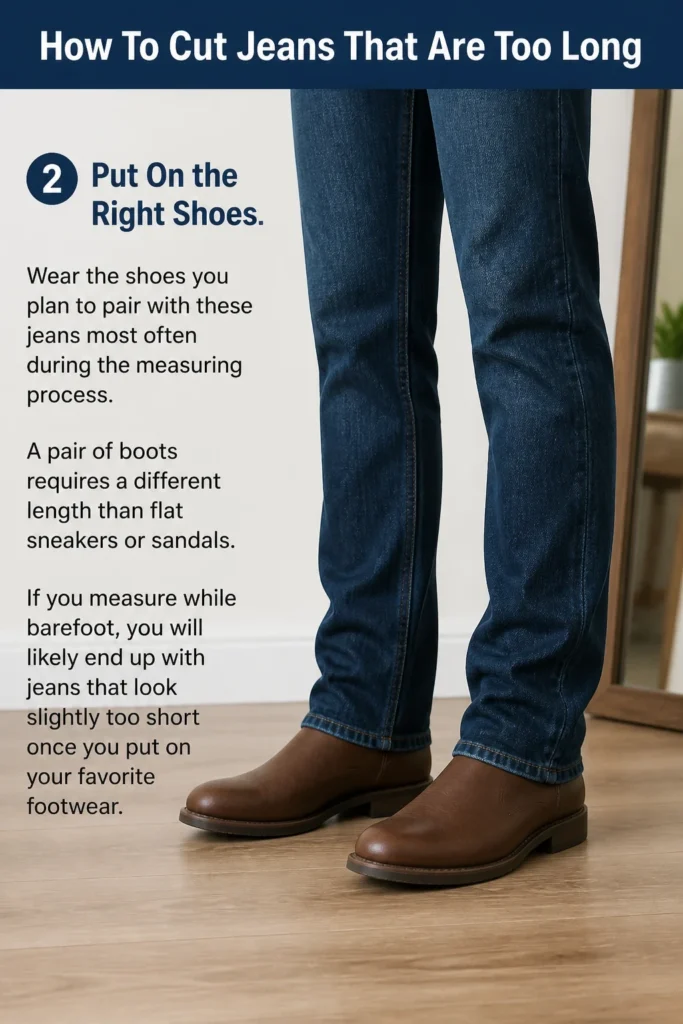
A pair of boots requires a different length than flat sneakers or sandals.
If you measure while barefoot, you will likely end up with jeans that look slightly too short once you put on your favorite footwear.
Step 3: Pin the Desired Length
Fold the extra fabric inward to the length you want and secure it with a few sewing pins.
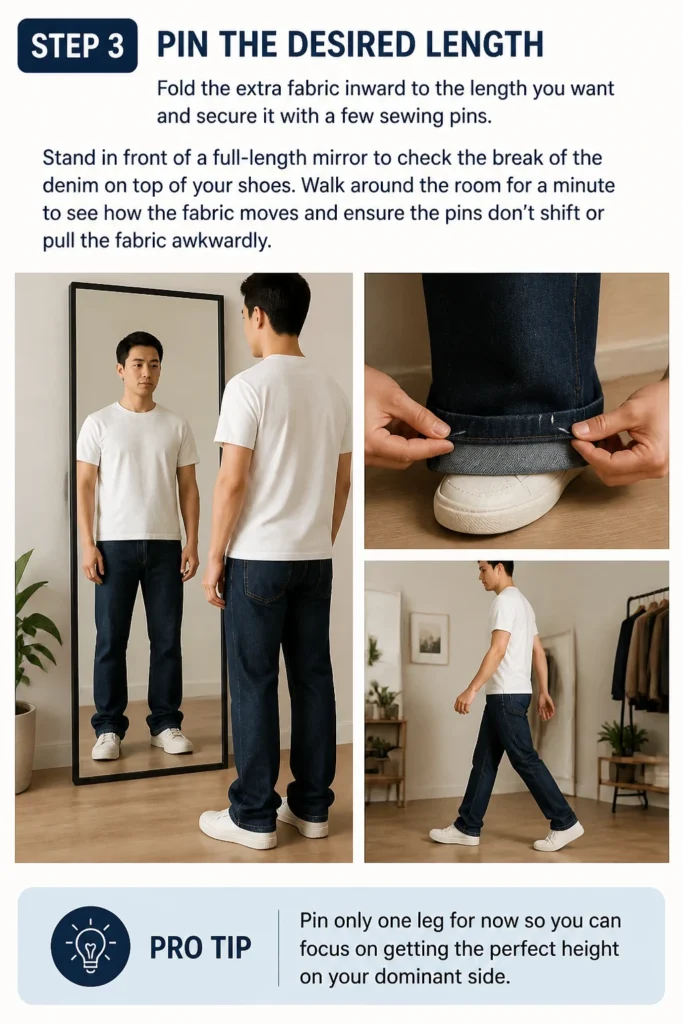
Stand in front of a full-length mirror to check the “break” of the denim on top of your shoes.
Walk around the room for a minute to see how the fabric moves and ensure the pins don’t shift or pull the fabric awkwardly.
Pro Tip: Pin only one leg for now so you can focus on getting the perfect height on your dominant side.
Step 4: Mark Your Cutting Line
Take the jeans off carefully so you don’t poke yourself with the pins.
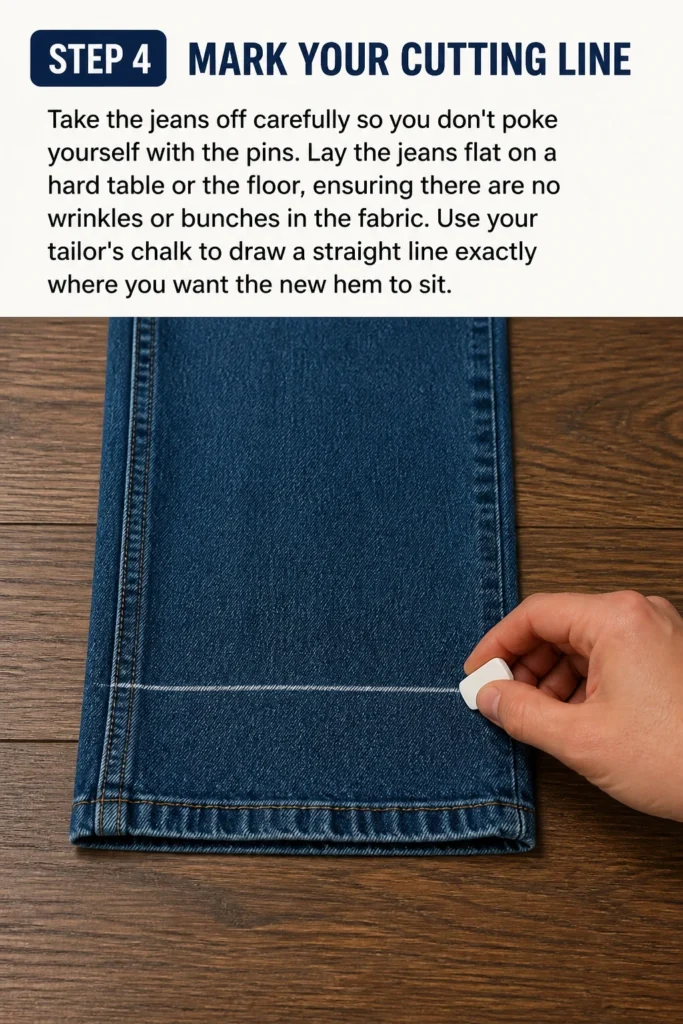
Lay the jeans flat on a hard table or the floor, ensuring there are no wrinkles or bunches in the fabric.
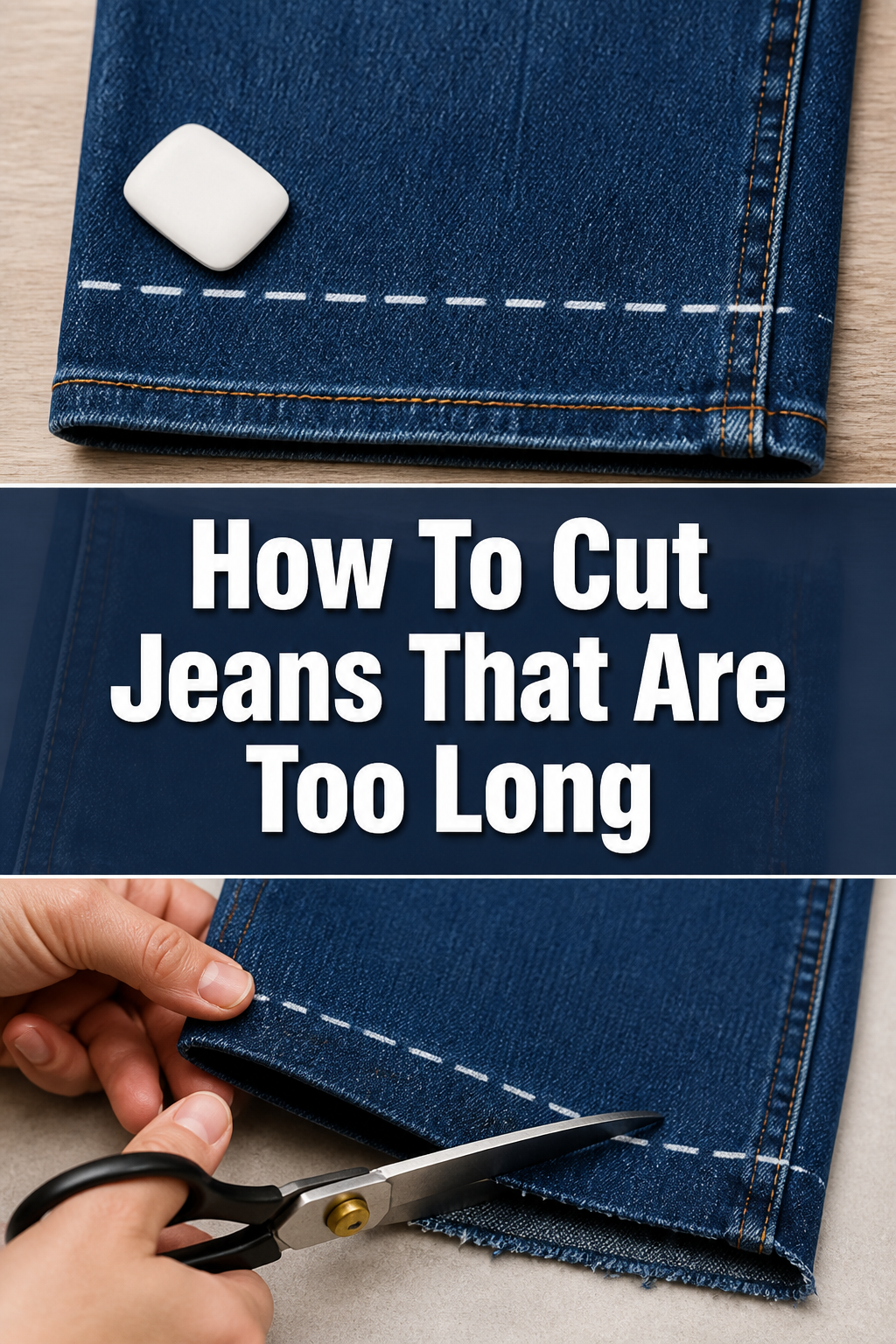
Use your tailor’s chalk to draw a straight line exactly where you want the new hem to sit.
Step 5: Account for the Hem Style
Decide if you want a “raw hem” look or a traditional “sewn hem” look before you cut.
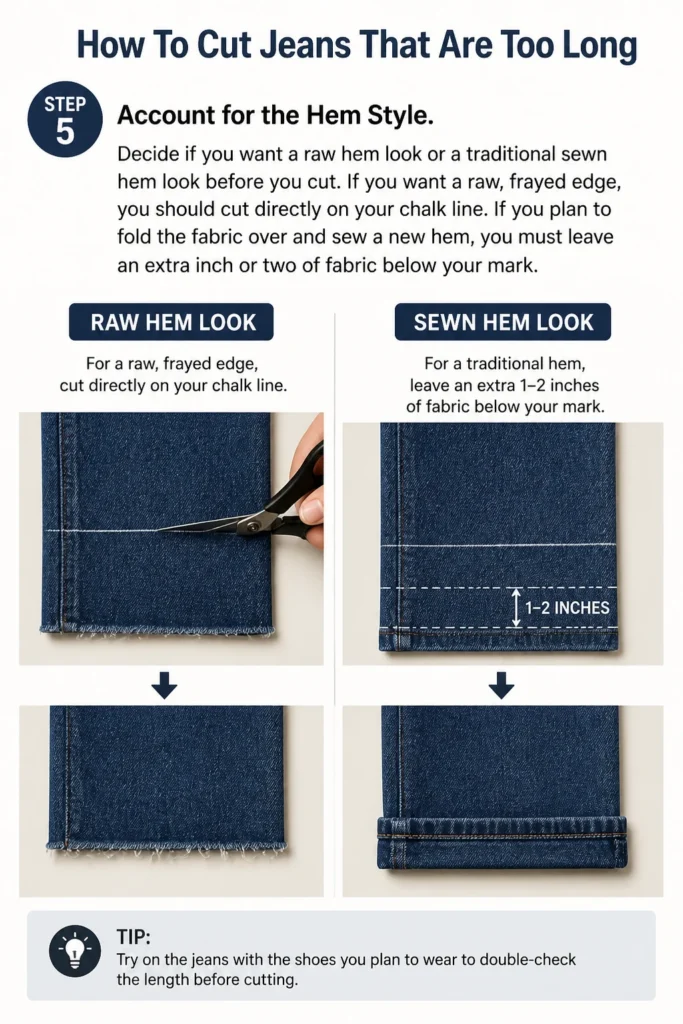
If you want a raw, frayed edge, you should cut directly on your chalk line.
If you plan to fold the fabric over and sew a new hem, you must leave an extra inch or two of fabric below your mark.
Step 6: Measure Twice for Accuracy
Use a ruler to measure the distance from the bottom of the original hem to your new chalk line.
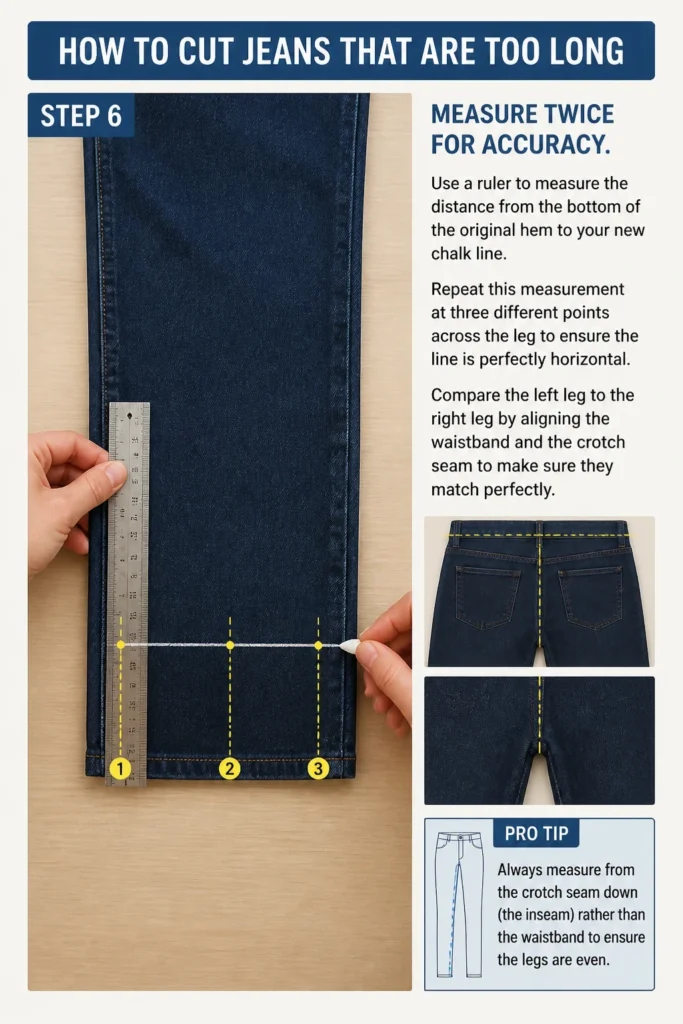
Repeat this measurement at three different points across the leg to ensure the line is perfectly horizontal.
Compare the left leg to the right leg by aligning the waistband and the crotch seam to make sure they match perfectly.
Pro Tip: Always measure from the crotch seam down (the inseam) rather than the waistband to ensure the legs are even.
Step 7: Execute the Cut
Slide your fabric shears into the bottom of the pant leg and cut slowly along your line.
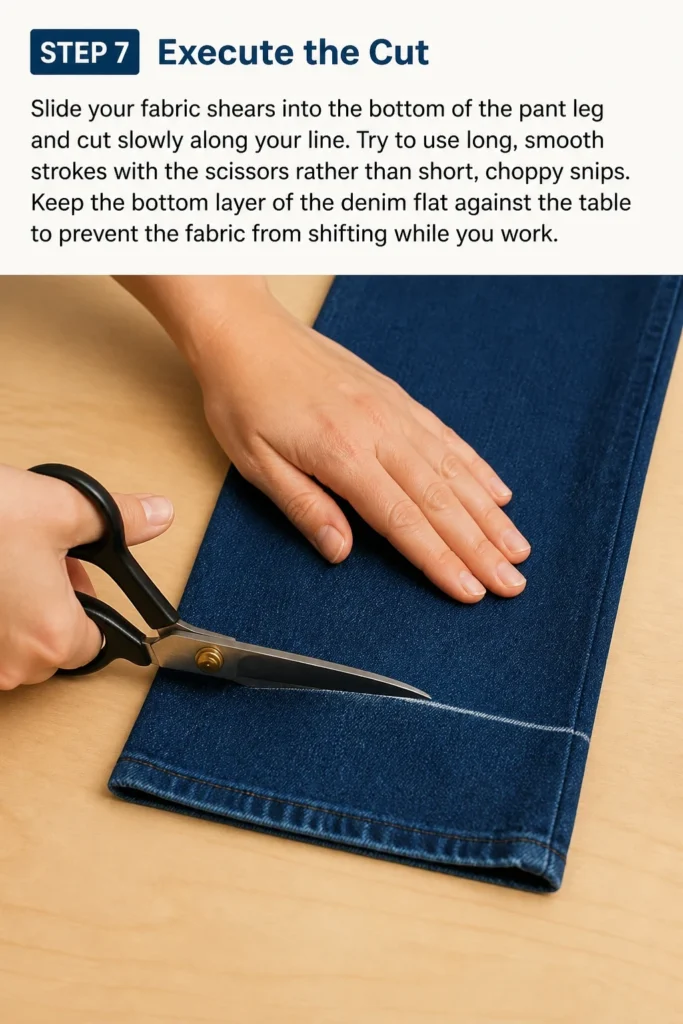
Try to use long, smooth strokes with the scissors rather than short, choppy snips.
Keep the bottom layer of the denim flat against the table to prevent the fabric from shifting while you work.
Step 8: Create the Frayed Look
Rub the freshly cut edges with your fingers or a piece of sandpaper if you want an instant distressed look.
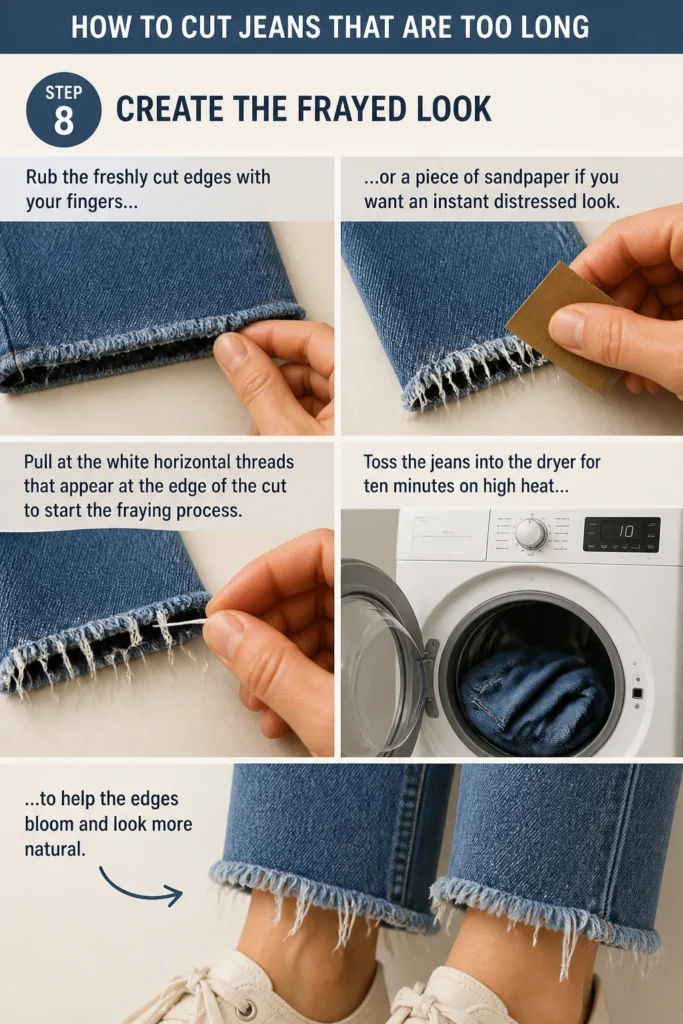
Pull at the white horizontal threads that appear at the edge of the cut to start the fraying process.
Toss the jeans into the dryer for ten minutes on high heat to help the edges bloom and look more natural.
Common Mistakes to Avoid
Using Dull Household Scissors
Denim is a thick, rugged textile that requires significant force to cut cleanly. If you use standard kitchen or craft scissors, you will likely end up with jagged, chewed-looking edges.
Invest in a pair of dedicated fabric shears that can slice through multiple layers of denim without snagging. This ensures the finished product looks intentional rather than like a DIY disaster.
Cutting Both Legs at the Same Time
It is tempting to fold the jeans in half and cut through all four layers of denim at once to save time. However, the fabric almost always shifts during this process, leading to one leg being shorter than the other.
Cut each leg individually while the jeans are laid out flat. This allows you to maintain control over the blade and follow your chalk lines with precision.
Forgetting the Seam Bulk
The side seams of jeans are much thicker than the rest of the fabric. When you reach these points, your scissors might want to veer off course or tilt.
Slow down your cutting speed as you approach the inner and outer seams. Apply firm, steady pressure to ensure the cut remains straight through the thickest parts of the denim.
Troubleshooting
The Hem Looks Crooked After Cutting
If you put the jeans on and notice one side of the leg is higher than the other, do not panic. Lay the jeans back down on your flat surface and use your ruler to find the highest point of the cut.
Draw a new, straight line using that high point as your guide. Trim away the excess fabric in very small increments until the line is level again.
The Fabric is Fraying Too Much
Some denim weaves are looser than others, which can lead to excessive unraveling after a few washes. If the strings are getting too long or the jeans are losing their length, you need to “stop” the fray.
Run a simple straight stitch on a sewing machine about a quarter-inch above the raw edge. This invisible line of thread will act as a barrier and prevent the denim from unraveling any further up the leg.
Key Takeaways
- Always wash and dry your jeans before cutting to account for any potential shrinkage.
- Measure your desired length while wearing the shoes you intend to wear with the jeans.
- Use tailor’s chalk and a ruler to ensure your cutting line is straight and even on both legs.
- Invest in sharp fabric shears to avoid jagged edges and uneven cuts.
- Decide between a raw hem and a sewn hem before making the final cut to ensure you leave enough fabric.
- Measure from the inseam (crotch to hem) to verify that both legs are identical in length.
Frequently Asked Questions
Can I cut jeans that have stretch in them?
Yes, you can cut stretch denim, but you need to be extra careful not to pull or tension the fabric while cutting. If you stretch the fabric as you cut, the edge will look wavy or “lettuce-edged” once it snaps back to its original shape. Keep the denim completely relaxed on the table for the best results.
How do I make the raw hem look professional?
The secret to a professional raw hem is a trip through the washing machine. The agitation and water will cause the cut ends of the cotton fibers to swell and twist. This creates that soft, fuzzy fringe seen on high-end boutique jeans rather than the sharp, flat edge of a fresh cut.
Should I cut my jeans longer than I think I need?
It is always better to cut them too long than too short. You can always trim another half-inch off if they are still dragging, but you cannot add fabric back once it is gone. Start by cutting them slightly longer than your “perfect” length and adjust from there.
What if I want to keep the original hem?
If you want the look of the original factory hem, you should use the “European hem” method instead of cutting. This involves folding the excess fabric and sewing a seam just above the original hem. However, for a quick and trendy update, cutting a raw hem is much faster and easier for beginners.
Our Top Recommended Finds
- Heavy-Duty Fabric Shears: These are essential for cutting through thick denim without hand fatigue or jagged results.
- Tailor’s Chalk Set: Chalk is much better than pens because it brushes off easily and allows you to redraw lines until they are perfect.
- Acrylic Sewing Ruler: A clear ruler helps you see the grain of the denim while you measure, ensuring your hem is perfectly square.
Master Your Denim Style Today
Now that you know the secrets to a perfect DIY hem, you never have to settle for ill-fitting pants again.
Take a look through your closet and find that one pair of jeans you never wear because they are too long.
Grab your scissors and give them a fresh, custom cut this afternoon to completely transform your wardrobe.
Beginner-friendly templates, step-by-step guides,
and weekly project ideas in your inbox.