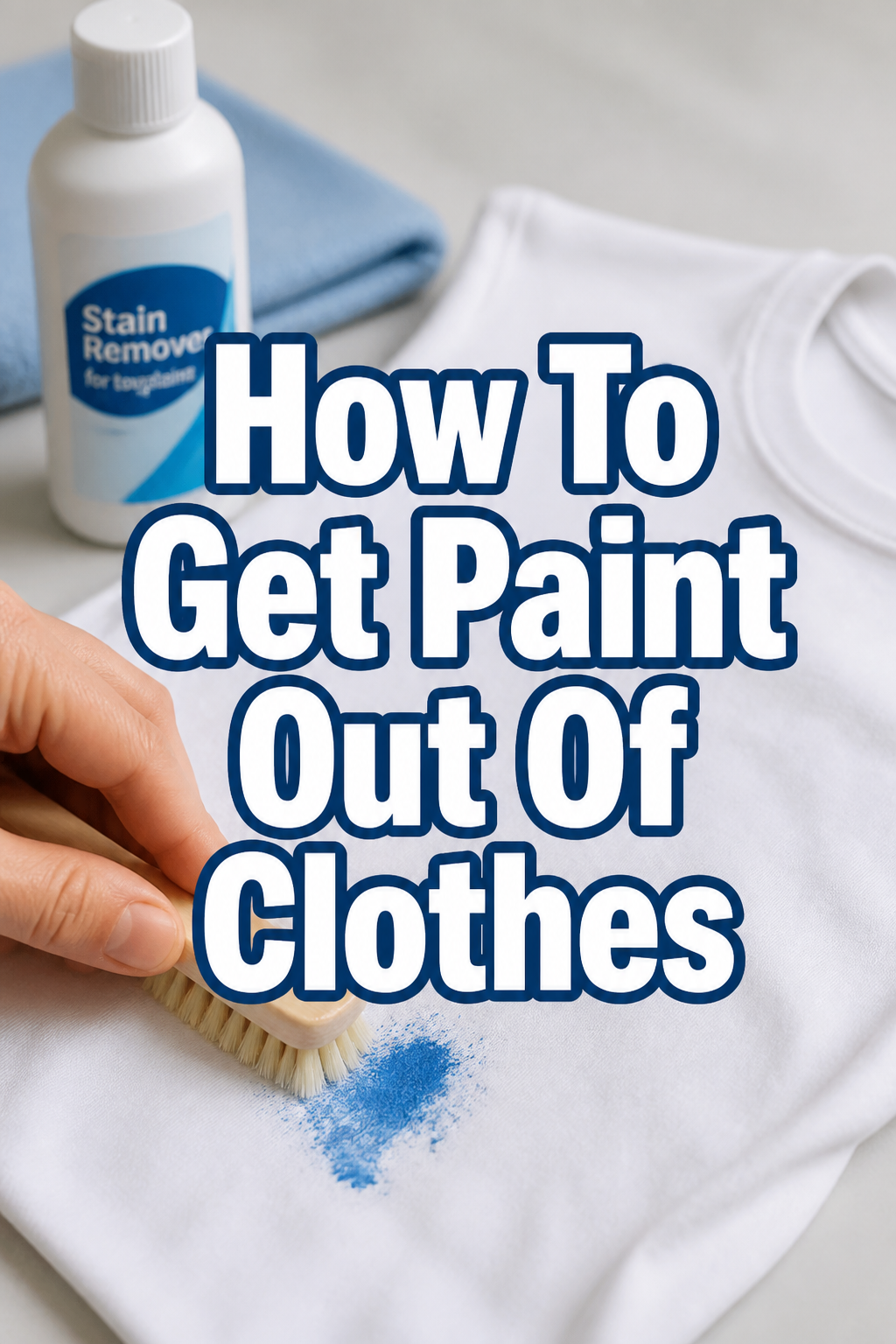
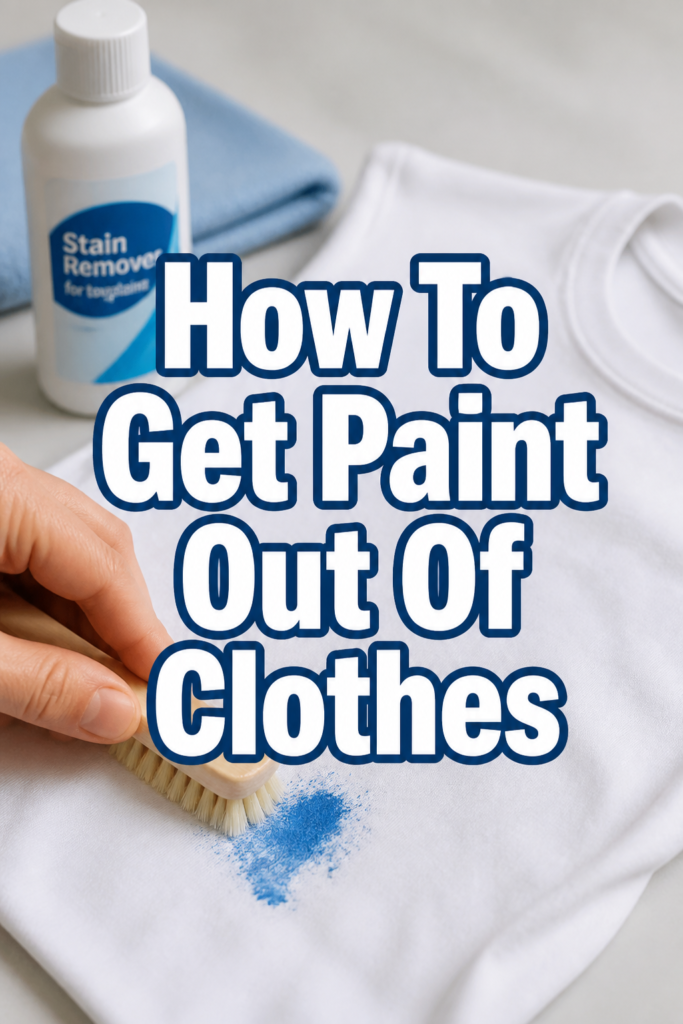
🎨 How To Get Paint Out Of Clothes

Beginner-friendly templates, step-by-step guides,
and weekly project ideas in your inbox.
We’ve all been there. One moment you’re confidently tackling a DIY project or unleashing your inner artist, the next, a rogue splatter lands squarely on your favorite shirt.
It feels like a disaster, a permanent blemish on your beloved fabric. But don’t despair – paint stains are often reversible with the right approach.
Having rescued countless garments from the brink of the discard pile myself, I’ve gathered the most effective strategies. This guide distills years of hands-on experience and expert advice into clear, actionable steps, ensuring you can tackle almost any paint mishap with confidence.
Quick Overview
Getting paint out of clothes requires patience and the correct technique, but it’s entirely achievable. You’ll learn how to identify paint types and apply targeted removal methods.
- Time needed: 30 minutes to 2 hours (depending on paint type, dryness, and fabric)
- Difficulty: Intermediate
- What you’ll need: Dull scraping tool, paper towels, clean cloths, various solvents (dish soap, rubbing alcohol, mineral spirits), old toothbrush, laundry detergent.
Step-by-Step Instructions
Step 1: Act Quickly & Identify the Paint Type
Time is your biggest ally when dealing with paint stains. The fresher the stain, the easier it will be to remove. Do not let the paint dry if you can help it.
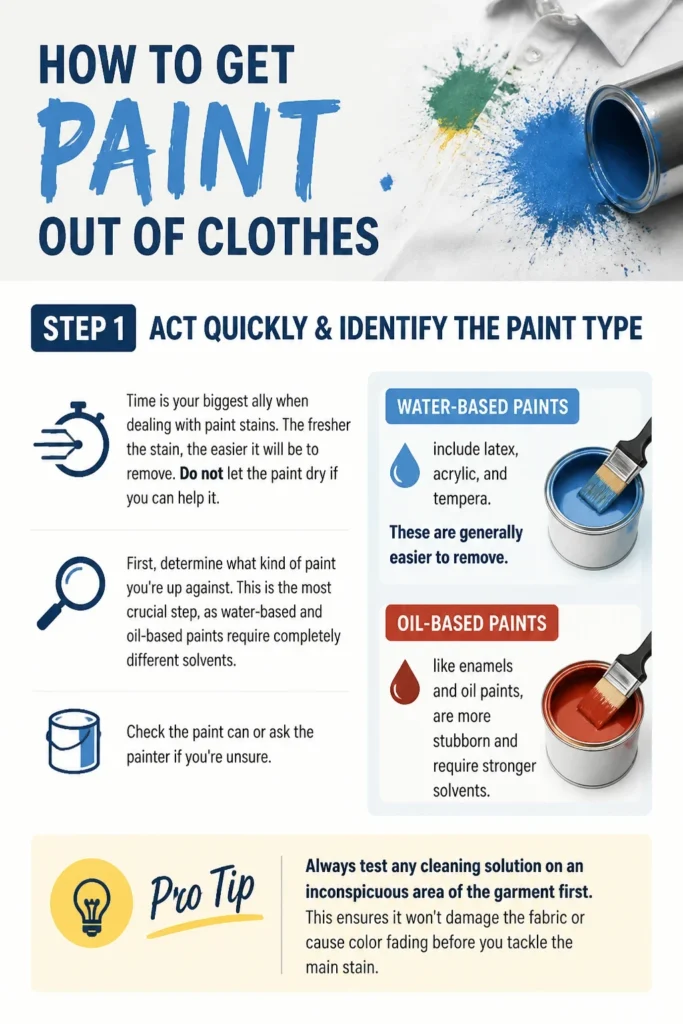
First, determine what kind of paint you’re up against. This is the most crucial step, as water-based and oil-based paints require completely different solvents. Check the paint can or ask the painter if you’re unsure.
Water-based paints include latex, acrylic, and tempera. These are generally easier to remove. Oil-based paints, like enamels and oil paints, are more stubborn and require stronger solvents.
Pro Tip: Always test any cleaning solution on an inconspicuous area of the garment first. This ensures it won’t damage the fabric or cause color fading before you tackle the main stain.
Step 2: Scrape Off Excess Paint
Before applying any liquids, remove as much wet or semi-dry paint as possible. Use a dull knife, the edge of a spoon, an old credit card, or even your fingernail.
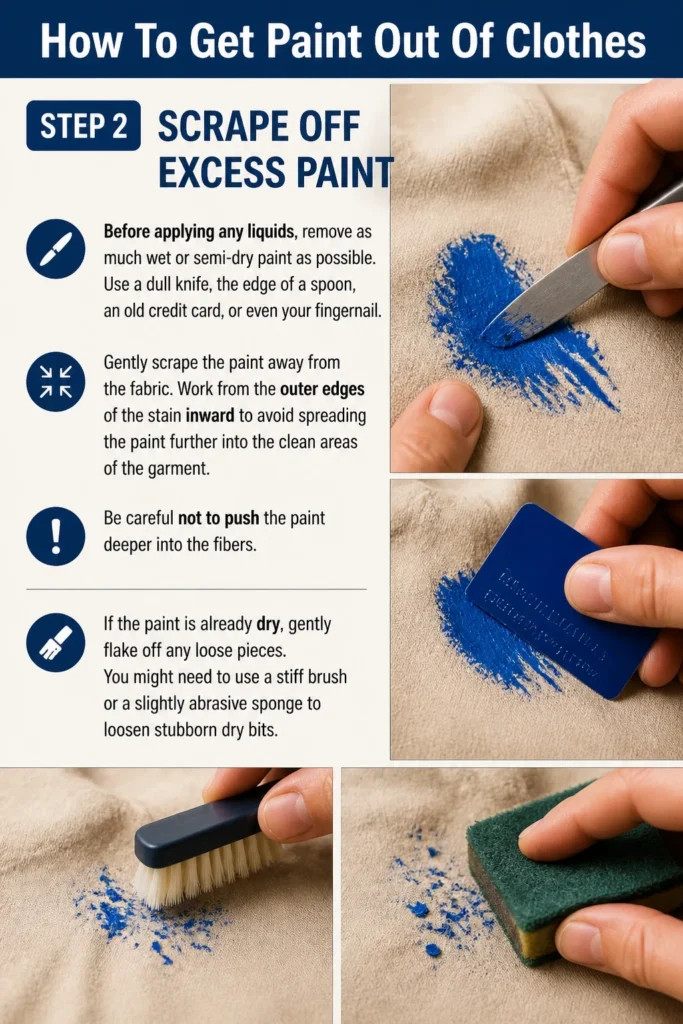
Gently scrape the paint away from the fabric. Work from the outer edges of the stain inward to avoid spreading the paint further into the clean areas of the garment. Be careful not to push the paint deeper into the fibers.
If the paint is already dry, gently flake off any loose pieces. You might need to use a stiff brush or a slightly abrasive sponge to loosen stubborn dry bits.
Step 3: Choose the Right Solvent (Water-Based Paints)
For water-based paints (latex, acrylic), start with gentler solutions. Begin by blotting the stain with warm water and a small amount of liquid dish soap. Work the solution into the stain using a clean cloth or sponge.
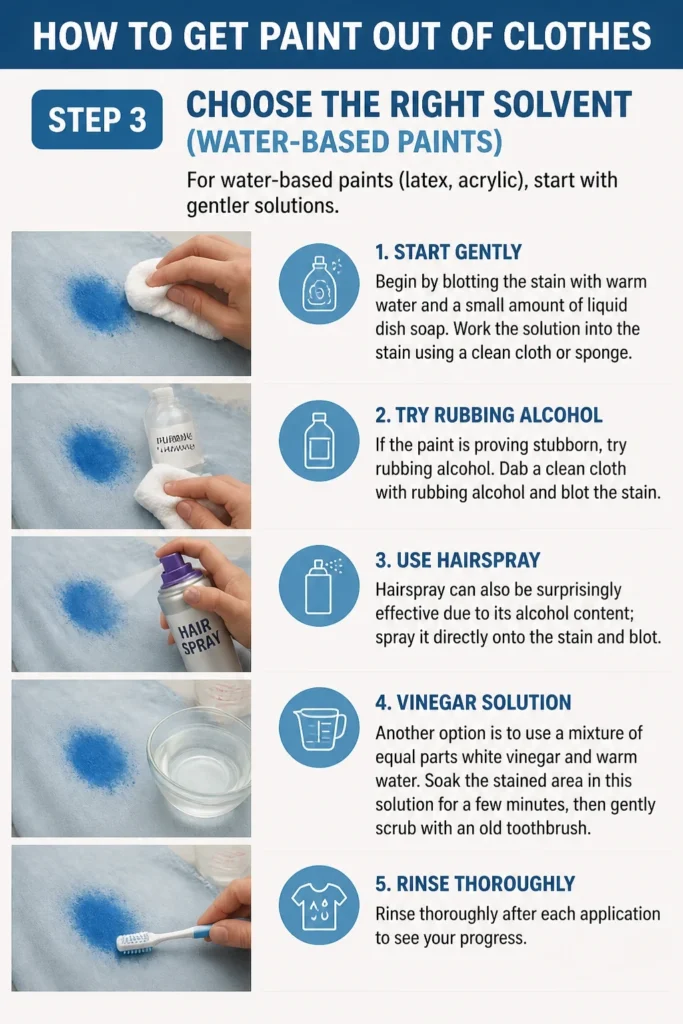
If the paint is proving stubborn, try rubbing alcohol. Dab a clean cloth with rubbing alcohol and blot the stain. Hairspray can also be surprisingly effective due to its alcohol content; spray it directly onto the stain and blot.
Another option is to use a mixture of equal parts white vinegar and warm water. Soak the stained area in this solution for a few minutes, then gently scrub with an old toothbrush. Rinse thoroughly after each application to see your progress.
Step 4: Choose the Right Solvent (Oil-Based Paints)
Oil-based paints demand stronger solvents. You’ll typically need mineral spirits, turpentine, or a commercial paint thinner. Ensure you are working in a well-ventilated area, preferably outdoors, and wear gloves and eye protection.
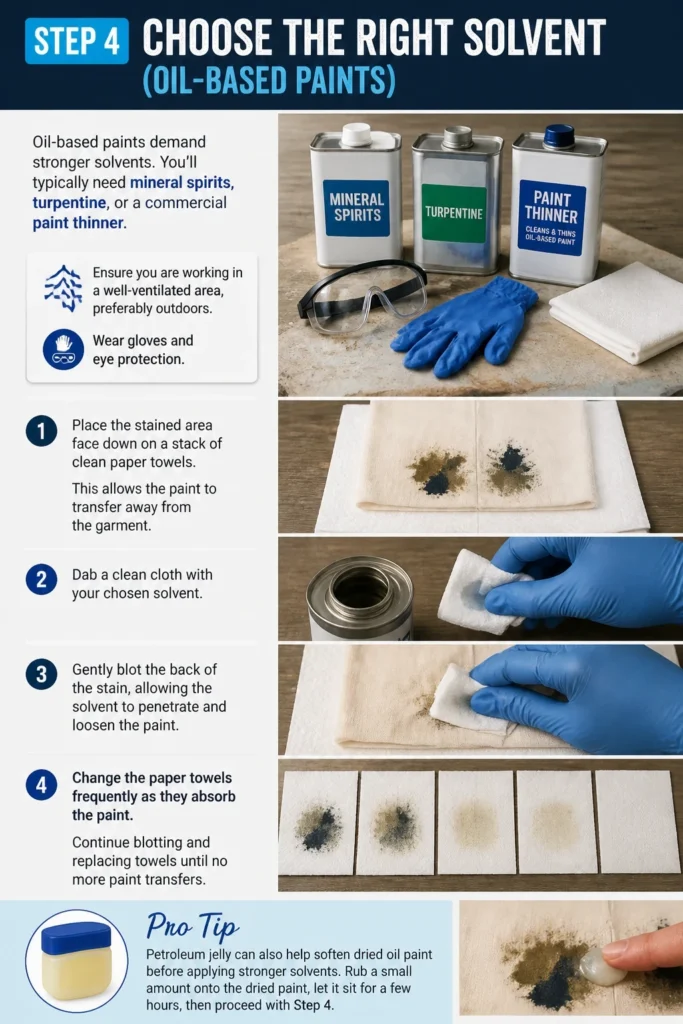
Place the stained area face down on a stack of clean paper towels. This allows the paint to transfer away from the garment. Dab a clean cloth with your chosen solvent.
Gently blot the back of the stain, allowing the solvent to penetrate and loosen the paint. Change the paper towels frequently as they absorb the paint. Continue blotting and replacing towels until no more paint transfers.
Pro Tip: Petroleum jelly can also help soften dried oil paint before applying stronger solvents. Rub a small amount onto the dried paint, let it sit for a few hours, then proceed with mineral spirits.
Step 5: Work the Stain Out
Once you’ve chosen and applied your solvent, it’s time to actively work the stain out of the fabric. Position the stained part of the garment face down on a thick layer of clean paper towels or an old rag. This setup encourages the paint to transfer off the fabric, rather than spreading further into it.
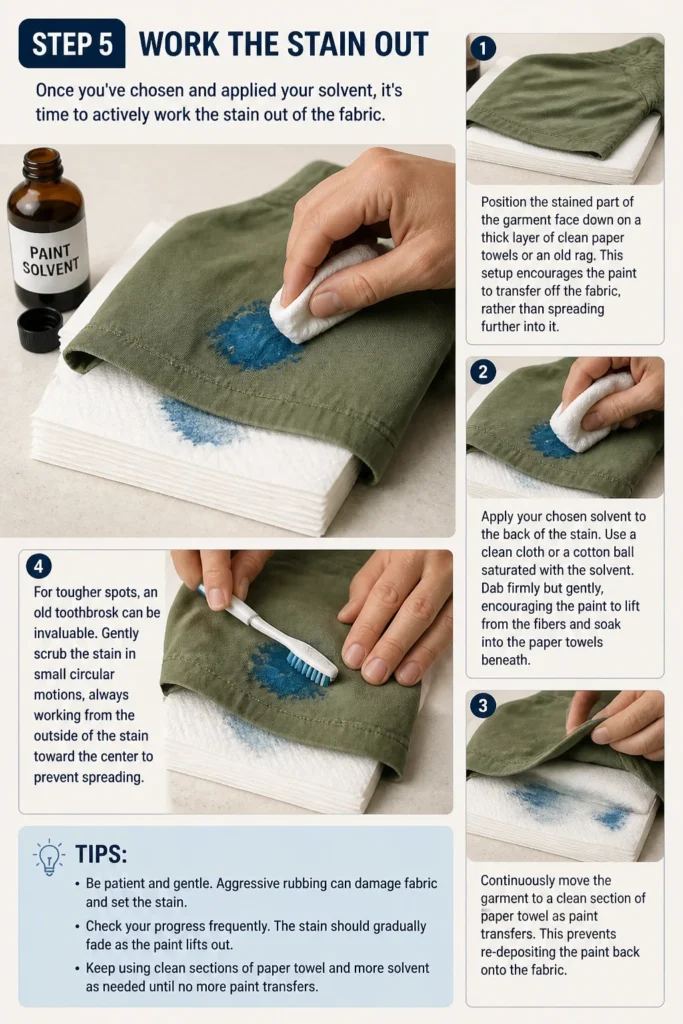
Apply your chosen solvent to the back of the stain. Use a clean cloth or a cotton ball saturated with the solvent. Dab firmly but gently, encouraging the paint to lift from the fibers and soak into the paper towels beneath.
Continuously move the garment to a clean section of paper towel as paint transfers. This prevents re-depositing the paint back onto the fabric. For tougher spots, an old toothbrush can be invaluable. Gently scrub the stain in small circular motions, always working from the outside in.
Step 6: Rinse and Pre-Treat
After you’ve removed as much paint as possible with your solvent, it’s crucial to rinse the garment thoroughly. Hold the stained area under cool running water, allowing the water to flush away any remaining paint particles and solvent residue. Ensure all traces of the solvent are gone before proceeding, especially if you used strong chemicals.
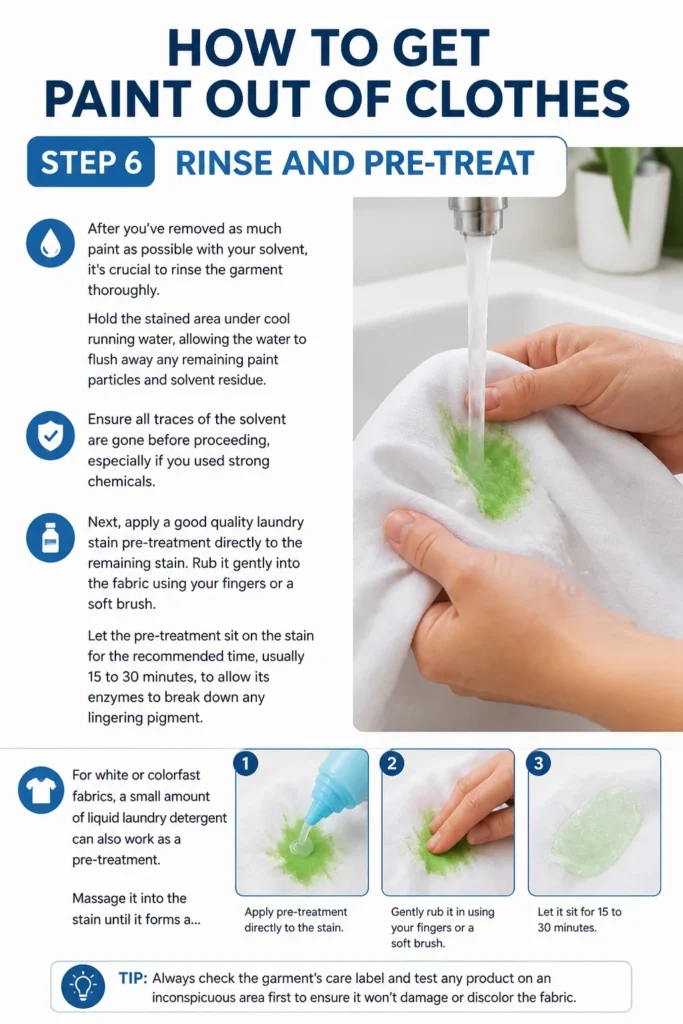
Next, apply a good quality laundry stain pre-treatment directly to the remaining stain. Rub it gently into the fabric using your fingers or a soft brush. Let the pre-treatment sit on the stain for the recommended time, usually 15 to 30 minutes, to allow its enzymes to break down any lingering pigment.
For white or colorfast fabrics, a small amount of liquid laundry detergent can also work as a pre-treatment. Massage it into the stain until it forms a lather. This step helps lift any final traces of paint and prepares the garment for washing.
Step 7: Wash the Garment
Once the pre-treatment has had time to work, it’s time to wash the garment. Place the item in your washing machine, ideally by itself or with similar items to avoid transferring any residue. Use the hottest water temperature that is safe for the fabric type, as heat can help further break down paint particles.
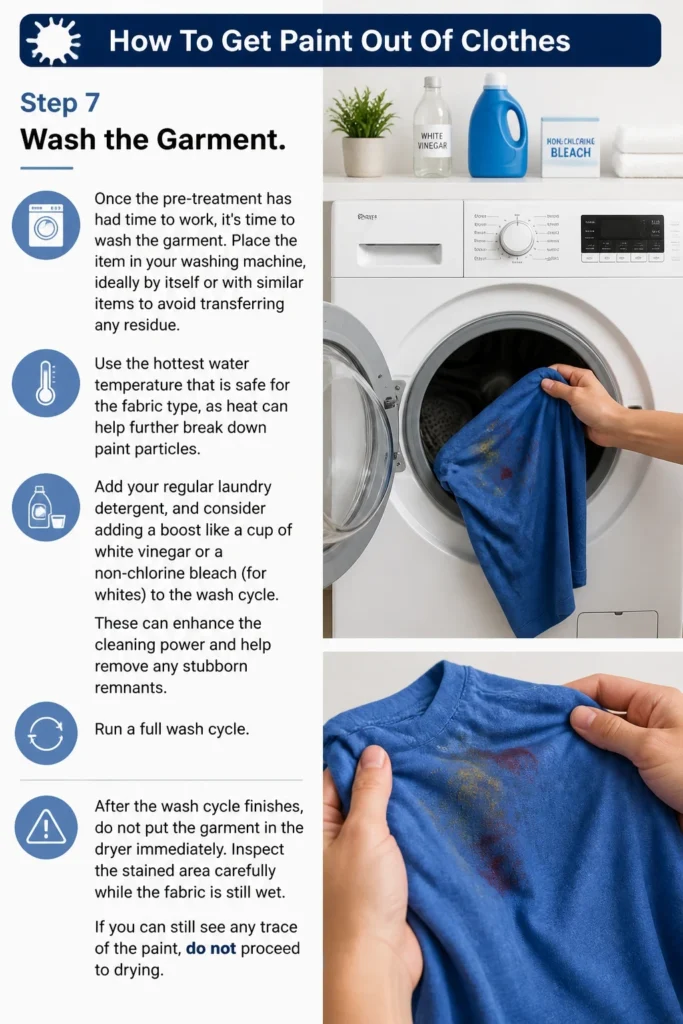
Add your regular laundry detergent, and consider adding a boost like a cup of white vinegar or a non-chlorine bleach (for whites) to the wash cycle. These can enhance the cleaning power and help remove any stubborn remnants. Run a full wash cycle.
After the wash cycle finishes, do not put the garment in the dryer immediately. Inspect the stained area carefully while the fabric is still wet. If you can still see any trace of the paint, do not proceed to drying.
Step 8: Air Dry (Crucial!)
This step is absolutely critical. Never put a garment with a lingering paint stain into a tumble dryer. The heat from the dryer will permanently set any remaining paint, making it virtually impossible to remove later.
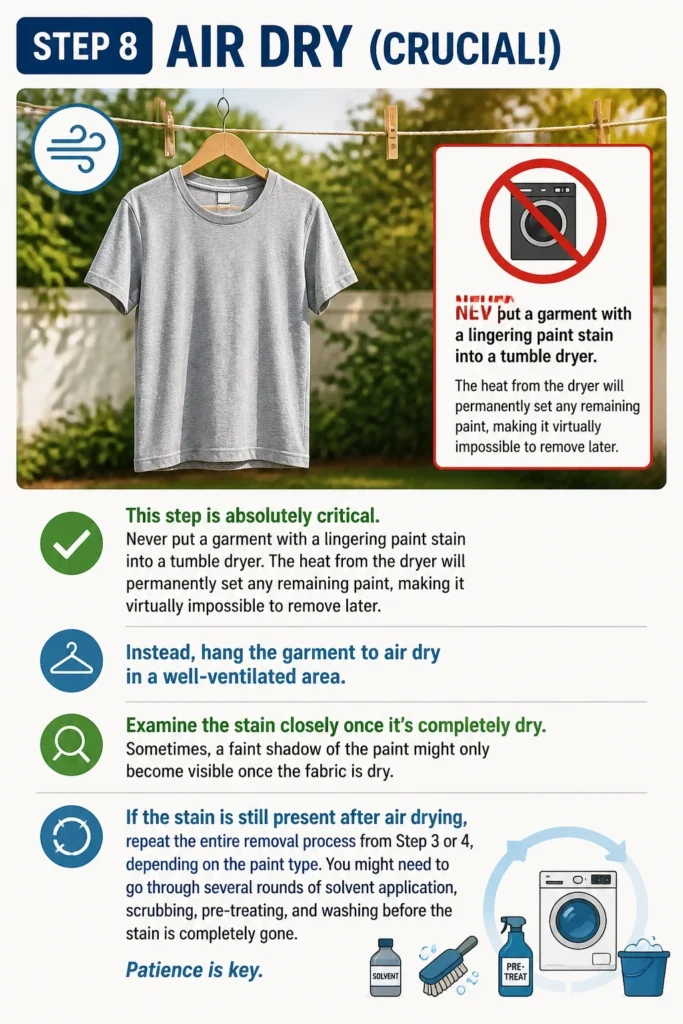
Instead, hang the garment to air dry in a well-ventilated area. Examine the stain closely once it’s completely dry. Sometimes, a faint shadow of the paint might only become visible once the fabric is dry.
If the stain is still present after air drying, repeat the entire removal process from Step 3 or 4, depending on the paint type. You might need to go through several rounds of solvent application, scrubbing, pre-treating, and washing before the stain is completely gone. Patience is key.
Common Mistakes to Avoid
Rubbing Instead of Blotting
When a paint stain first appears, the natural instinct is often to rub at it vigorously. However, rubbing only pushes the paint deeper into the fabric fibers, making it harder to remove. It can also spread the stain to a larger area. Always blot the stain with a clean cloth or paper towel, working from the outside in, to lift the paint away.
Skipping the Pre-Test
Different fabrics react differently to cleaning solvents. Applying a strong chemical directly to a visible stain without testing can lead to discoloration, fading, or even damage to the fabric itself. Always test any solvent or cleaning solution on an inconspicuous spot, like an inside seam, before treating the main stain.
Using the Dryer Too Soon
Heat is the enemy of paint stains. If any paint residue remains on the fabric and you put it in the dryer, the heat will permanently set the stain. This makes subsequent removal attempts far less effective, often impossible. Always air dry the garment and ensure the stain is completely gone before considering machine drying.
Ignoring Paint Type
Treating an oil-based paint stain with water and dish soap, or a water-based stain with harsh mineral spirits, will be ineffective at best and damaging at worst. The chemical composition of the paint dictates the appropriate solvent. Identify the paint type first to save time, effort, and your garment.
Troubleshooting
Old, Dried Paint
Dried paint stains are significantly harder to remove but not impossible. For water-based paints, try soaking the stained area in warm water with a generous amount of liquid dish soap for several hours, or even overnight. This can help rehydrate and soften the paint. For oil-based paints, apply a small amount of petroleum jelly or glycerin to the dried paint and let it sit for a few hours to help soften it before proceeding with mineral spirits or paint thinner.
Delicate Fabrics
For items made of silk, wool, rayon, or other delicate materials, strong solvents can cause irreversible damage. Avoid harsh scrubbing or aggressive chemicals. Instead, opt for very gentle blotting with diluted solutions or specialized fabric stain removers designed for delicates. If you’re unsure or the stain is significant, consult a professional dry cleaner. They have expertise and tools for sensitive fabrics.
Faint Remaining Stain
Sometimes, after all your efforts, a faint shadow of the paint stain might remain. For white or light-colored, colorfast fabrics, try applying an oxygen-based bleach solution directly to the area. Allow it to soak for a few hours or overnight, then wash again. Alternatively, for persistent faint stains on white items, try placing the garment in direct sunlight for several hours; the UV rays can sometimes help fade residual discoloration.
Key Takeaways
- Act Fast: The quicker you address a paint stain, the higher your chances of complete removal.
- Identify Paint Type: Knowing if it’s water-based or oil-based dictates the correct solvent.
- Blot, Don’t Rub: Always lift the paint away from the fabric, rather than pushing it deeper.
- Test Solvents: Always perform a patch test on an inconspicuous area first to prevent damage.
- Never Dry Until Clean: Heat from a dryer will permanently set any lingering paint stain.
- Patience is Key: Stubborn stains may require multiple applications and repetitions of the cleaning process.
Frequently Asked Questions
Can I use nail polish remover to get paint out of clothes?
Nail polish remover, which often contains acetone, can be effective on some types of paint, particularly acrylic. However, it’s a very strong solvent and can easily damage or discolor certain fabrics, especially synthetics like acetate, rayon, and modacrylic. Always test it on an inconspicuous area first, and use it sparingly for very small, localized stains.
What if the paint stain is really old and dried?
Old, dried paint stains are much harder to remove, but not impossible. For water-based paints, try soaking the garment in warm water with a strong detergent or a paint-softening solution. For oil-based paints, apply a thick layer of petroleum jelly or even vegetable oil to the stain to help rehydrate and loosen it over several hours before applying mineral spirits. Multiple attempts may be needed.
Does this guide work for all fabric types?
This guide provides general methods for common fabrics. While many techniques are broadly applicable, delicate fabrics like silk, wool, rayon, or blends require extra caution. For these, always err on the side of caution with gentler solutions and minimal scrubbing. If in doubt, seek professional dry cleaning advice to avoid damaging the garment.
Is it safe to mix different paint removal solvents?
Absolutely not. Never mix different cleaning solvents or chemicals. Combining substances like bleach, ammonia, paint thinner, or rubbing alcohol can create dangerous fumes or unpredictable chemical reactions that are harmful to your health and can irreparably damage your clothes. Use one solvent at a time and rinse thoroughly before trying another.
Our Top Recommended Finds
- Microfiber Cleaning Cloths: Excellent for blotting and applying solvents without scratching or spreading.
- Mineral Spirits (or Turpentine): An essential for tackling stubborn oil-based paint stains effectively and safely.
- Heavy-Duty Laundry Pre-Treater: A strong enzyme-based pre-treatment can make a significant difference in lifting residual paint pigments.
Reclaim Your Wardrobe: A Spotless Future Awaits
Don’t let a paint splatter dictate the fate of your favorite garments. With the right knowledge and a bit of patience, you can tackle almost any paint mishap and restore your clothes to their former glory. It’s incredibly satisfying to see a seemingly ruined item come back to life.
Now that you’re equipped with these practical steps, take action the next time paint strikes. Remember, speed and the correct solvent are your most powerful tools. You might even find yourself feeling more confident about those DIY projects, knowing you have a secret weapon against accidental spills. What other cleaning challenges are you ready to conquer?
Beginner-friendly templates, step-by-step guides,
and weekly project ideas in your inbox.