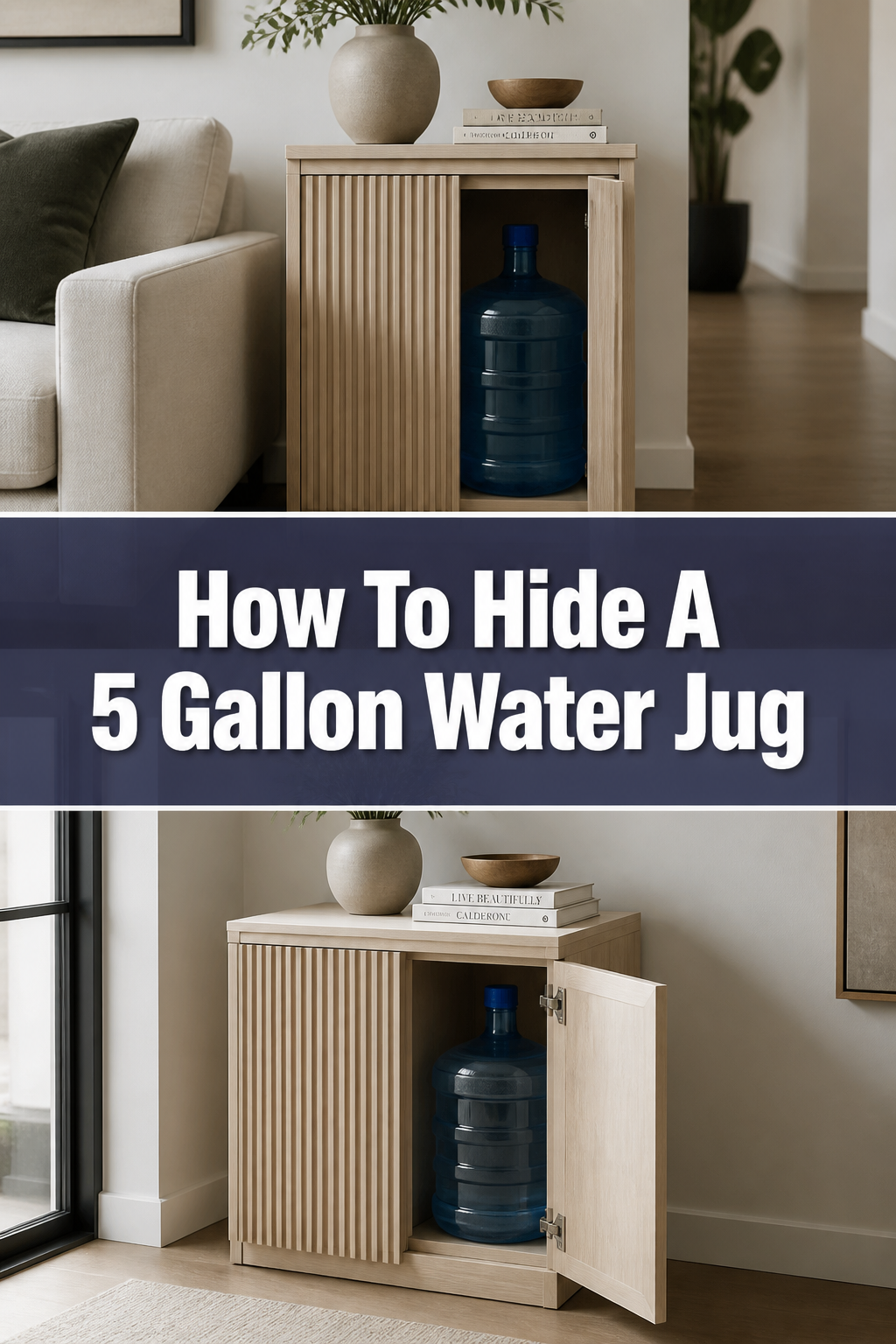
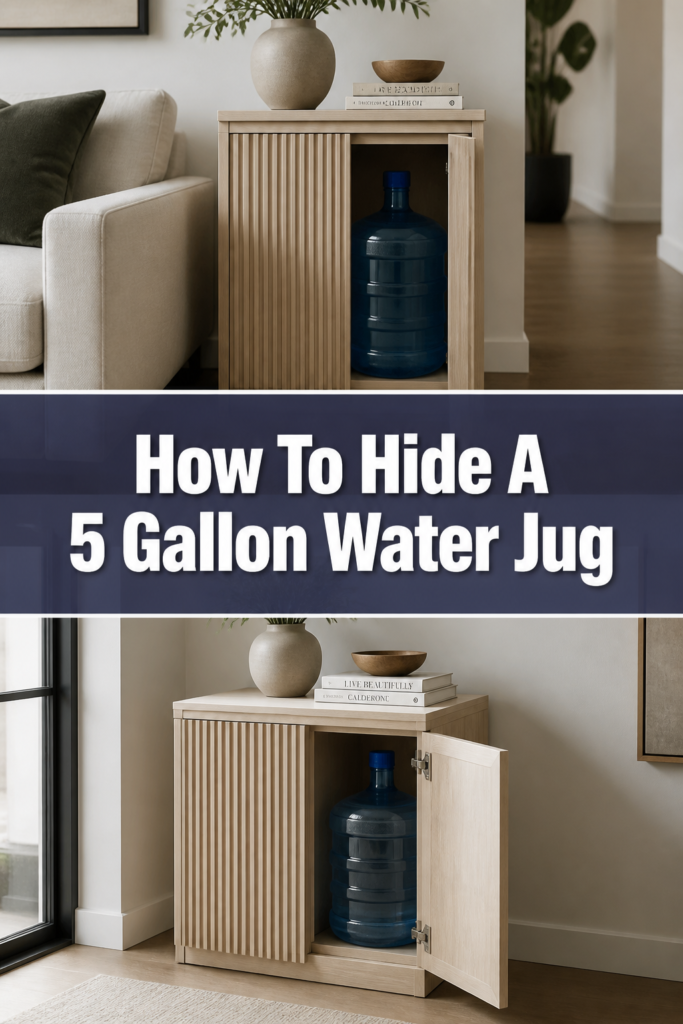
💧 How To Hide A 5 Gallon Water Jug
Beginner-friendly templates, step-by-step guides,
and weekly project ideas in your inbox.
I spent years staring at a clunky, blue plastic eyesore in the corner of my minimalist kitchen before I finally decided to do something about it.
After testing everything from burlap sacks to custom-built cabinetry, I discovered that hiding a water jug is as much about accessibility as it is about aesthetics.
This guide draws on those trial-and-error experiences to help you seamlessly integrate your hydration station into your home decor without sacrificing convenience.
Quick Overview
You are about to transform a bulky utility item into a hidden or decorative element of your living space. This process involves evaluating your room layout, selecting a concealment method that matches your style, and ensuring the jug remains easy to swap out.
- Time needed: 30 minutes to 3 hours (depending on the method chosen)
- Difficulty: Beginner
- What you’ll need: Measuring tape, fabric or a wooden crate, adhesive hooks or a dedicated cabinet, and basic cleaning supplies.
Step-by-Step Instructions
Step 1: Evaluate Your Current Space
Measure the exact dimensions of your 5-gallon jug and the dispenser it sits on. Standard jugs are roughly 11 inches in diameter and 19 inches tall, but dispensers vary wildly in height and width.
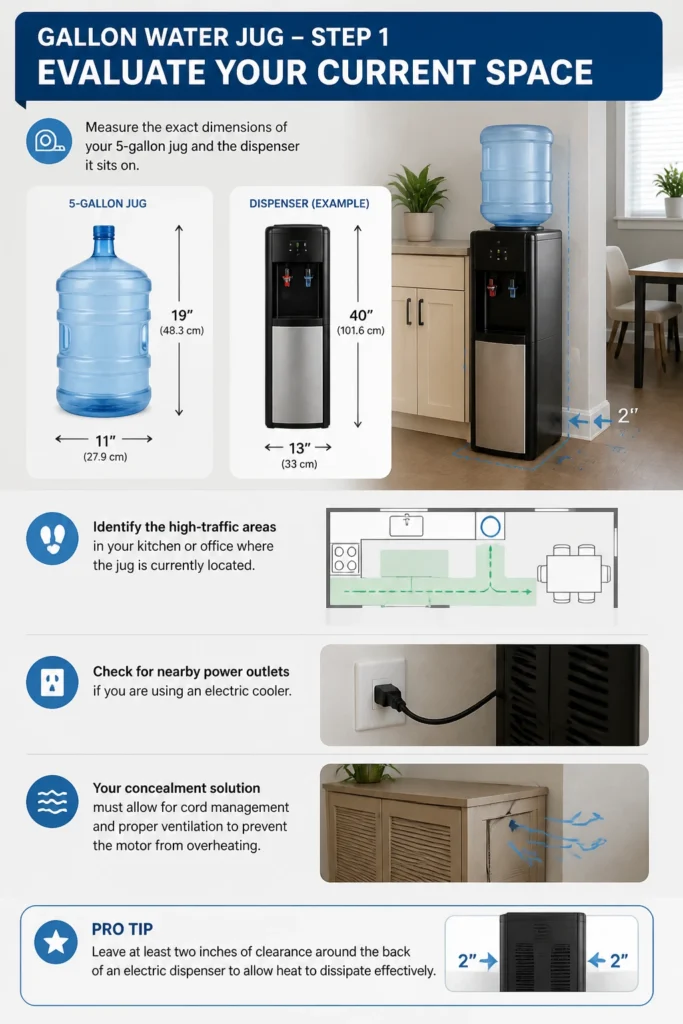
Identify the high-traffic areas in your kitchen or office where the jug is currently located. You need to ensure that whatever hiding method you choose doesn’t create a tripping hazard or block a walkway.
Check for nearby power outlets if you are using an electric cooler. Your concealment solution must allow for cord management and proper ventilation to prevent the motor from overheating.
Pro Tip: Leave at least two inches of clearance around the back of an electric dispenser to allow heat to dissipate effectively.
Step 2: Select Your Concealment Strategy
Decide between a “soft” cover or a “hard” enclosure. Soft covers are best for budget-conscious decorators, while hard enclosures provide a more permanent, high-end furniture look.
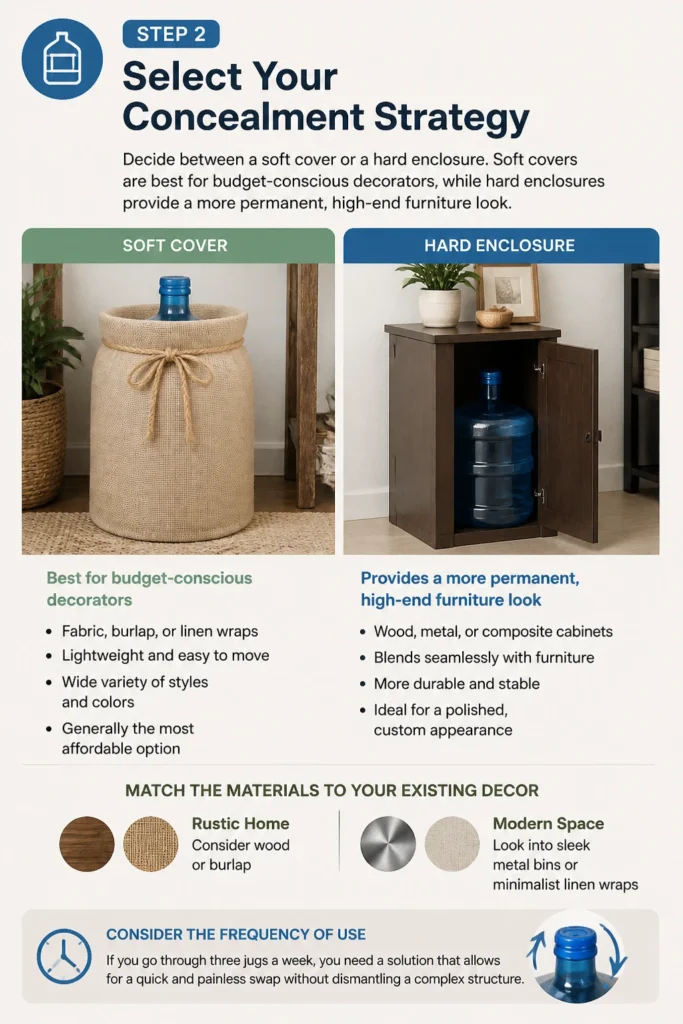
Match the materials to your existing decor. If you have a rustic home, consider wood or burlap; for a modern space, look into sleek metal bins or minimalist linen wraps.
Consider the frequency of use. If you go through three jugs a week, you need a solution that allows for a quick and painless swap without dismantling a complex structure.
Step 3: Implement a Fabric Wrap Solution
Purchase or sew a fabric sleeve specifically designed for 5-gallon bottles. These are often called “water bottle parkas” or “jug cozies” and come in various patterns.
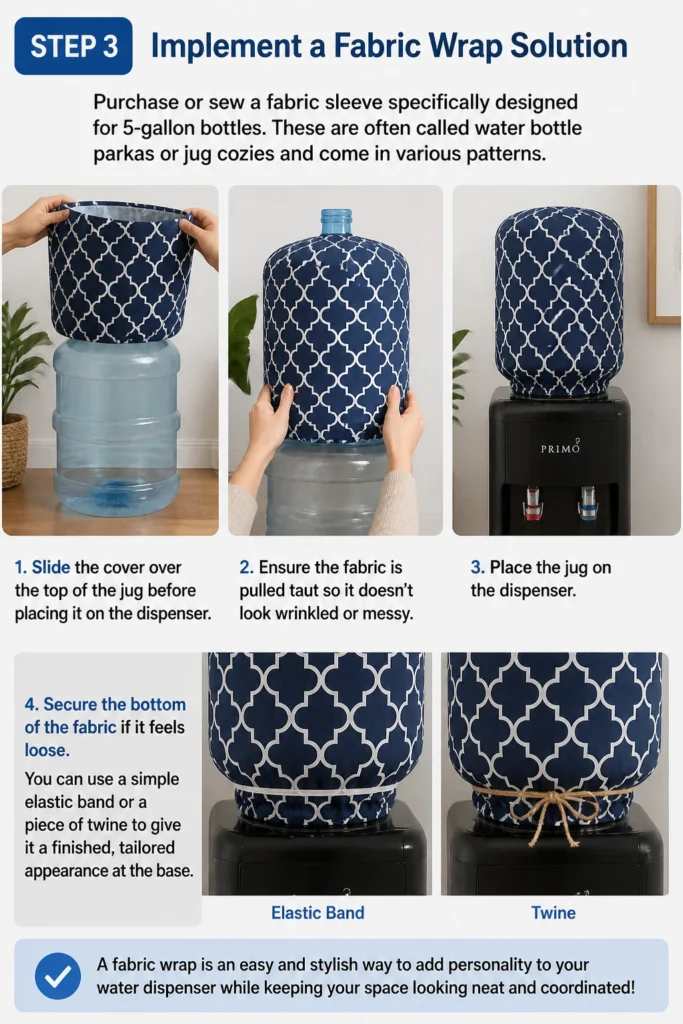
Slide the cover over the top of the jug before placing it on the dispenser. Ensure the fabric is pulled taut so it doesn’t look wrinkled or messy.
Secure the bottom of the fabric if it feels loose. You can use a simple elastic band or a piece of twine to give it a finished, tailored appearance at the base.
Step 4: Use a Decorative Wooden Crate
Find a large wooden crate that is slightly wider than the diameter of your water jug. Many craft stores sell unfinished crates that you can stain or paint to match your cabinetry.
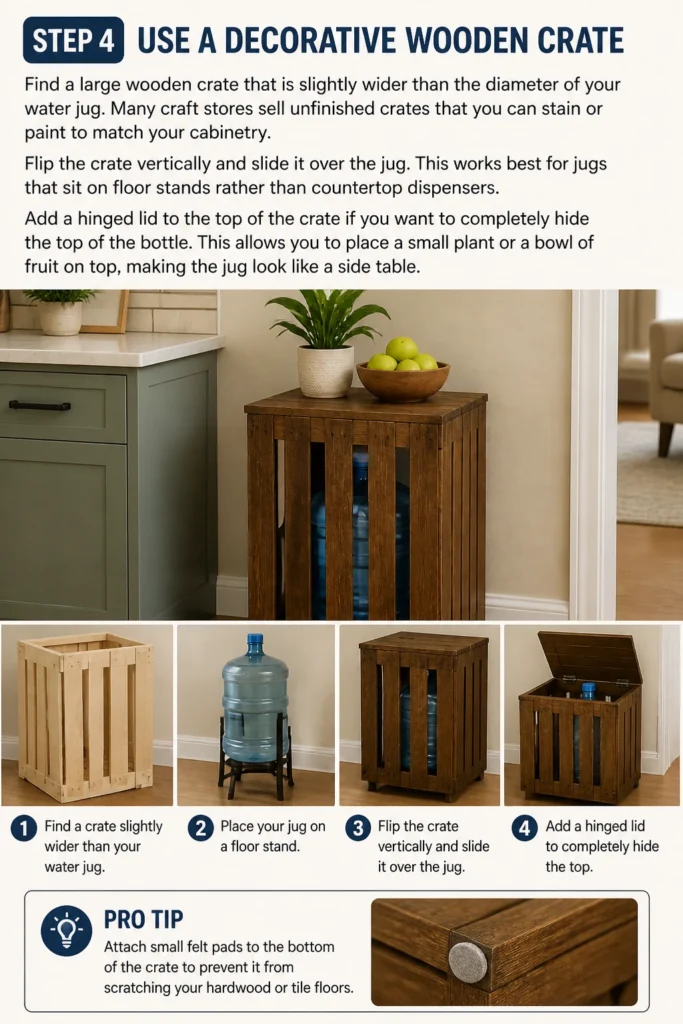
Flip the crate vertically and slide it over the jug. This works best for jugs that sit on floor stands rather than countertop dispensers.
Add a hinged lid to the top of the crate if you want to completely hide the top of the bottle. This allows you to place a small plant or a bowl of fruit on top, making the jug look like a side table.
Pro Tip: Attach small felt pads to the bottom of the crate to prevent it from scratching your hardwood or tile floors.
Step 5: Repurpose a Cabinet or Sideboard
Modify an existing piece of furniture, such as a small kitchen island or a deep sideboard. You may need to remove an interior shelf to accommodate the height of the jug.
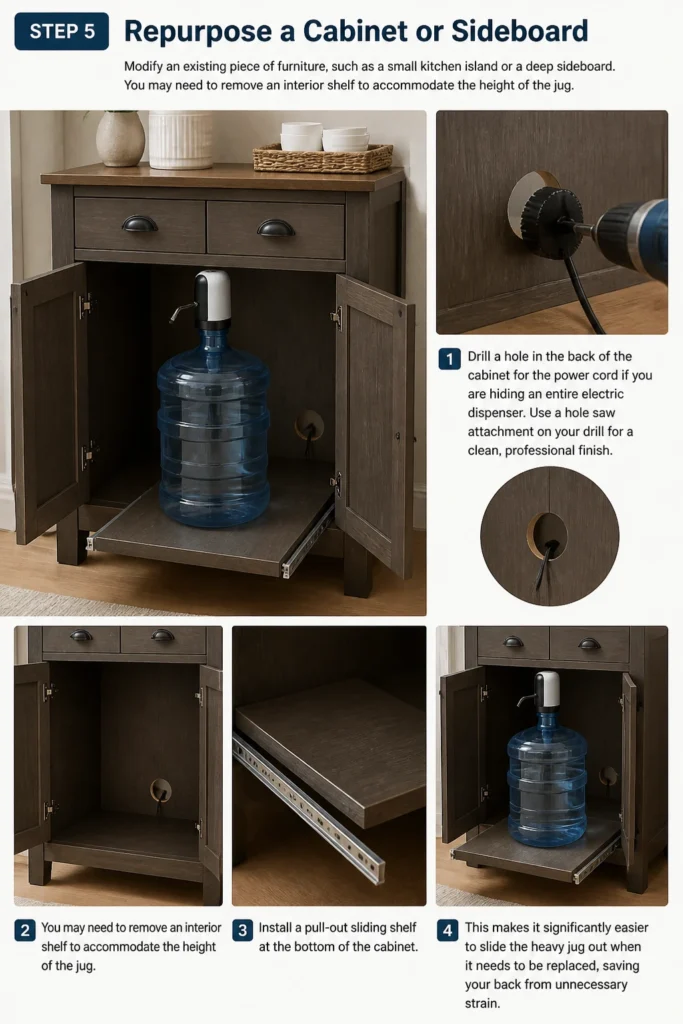
Drill a hole in the back of the cabinet for the power cord if you are hiding an entire electric dispenser. Use a hole saw attachment on your drill for a clean, professional finish.
Install a pull-out sliding shelf at the bottom of the cabinet. This makes it significantly easier to slide the heavy jug out when it needs to be replaced, saving your back from unnecessary strain.
Step 6: Create a Screened Partition
Set up a small folding screen or a room divider in the corner where the water jug sits. This is the fastest way to hide the jug without actually touching the bottle or dispenser.
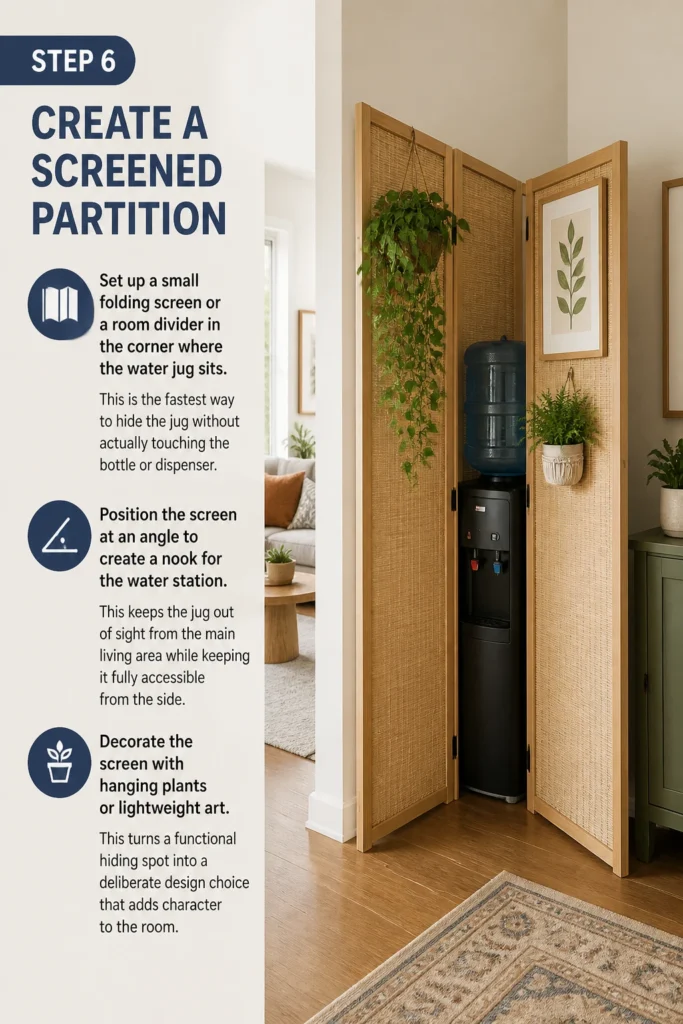
Position the screen at an angle to create a “nook” for the water station. This keeps the jug out of sight from the main living area while keeping it fully accessible from the side.
Decorate the screen with hanging plants or lightweight art. This turns a functional hiding spot into a deliberate design choice that adds character to the room.
Step 7: Transition to a Bottom-Loading Dispenser
Upgrade your hardware if DIY solutions aren’t meeting your aesthetic needs. Bottom-loading dispensers house the jug inside a stainless steel or plastic cabinet at the base.
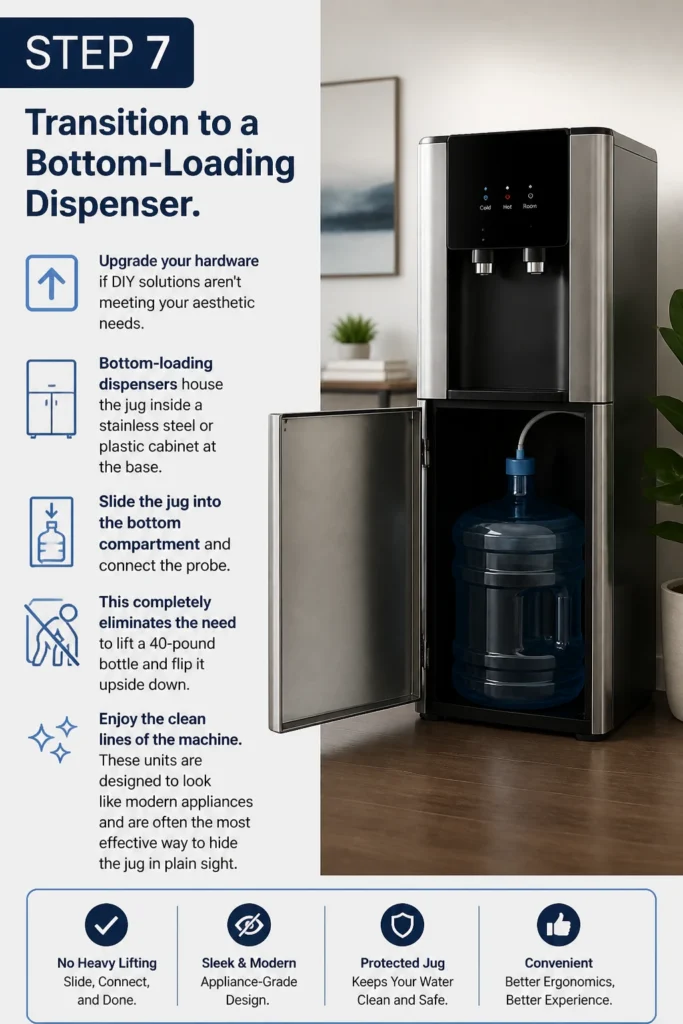
Slide the jug into the bottom compartment and connect the probe. This completely eliminates the need to lift a 40-pound bottle and flip it upside down.
Enjoy the clean lines of the machine. These units are designed to look like modern appliances and are often the most effective way to “hide” the jug in plain sight.
Step 8: Establish a Maintenance Routine
Wipe down the inside of your enclosure or the fabric of your cover once a week. Dust and moisture can accumulate in hidden spaces, leading to musty smells or mold.
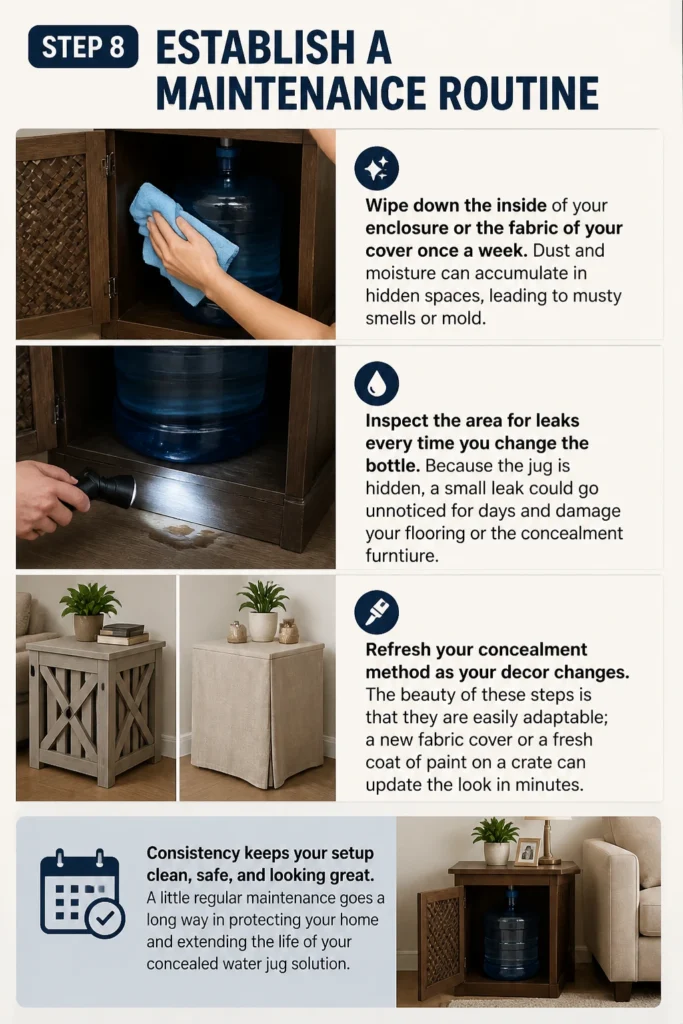
Inspect the area for leaks every time you change the bottle. Because the jug is hidden, a small leak could go unnoticed for days and damage your flooring or the concealment furniture.
Refresh your concealment method as your decor changes. The beauty of these steps is that they are easily adaptable; a new fabric cover or a fresh coat of paint on a crate can update the look in minutes.
Common Mistakes to Avoid
Ignoring Weight Distribution
A full 5-gallon water jug weighs about 42 pounds. If you are placing the jug inside a repurposed cabinet or on a shelf, you must ensure the furniture is rated for that weight. Many cheap particle-board cabinets will bow or collapse over time under the constant pressure of a heavy water bottle.
Restricting Airflow to Coolers
Electric water dispensers generate heat as they chill the water. If you wrap the entire unit in fabric or seal it inside a tight wooden box without vents, the compressor will work overtime and eventually burn out. Always ensure there are several inches of breathing room and air holes in any hard enclosure.
Blocking the Dispenser Spout
It sounds obvious, but many people build covers that look great but make it impossible to fit a tall glass or a sports bottle under the spout. Always test the clearance of the dispensing area before finalizing your design. You don’t want to have to move the entire cover every time you want a drink of water.
Neglecting Moisture Barriers
Condensation can form on the outside of cold water jugs, especially in humid environments. If you use a fabric cover without a moisture-wicking liner or place the jug directly on unfinished wood, you risk rot and mold. Use a plastic tray or a waterproof mat inside your hiding spot to catch stray drops.
Troubleshooting
The Jug is Hard to Replace
If your hiding spot is too cramped, you will dread the weekly task of changing the bottle. The solution is to increase the clearance around the jug or install a heavy-duty drawer slide. A sliding base allows you to pull the entire dispenser forward, swap the bottle in open space, and slide it back into its hidden home.
The Cover Looks Messy or Cheap
Fabric covers often look “homemade” in a way that detracts from a professional kitchen. To fix this, use heavier upholstery-grade fabric rather than thin cotton. You can also use a “structure” inside the fabric, like a plastic cylinder or a wire frame, to keep the shape crisp and uniform.
Strange Odors Near the Jug
If you notice a damp or earthy smell, moisture is likely trapped behind your concealment device. Remove the cover or enclosure immediately and dry the area thoroughly. Moving forward, increase the ventilation by drilling more holes in the back of the cabinet or switching to a more breathable fabric like linen.
Key Takeaways
- Prioritize airflow to prevent your water cooler from overheating and breaking.
- Use a sliding base for heavy jugs to make replacements easier on your back.
- Select moisture-resistant materials or use a drip tray to protect your furniture and floors.
- Match your concealment method to your room’s existing aesthetic for a seamless look.
- Check for leaks regularly since hidden water sources can cause damage before you notice them.
Frequently Asked Questions
Can I paint my 5-gallon water jug?
It is generally not recommended to paint the plastic jug itself. The paint can flake off during handling, and some chemicals in the paint might leach through the plastic or contaminate the spout area. It is much safer and more effective to use a removable cover or an external enclosure.
Is it safe to keep a water jug in a dark cabinet?
Yes, it is actually beneficial. Keeping water out of direct sunlight prevents the growth of algae inside the bottle. Just ensure the cabinet is clean and dry to prevent external mold from forming on the outside of the jug or the dispenser.
How do I hide the extra jugs I have in storage?
The best way to hide spare jugs is to use a vertical stacking rack tucked into a closet or a laundry room. You can also place a decorative “skirt” around the bottom of a console table and slide the spare jugs underneath. This keeps them off the floor and out of your line of sight.
Will a fabric cover make the water get warm?
A fabric cover acts as a mild insulator. If you are using a room-temperature ceramic crock, the cover won’t change the temperature much. If you are using an electric cooler, the cover won’t affect the internal cooling mechanism as long as the back vents are left uncovered.
Our Top Recommended Finds
- Universal Burlap Jug Cover: This provides a neutral, rustic look that fits almost any decor and is naturally breathable.
- Heavy-Duty Appliance Rollers: These allow you to easily move a full dispenser or a heavy wooden enclosure for cleaning or bottle swaps.
- Waterproof Silicone Drip Mat: A must-have for the bottom of any cabinet to prevent water damage from accidental spills or condensation.
Elevate Your Hydration Station Today
Hiding your water jug is one of those small home improvements that provides an immediate sense of calm and order. Once that bulky plastic bottle is out of sight, your kitchen or office will instantly feel more polished and intentional.
Start by choosing one of the methods above that fits your current skill level and budget. You don’t need a full kitchen remodel to make a significant impact on your home’s visual flow.
If you enjoyed this organizational project, consider looking into other ways to hide household utilities, such as disguising your Wi-Fi router or creating a hidden charging station for your electronics. Taking control of these small details is the fastest way to create a space you truly love living in.
Beginner-friendly templates, step-by-step guides,
and weekly project ideas in your inbox.