👚 How To Get Yellow Out Of White Clothes
Beginner-friendly templates, step-by-step guides,
and weekly project ideas in your inbox.
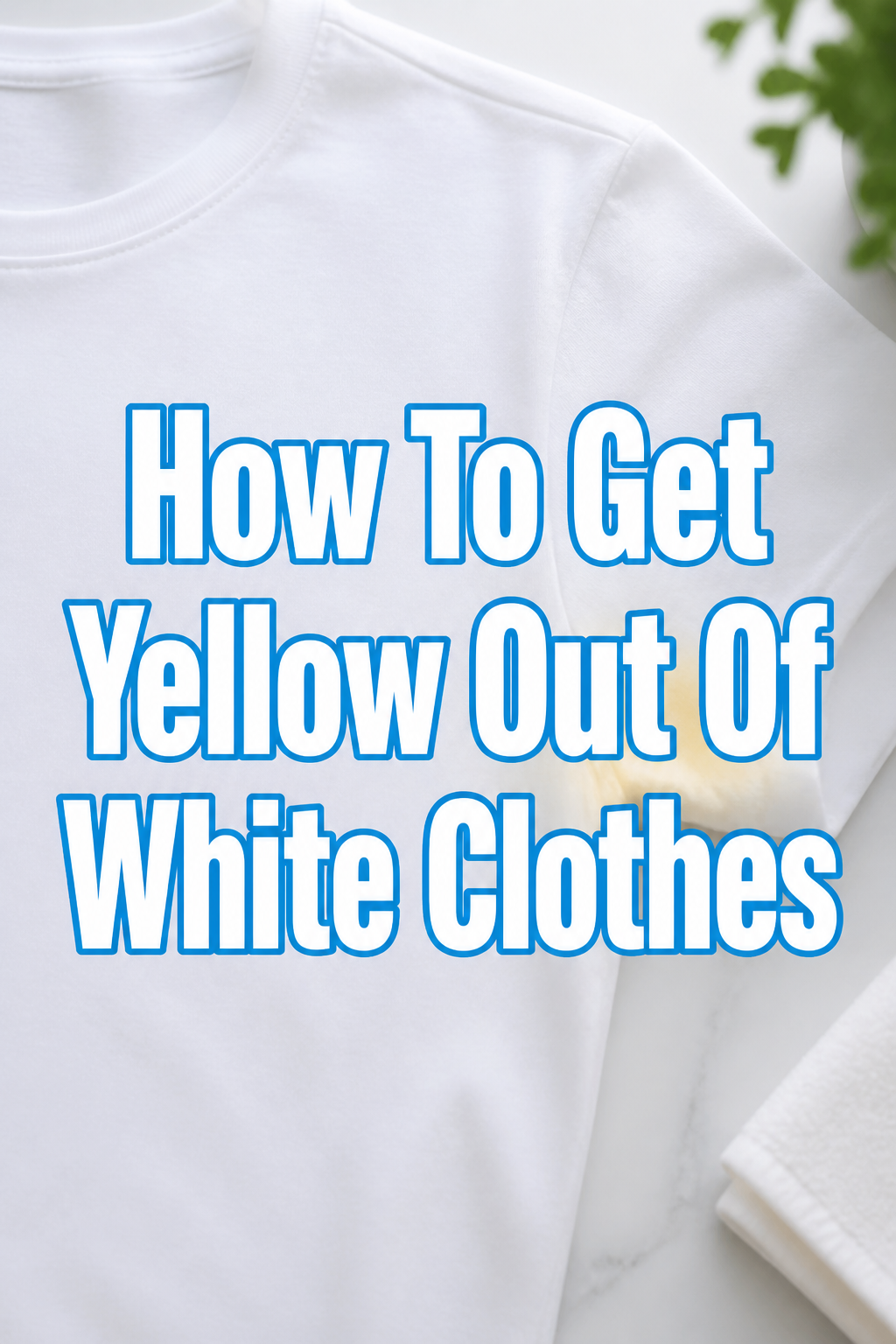
There are few things more frustrating than pulling a favorite white shirt from the laundry, only to find it riddled with stubborn yellow stains. It’s a common problem that can make beloved garments look old and worn.
I’ve been there countless times, wondering if my whites were doomed to a dingy fate. But through trial and error, I’ve discovered reliable methods to restore their pristine brilliance. This guide shares those proven techniques, so you can confidently tackle yellowing and bring your whites back to life.
Quick Overview
This guide will walk you through effective strategies to remove yellow stains from your white clothes, restoring their brightness and extending their life. You’ll learn how to identify the cause, choose the right treatment, and apply it safely.
- Time needed: 30 minutes to a few hours (depending on soaking time and severity)
- Difficulty: Beginner
- What you’ll need: Common household items like baking soda, vinegar, or oxygen bleach, a bucket or basin, and your regular laundry supplies.
Step-by-Step Instructions
Step 1: Identify the Source of the Yellowing
Before you begin, try to understand why your whites have turned yellow. Common culprits include sweat and body oils, deodorant residue, detergent buildup, hard water minerals, or even just age and improper storage. Knowing the cause can help you choose the most effective treatment.
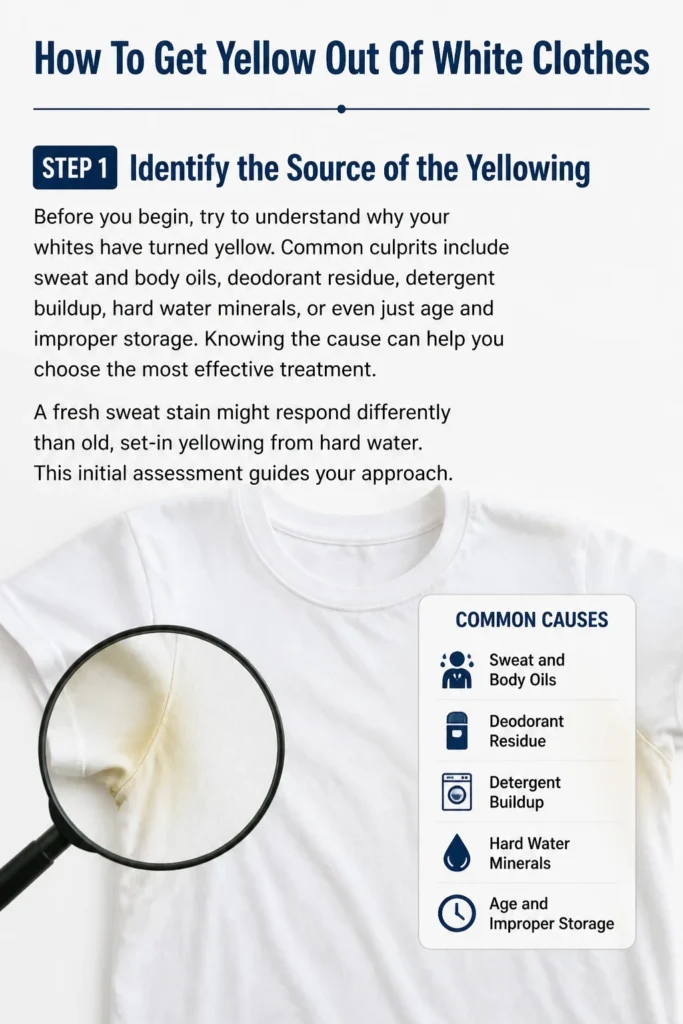
A fresh sweat stain might respond differently than old, set-in yellowing from hard water. This initial assessment guides your approach.
Step 2: Isolate and Prepare the Garment
Always work with the affected white garment separately from other laundry. Ensure it’s clean of any loose dirt or debris before treatment. This prevents transferring other impurities during the stain removal process.
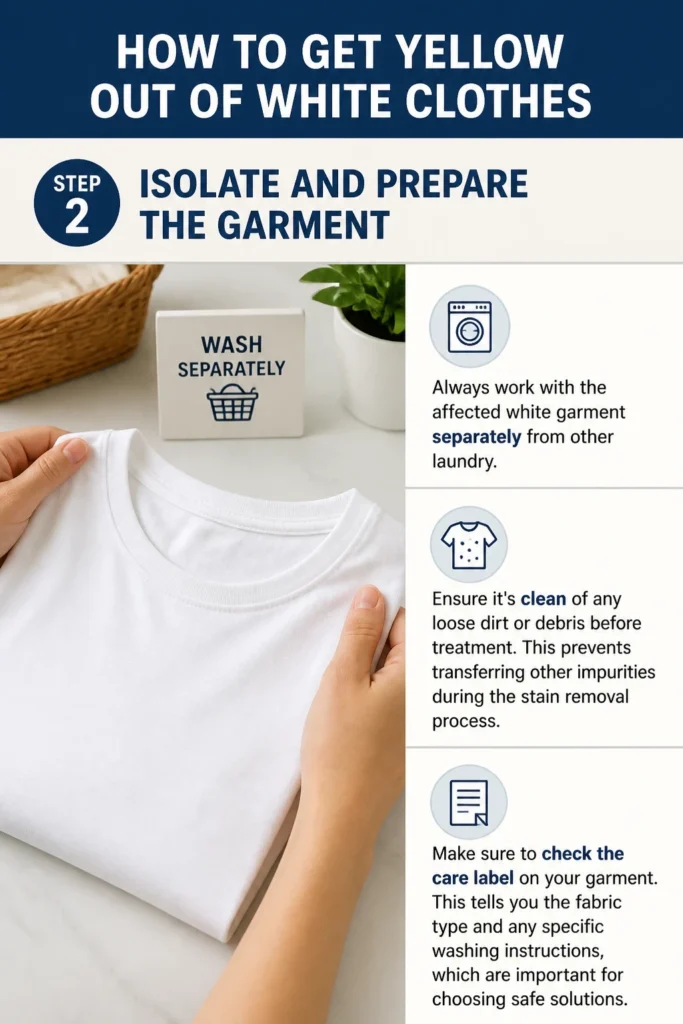
Make sure to check the care label on your garment. This tells you the fabric type and any specific washing instructions, which are important for choosing safe solutions.
Step 3: Pre-Treat Localized Yellow Spots
For smaller, concentrated yellow areas, a targeted pre-treatment is highly effective. Dampen the yellowed area with water.
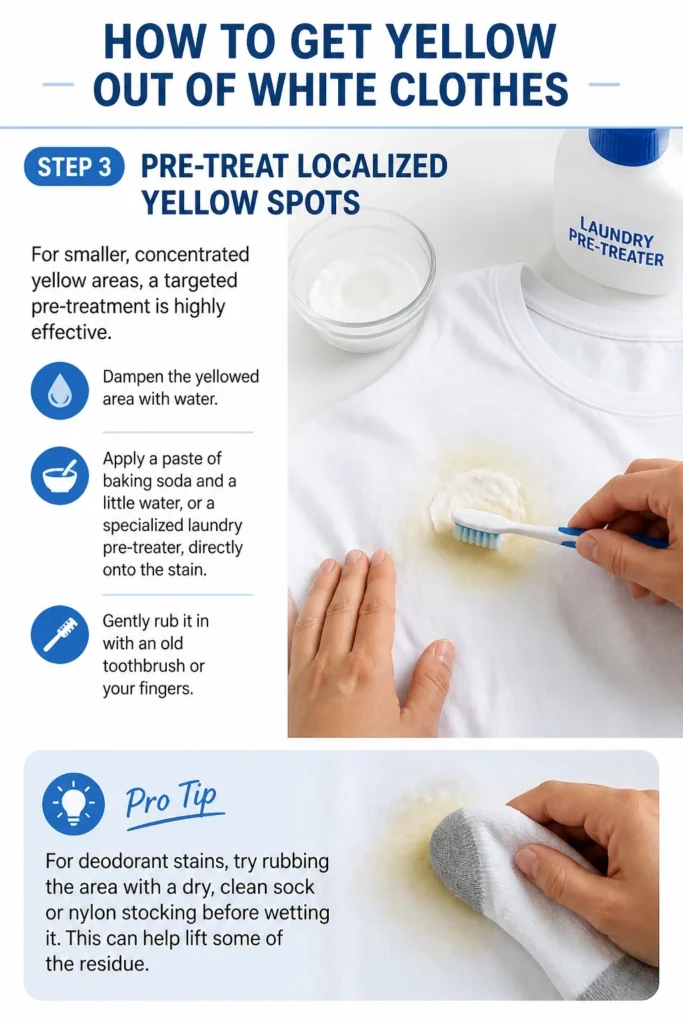
Apply a paste of baking soda and a little water, or a specialized laundry pre-treater, directly onto the stain. Gently rub it in with an old toothbrush or your fingers.
Pro Tip: For deodorant stains, try rubbing the area with a dry, clean sock or nylon stocking before wetting it. This can help lift some of the residue.
Step 4: Choose Your Brightening Solution
There are several powerful, non-chlorine options for brightening yellowed whites. Select the method that best suits the stain and your available supplies.
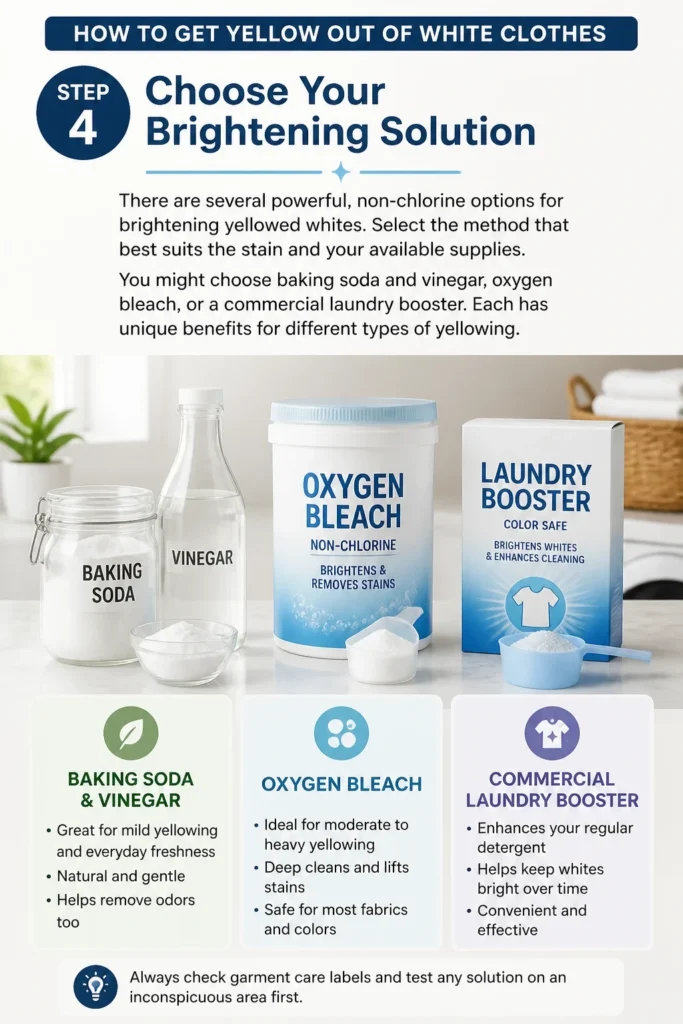
You might choose baking soda and vinegar, oxygen bleach, or a commercial laundry booster. Each has unique benefits for different types of yellowing.
Step 5: Prepare a Soaking Solution
For an all-over yellowing or larger stains, a good soak is crucial. Fill a clean basin or bucket with warm water, following the product’s instructions for temperature.
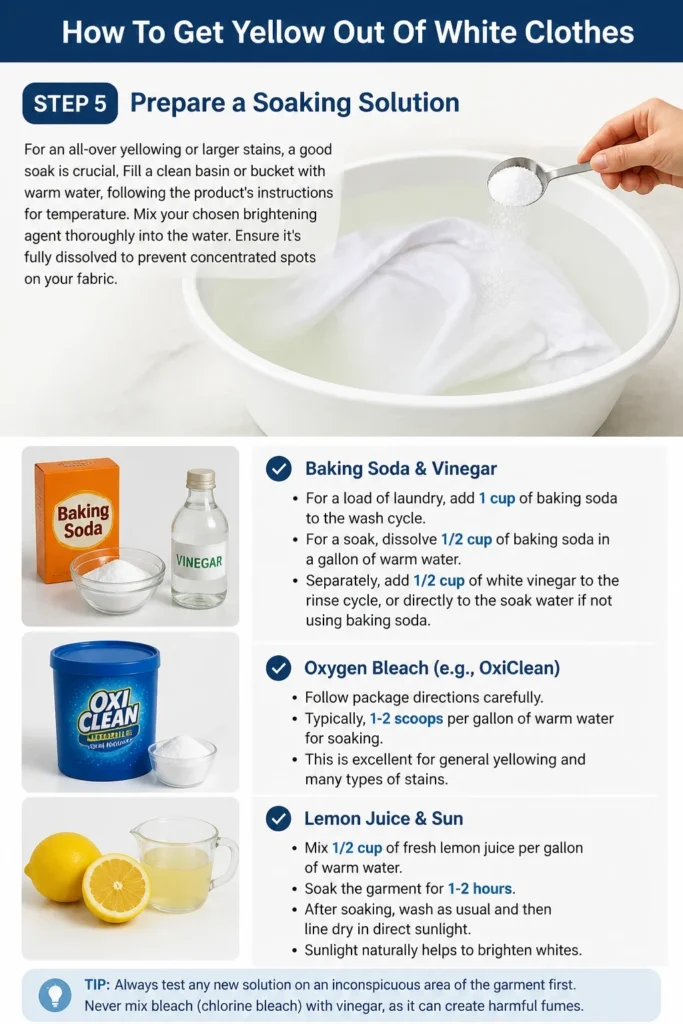
Mix your chosen brightening agent thoroughly into the water. Ensure it’s fully dissolved to prevent concentrated spots on your fabric.
- Baking Soda & Vinegar: For a load of laundry, add 1 cup of baking soda to the wash cycle. For a soak, dissolve 1/2 cup of baking soda in a gallon of warm water. Separately, add 1/2 cup of white vinegar to the rinse cycle, or directly to the soak water if not using baking soda.
- Oxygen Bleach (e.g., OxiClean): Follow package directions carefully. Typically, 1-2 scoops per gallon of warm water for soaking. This is excellent for general yellowing and many types of stains.
- Lemon Juice & Sun: Mix 1/2 cup lemon juice with a gallon of hot water. Submerge the garment, then hang it in direct sunlight to dry. The sun acts as a natural bleach.
Step 6: Submerge and Soak the Garment
Completely submerge your yellowed white garment in the prepared soaking solution. Make sure the fabric is fully saturated and no parts are floating above the water.
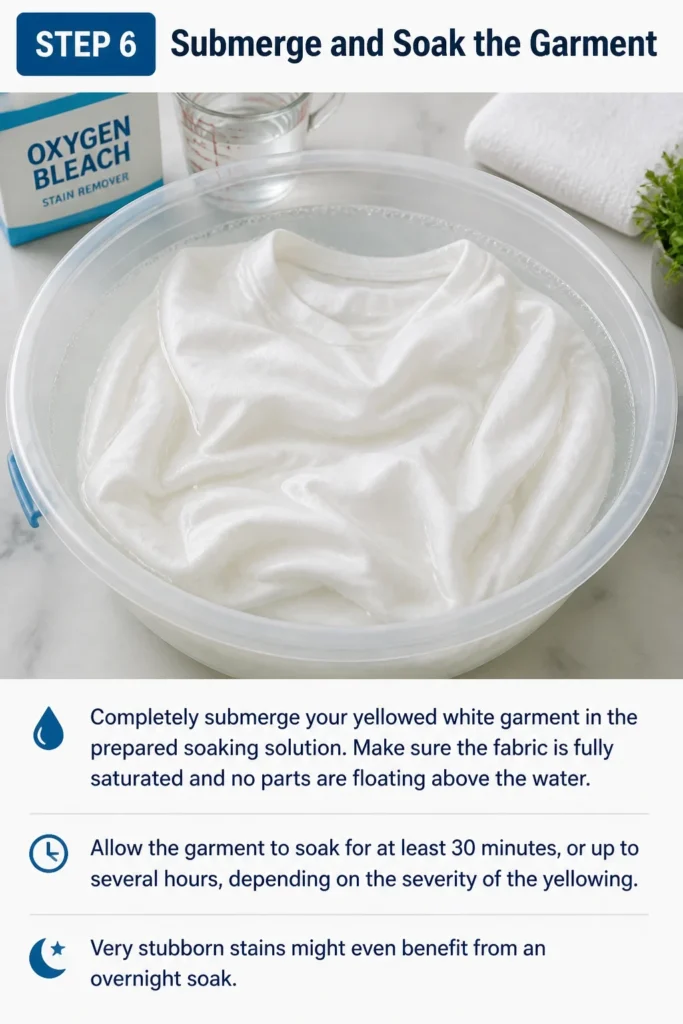
Allow the garment to soak for at least 30 minutes, or up to several hours, depending on the severity of the yellowing. Very stubborn stains might even benefit from an overnight soak.
Step 7: Gently Agitate During the Soak
Every so often, gently agitate the garment in the soaking solution. You can swirl it around or lightly squeeze the fabric.
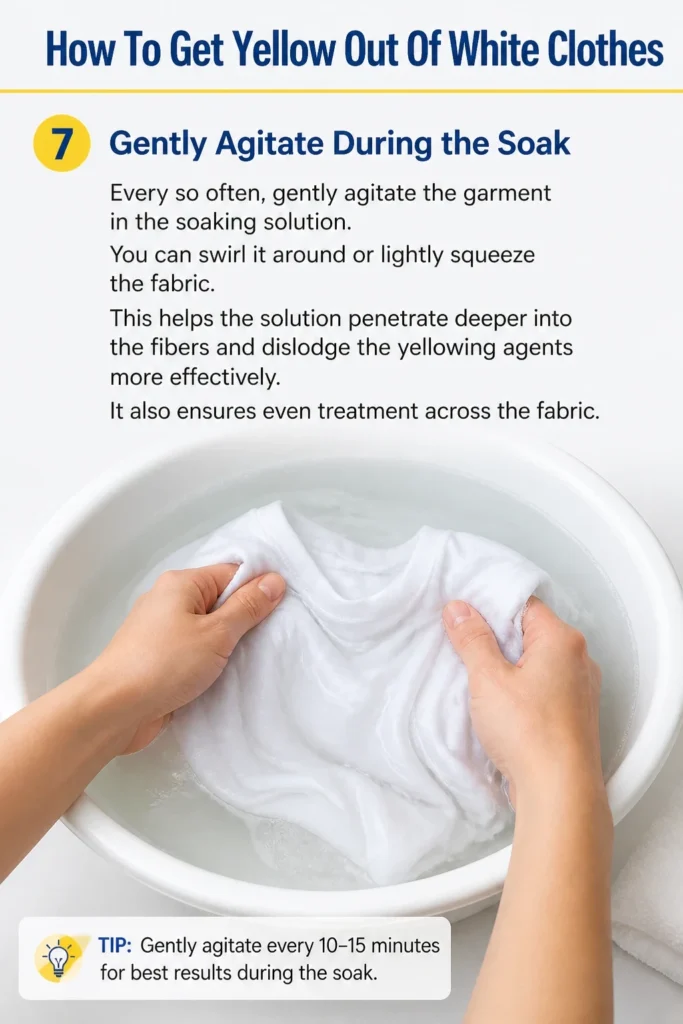
This helps the solution penetrate deeper into the fibers and dislodge the yellowing agents more effectively. It also ensures even treatment across the fabric.
Step 8: Wash as Usual (with an extra boost)
After soaking, remove the garment from the solution and gently squeeze out excess water. Do not rinse it yet.
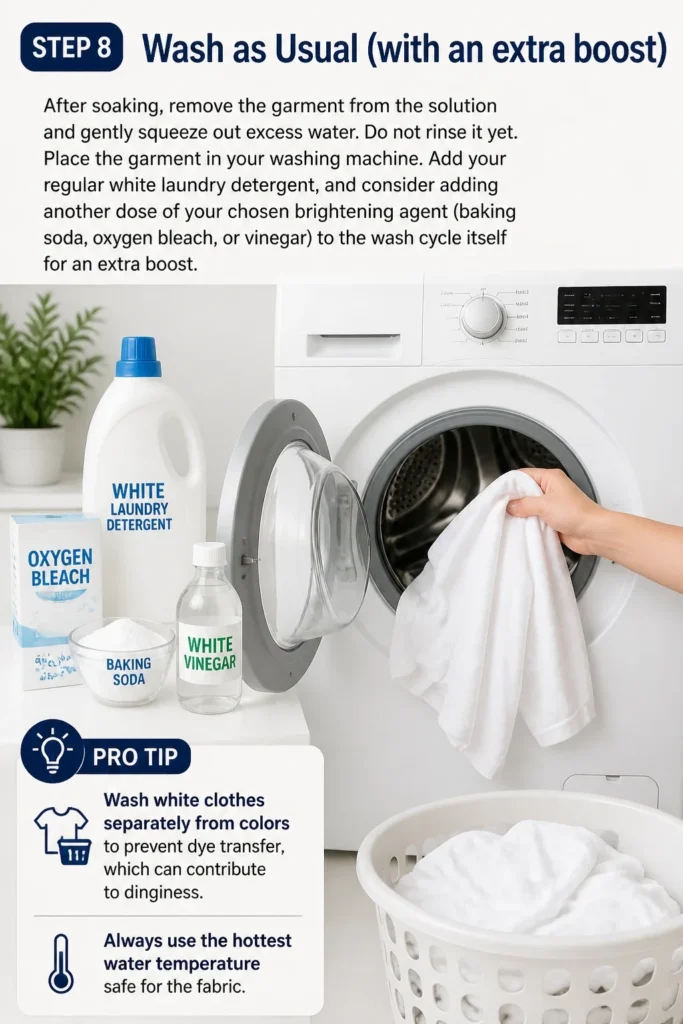
Place the garment in your washing machine. Add your regular white laundry detergent, and consider adding another dose of your chosen brightening agent (baking soda, oxygen bleach, or vinegar) to the wash cycle itself for an extra boost.
Pro Tip: Wash white clothes separately from colors to prevent dye transfer, which can contribute to dinginess. Always use the hottest water temperature safe for the fabric.
Step 9: Inspect Thoroughly Before Drying
This step is absolutely critical. After the wash cycle is complete, carefully inspect the garment for any remaining yellowing.
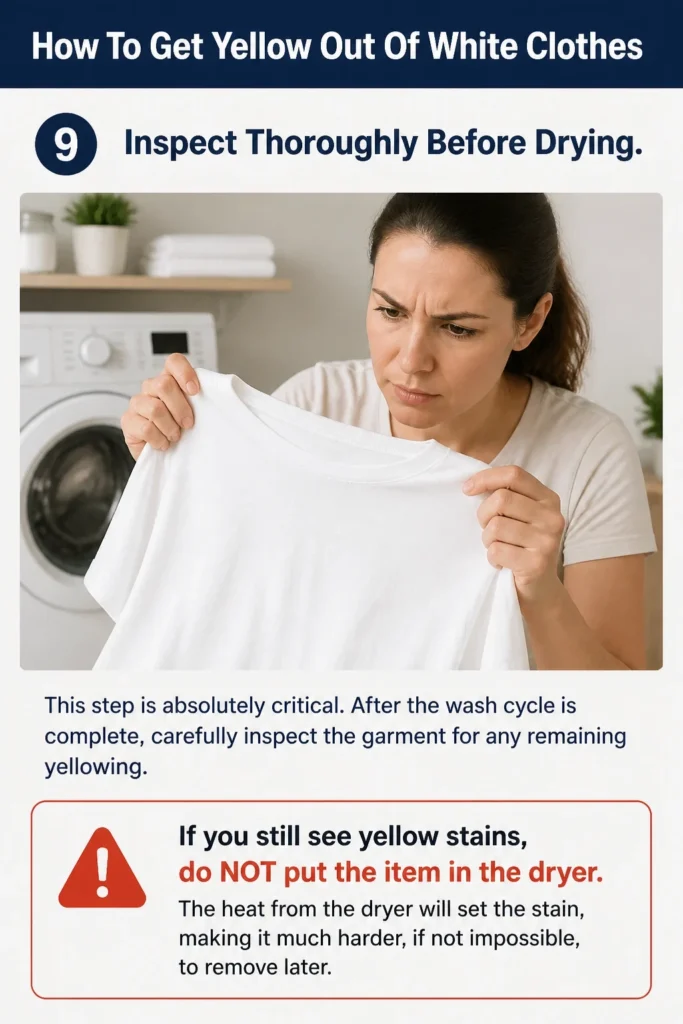
If you still see yellow stains, do NOT put the item in the dryer. The heat from the dryer will set the stain, making it much harder, if not impossible, to remove later.
Step 10: Repeat Treatment or Air Dry
If the yellowing persists, repeat the soaking and washing steps. Sometimes, deeply set stains require multiple treatments. Be patient and persistent.
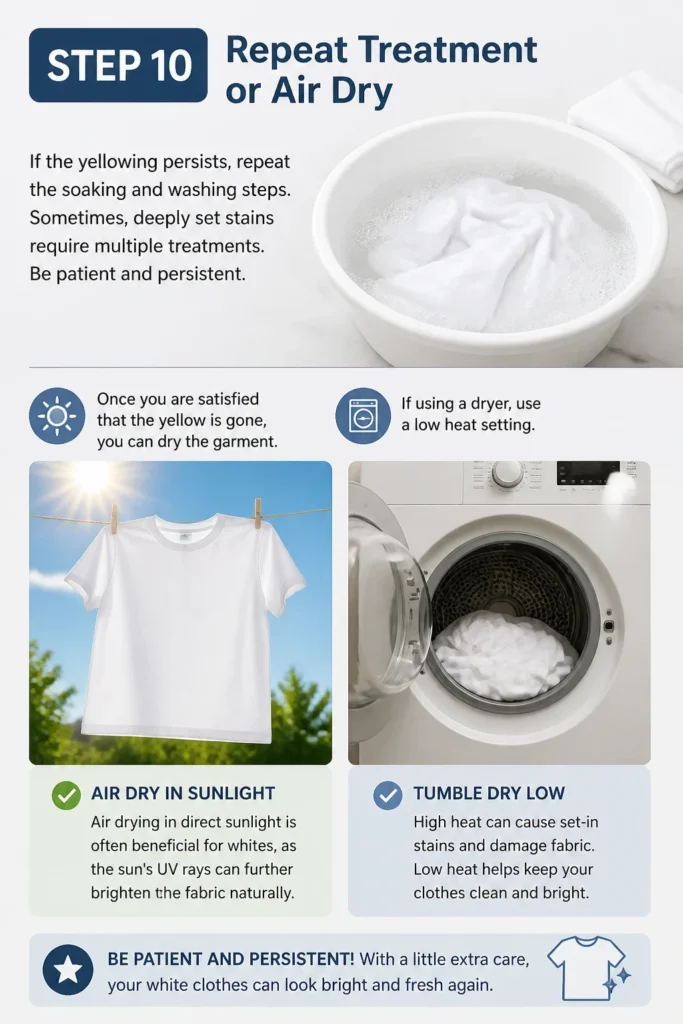
Once you are satisfied that the yellow is gone, you can dry the garment. Air drying in direct sunlight is often beneficial for whites, as the sun’s UV rays can further brighten the fabric naturally. If using a dryer, use a low heat setting.
Common Mistakes to Avoid
Using Chlorine Bleach on All Yellow Stains
Many people instinctively reach for chlorine bleach when their whites yellow. However, this can often make the problem worse, especially on synthetic fibers or when reacting with sweat and body oils. Chlorine bleach can react with proteins in sweat to create a permanent yellow stain, or it can degrade fabric over time, leading to yellowing.
Instead, opt for oxygen bleach, baking soda, or vinegar. These alternatives are safer for a wider range of fabrics and effectively break down many types of yellowing without the risk of further damage or discoloration. Always check the fabric care label before using any bleach.
Drying Garments Before Stains Are Fully Removed
Drying a garment with a yellow stain still present is one of the biggest mistakes you can make. The heat from the dryer will essentially “bake” the stain into the fabric fibers, making it incredibly difficult, if not impossible, to remove later. This is why the inspection step (Step 9) is so vital.
Always air dry or re-treat any garment that still shows signs of yellowing after washing. Patience here saves you a lot of future frustration and potentially saves the garment.
Overloading the Washing Machine
Stuffing too many clothes into your washing machine prevents proper cleaning and rinsing. When there isn’t enough space for water and detergent to circulate freely, dirt, oils, and detergent residue can redeposit onto your clothes, contributing to yellowing and dinginess.
Wash whites in smaller, appropriately sized loads. This ensures that each garment gets thoroughly cleaned and rinsed, removing all the elements that can cause yellowing over time.
Ignoring Water Hardness and Detergent Buildup
Hard water contains minerals like calcium and magnesium, which can react with detergents and leave behind a dingy, yellowish film on your white clothes. Similarly, using too much detergent can lead to residue buildup that attracts dirt and causes yellowing.
If you have hard water, consider adding a water softener to your wash or using detergents formulated for hard water. Always use the recommended amount of detergent, or even slightly less, to prevent residue buildup.
Troubleshooting
Yellow Stain Persists After First Attempt
If the yellowing is still visible after your initial treatment and wash, don’t despair. Some stubborn stains or deep-set yellowing require more intensive effort.
Try repeating the entire process, perhaps extending the soaking time or increasing the concentration of your chosen brightening agent slightly. For very old stains, you might need to try a different method, such as the lemon juice and sun technique, or a commercial stain remover specifically designed for set-in stains.
Fabric Appears Dull or Dingy, Not Just Yellow
Sometimes, white clothes develop a general dinginess rather than specific yellow stains. This can be due to detergent residue, hard water, or simply the natural graying of fabric over time.
Consider using a laundry bluing agent, which uses a tiny amount of blue dye to counteract yellow tones and make whites appear brighter. Alternatively, a good soak in oxygen bleach or a strong baking soda solution can often restore overall brightness. Ensure your washing machine is clean and free of mildew.
Yellowing Returns Quickly After Treatment
If your whites yellow again soon after you’ve brightened them, the problem might be an underlying cause in your laundry routine. This often points to hard water issues, excessive detergent use, or inadequate rinsing.
Evaluate your water quality and adjust detergent amounts. Ensure your washing machine’s rinse cycle is effective. For sweat and deodorant stains, consider switching to an aluminum-free deodorant or using a dedicated anti-perspirant stain remover before each wash.
Key Takeaways
- Act Quickly: Address yellow stains as soon as you notice them for the best chance of complete removal.
- Avoid Chlorine Bleach: For many yellow stains, especially on synthetics or from sweat, oxygen bleach or natural alternatives are safer and more effective.
- Soaking is Key: A good, long soak in a brightening solution is often the most critical step for removing widespread yellowing.
- Inspect Before Drying: Never put a yellowed garment in the dryer, as heat will set the stain permanently.
- Prevent Future Yellowing: Understand the causes of yellowing (sweat, hard water, detergent buildup) and adjust your laundry habits accordingly.
- Test First: Always test any new cleaning solution on an inconspicuous area of the fabric to ensure it doesn’t cause damage or discoloration.
Frequently Asked Questions
Can I use lemon juice to get yellow out of white clothes?
Yes, lemon juice is a fantastic natural brightener. Mix 1/2 cup of lemon juice with a gallon of hot water and soak your yellowed garment. For best results, hang the wet garment in direct sunlight to dry. The combination of lemon’s acidity and the sun’s UV rays provides a powerful bleaching effect without harsh chemicals.
What causes white clothes to turn yellow in the first place?
Several factors contribute to yellowing. Common culprits include sweat and body oils, especially in underarm areas, which can react with deodorant ingredients. Detergent residue, hard water minerals, and even just age can cause fabrics to develop a yellow tint. Storing whites in plastic containers can also trap gases that lead to yellowing.
Is it safe to use these methods on all white fabrics?
Most of these methods (baking soda, vinegar, oxygen bleach) are generally safe for a wide range of white fabrics, including cotton, linen, and many synthetics. However, it’s always crucial to check the garment’s care label first. For delicate fabrics like silk or wool, always opt for gentler, fabric-specific cleaners and test on an inconspicuous area.
How can I prevent my white clothes from turning yellow?
To prevent yellowing, use the recommended amount of detergent (avoiding overuse), and consider adding a laundry booster like oxygen bleach or baking soda to your regular white washes. Wash whites separately from colors. Ensure clothes are thoroughly rinsed. Store clean, dry whites in breathable bags or on shelves, away from direct sunlight and humidity.
Our Top Recommended Finds
- Oxygen Bleach (e.g., OxiClean): An incredibly versatile and effective stain remover and whitener for most fabrics, without the harshness of chlorine bleach.
- Borax Laundry Booster: A natural mineral that softens water, boosts detergent performance, and helps remove stains and odors, excellent for preventing and treating yellowing.
- White Distilled Vinegar: An inexpensive and powerful natural deodorizer, fabric softener, and mild whitener that helps break down residues and brighten fabrics.
Embrace a Brighter Wardrobe
Don’t let yellow stains condemn your favorite white clothes to the back of the closet. With these practical steps and a little patience, you have the power to restore their crisp, clean appearance. You can reclaim your wardrobe and feel confident in your brightest whites once more.
Start tackling those yellow stains today. You might even find yourself enjoying the satisfying process of bringing forgotten garments back to life. For more tips on maintaining your laundry, explore guides on preventing color bleeding or tackling specific stain types.
Beginner-friendly templates, step-by-step guides,
and weekly project ideas in your inbox.