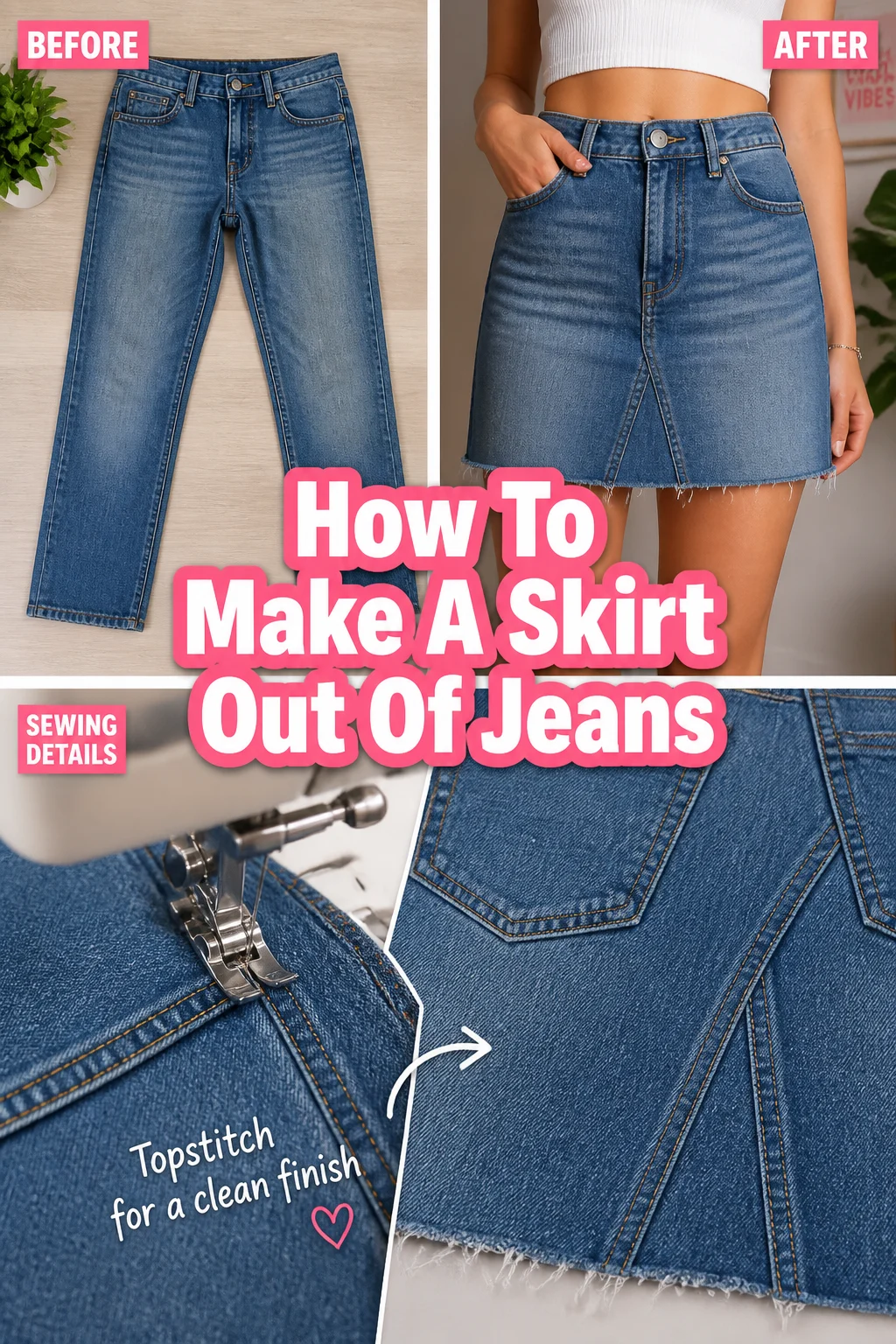
👖 How To Make A Skirt Out Of Jeans
Beginner-friendly templates, step-by-step guides,
and weekly project ideas in your inbox.
Do you have an old pair of jeans gathering dust in your closet? Transforming them into a stylish skirt is a fantastic way to give them new life. I’ve personally made several denim skirts this way, perfecting the process over time. This guide will walk you through each stitch, ensuring your upcycled creation looks professionally made.

Quick Overview
This project lets you custom-create a unique denim skirt from your favorite old jeans. It’s a rewarding craft that combines sustainability with personal style. You’ll end up with a versatile piece perfect for any casual wardrobe.
- Time needed: 2-4 hours (depending on detail and experience)
- Difficulty: Beginner to Intermediate
- What you’ll need: Old jeans, scissors, sewing machine, thread, seam ripper, pins, fabric markers/chalk, ruler.
Step-by-Step Instructions
Step 1: Gather Your Materials
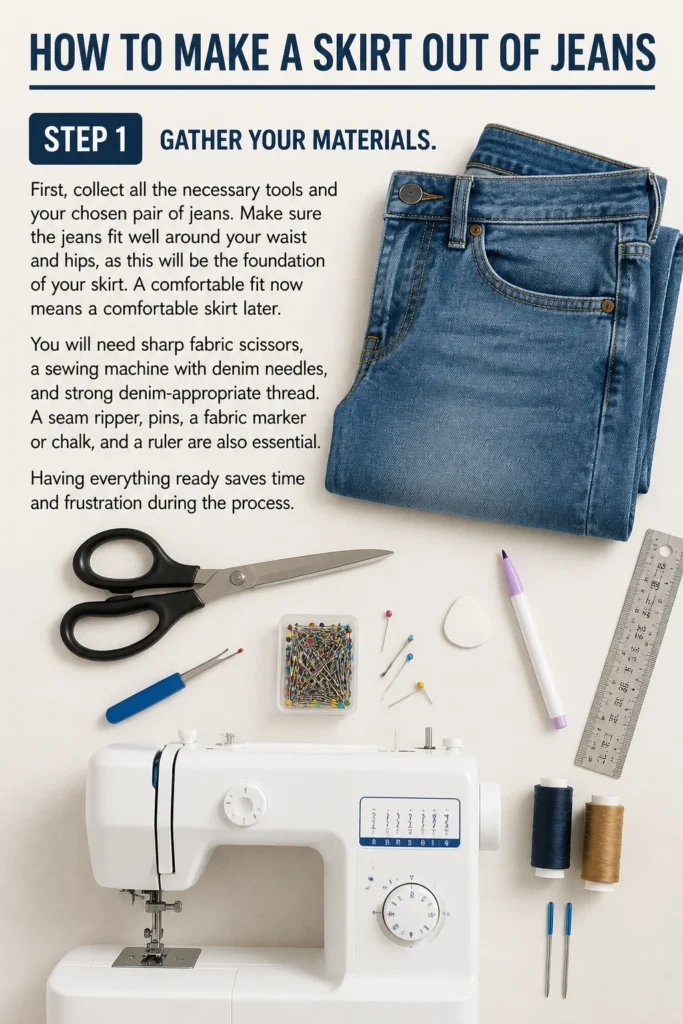
First, collect all the necessary tools and your chosen pair of jeans. Make sure the jeans fit well around your waist and hips, as this will be the foundation of your skirt. A comfortable fit now means a comfortable skirt later.
You will need sharp fabric scissors, a sewing machine with denim needles, and strong denim-appropriate thread. A seam ripper, pins, a fabric marker or chalk, and a ruler are also essential. Having everything ready saves time and frustration during the process.
Step 2: Prepare Your Jeans
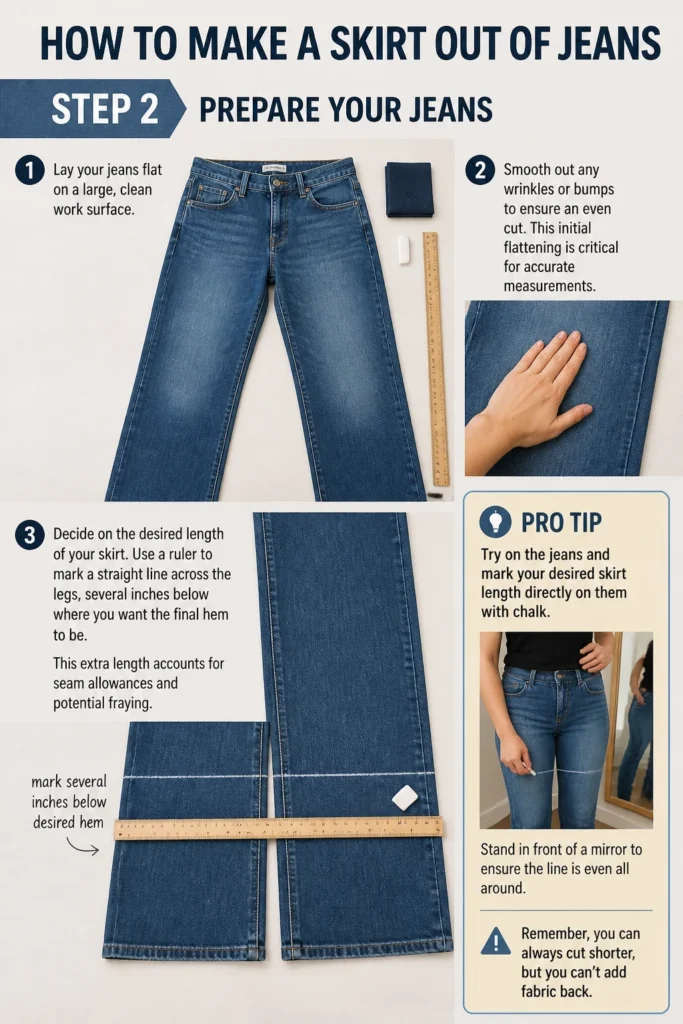
Lay your jeans flat on a large, clean work surface. Smooth out any wrinkles or bumps to ensure an even cut. This initial flattening is critical for accurate measurements.
Decide on the desired length of your skirt. Use a ruler to mark a straight line across the legs, several inches below where you want the final hem to be. This extra length accounts for seam allowances and potential fraying.
Pro Tip: Try on the jeans and mark your desired skirt length directly on them with chalk. Stand in front of a mirror to ensure the line is even all around. Remember, you can always cut shorter, but you can’t add fabric back.
Step 3: Cut the Legs
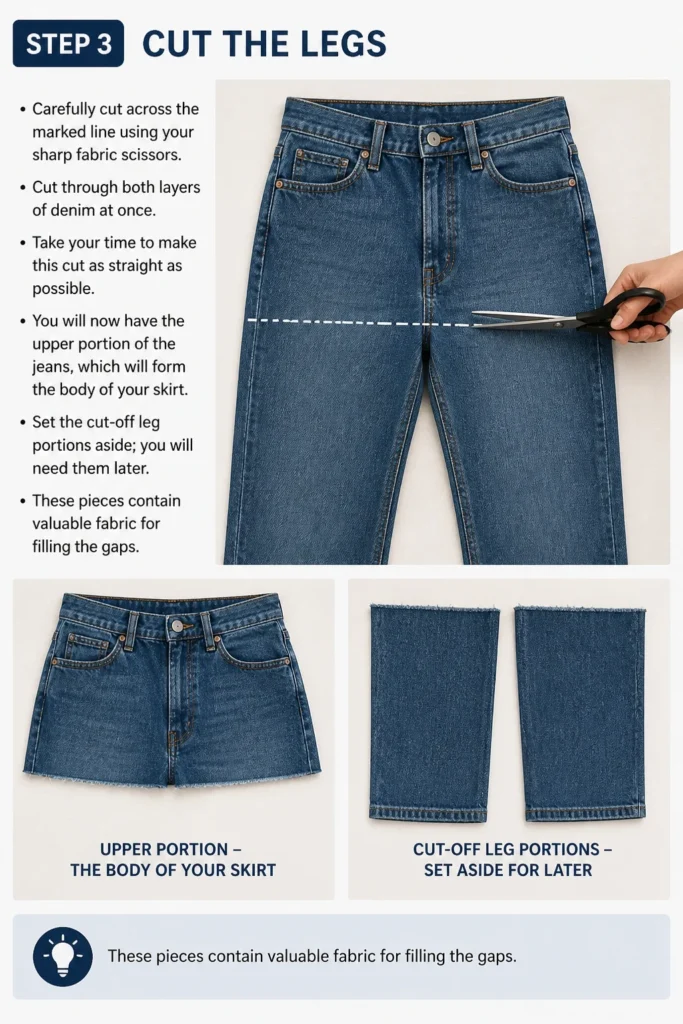
Carefully cut across the marked line using your sharp fabric scissors. Cut through both layers of denim at once. Take your time to make this cut as straight as possible.
You will now have the upper portion of the jeans, which will form the body of your skirt. Set the cut-off leg portions aside; you will need them later. These pieces contain valuable fabric for filling the gaps.
Step 4: Deconstruct the Inner Seams
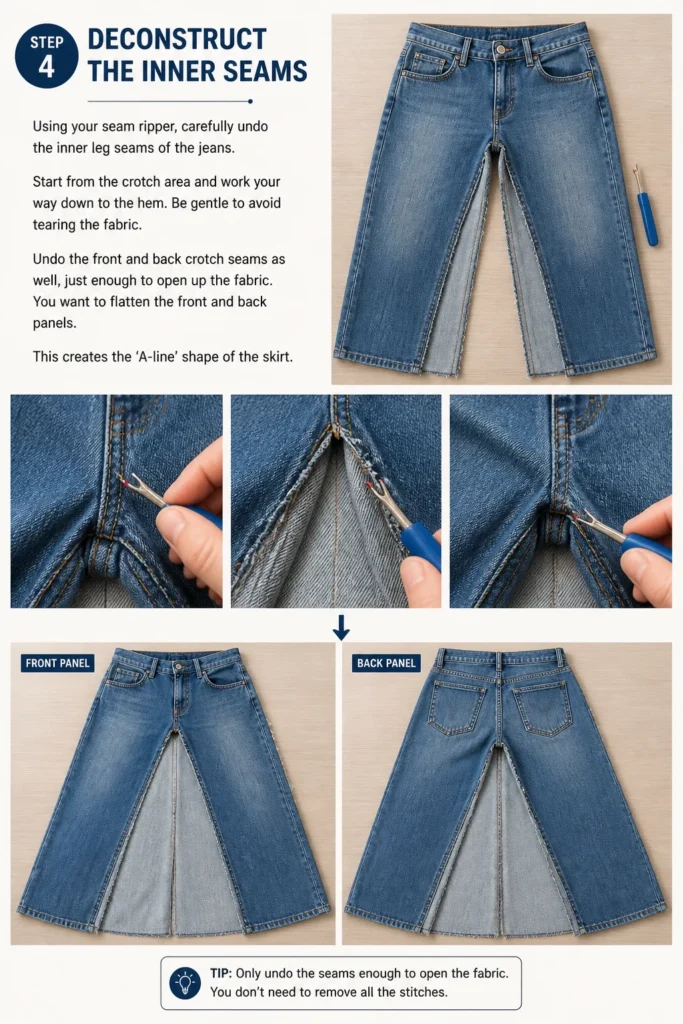
Using your seam ripper, carefully undo the inner leg seams of the jeans. Start from the crotch area and work your way down to the hem. Be gentle to avoid tearing the fabric.
Undo the front and back crotch seams as well, just enough to open up the fabric. You want to flatten the front and back panels. This creates the ‘A-line’ shape of the skirt.
Step 5: Create the Front Panel Overlap
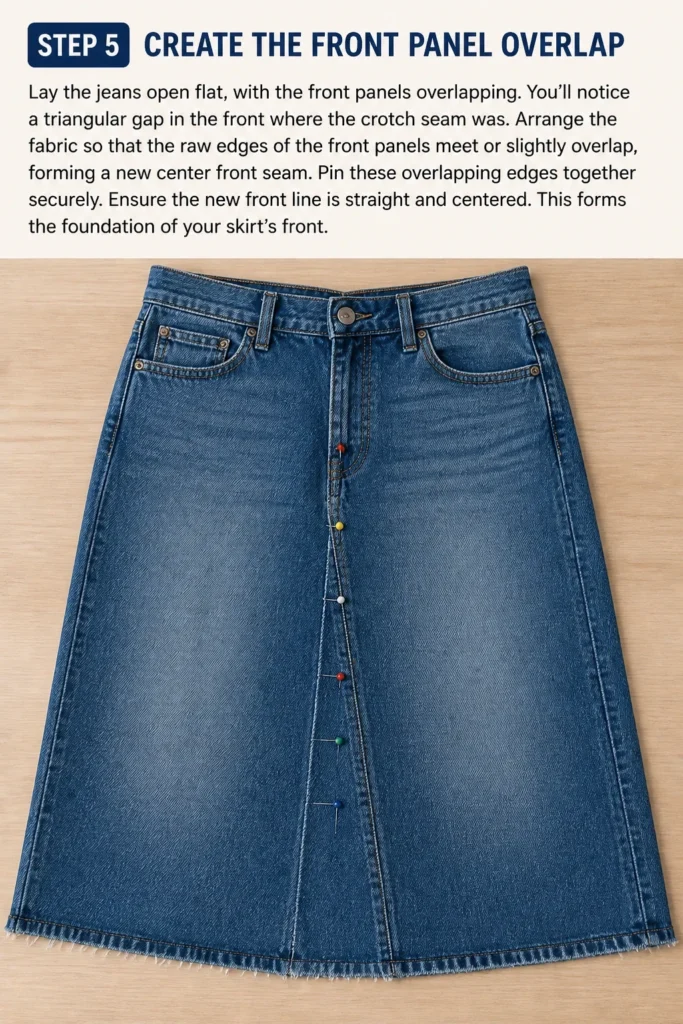
Lay the jeans open flat, with the front panels overlapping. You’ll notice a triangular gap in the front where the crotch seam was. Arrange the fabric so that the raw edges of the front panels meet or slightly overlap, forming a new center front seam.
Pin these overlapping edges together securely. Ensure the new front line is straight and centered. This forms the foundation of your skirt’s front.
Step 6: Fill the Front Gap
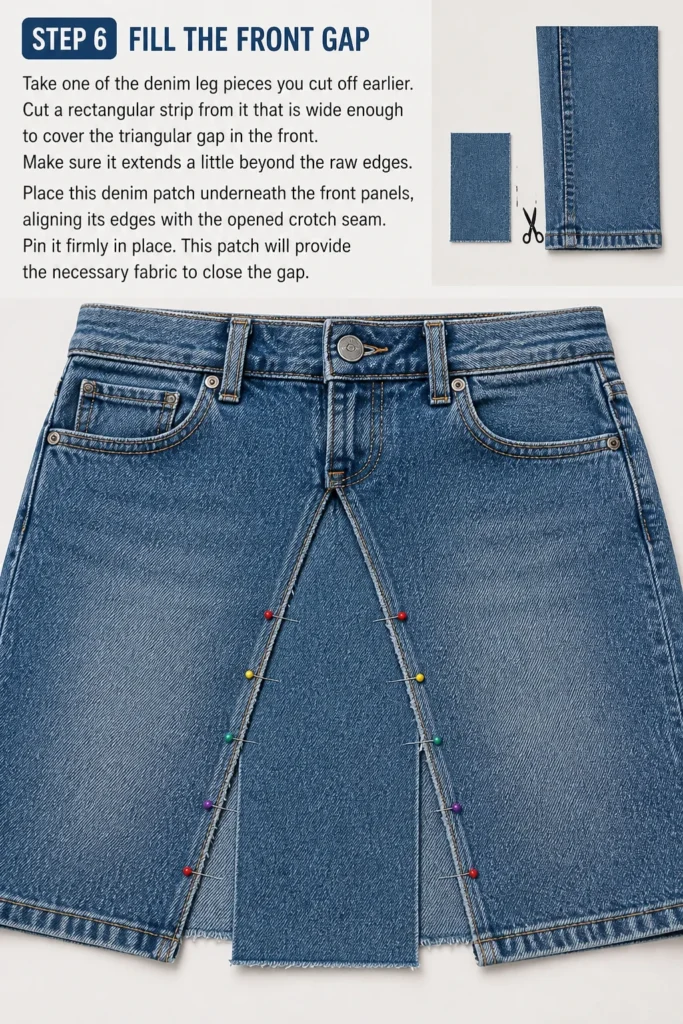
Take one of the denim leg pieces you cut off earlier. Cut a rectangular strip from it that is wide enough to cover the triangular gap in the front. Make sure it extends a little beyond the raw edges.
Place this denim patch underneath the front panels, aligning its edges with the opened crotch seam. Pin it firmly in place. This patch will provide the necessary fabric to close the gap.
Step 7: Stitch the Front Seam
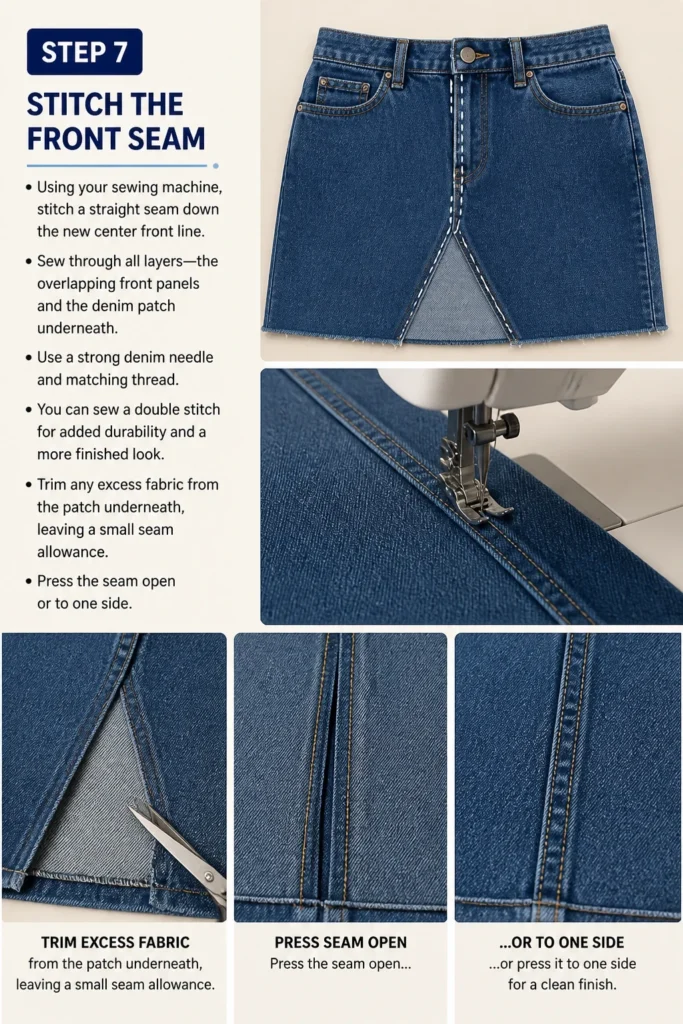
Using your sewing machine, stitch a straight seam down the new center front line. Sew through all layers: the overlapping front panels and the denim patch underneath. Use a strong denim needle and matching thread.
You can sew a double stitch for added durability and a more finished look. Trim any excess fabric from the patch underneath, leaving a small seam allowance. Press the seam open or to one side.
Step 8: Construct the Back Panel
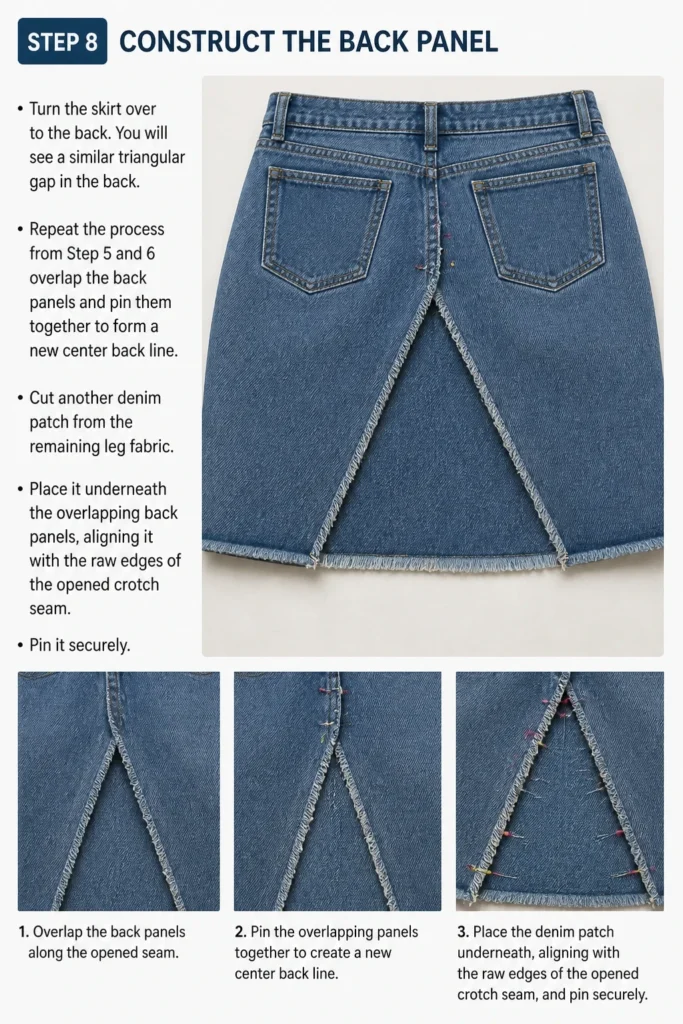
Turn the skirt over to the back. You will see a similar triangular gap in the back. Repeat the process from Step 5 and 6: overlap the back panels and pin them together to form a new center back line.
Cut another denim patch from the remaining leg fabric. Place it underneath the overlapping back panels, aligning it with the raw edges of the opened crotch seam. Pin it securely.
Step 9: Stitch the Back Seam
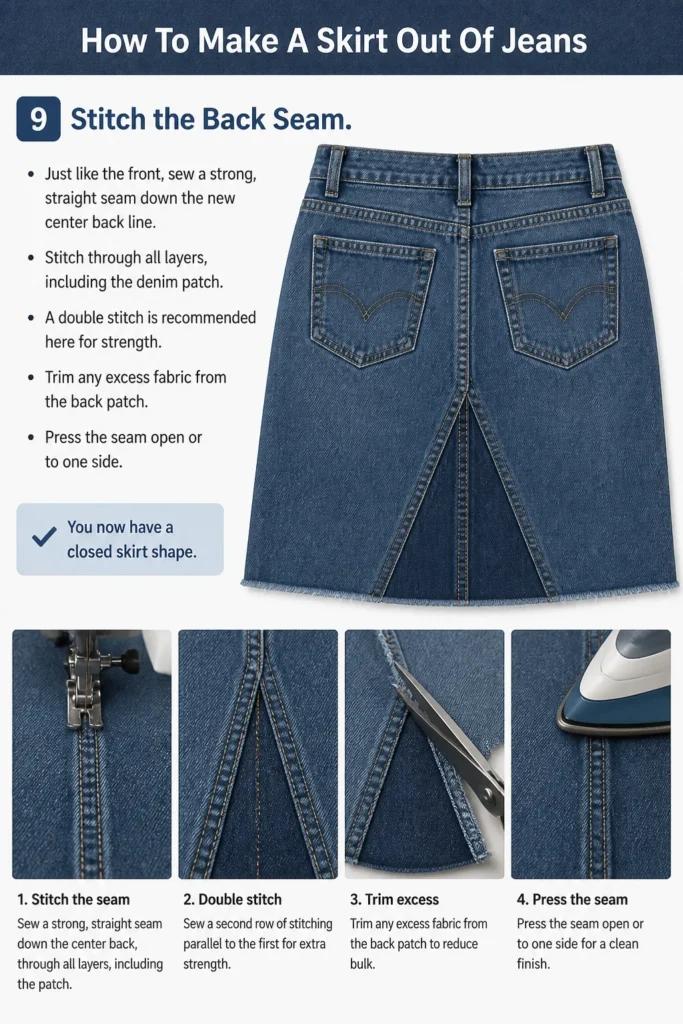
Just like the front, sew a strong, straight seam down the new center back line. Stitch through all layers, including the denim patch. A double stitch is recommended here for strength.
Trim any excess fabric from the back patch. Press the seam open or to one side. You now have a closed skirt shape.
Step 10: Hem the Skirt
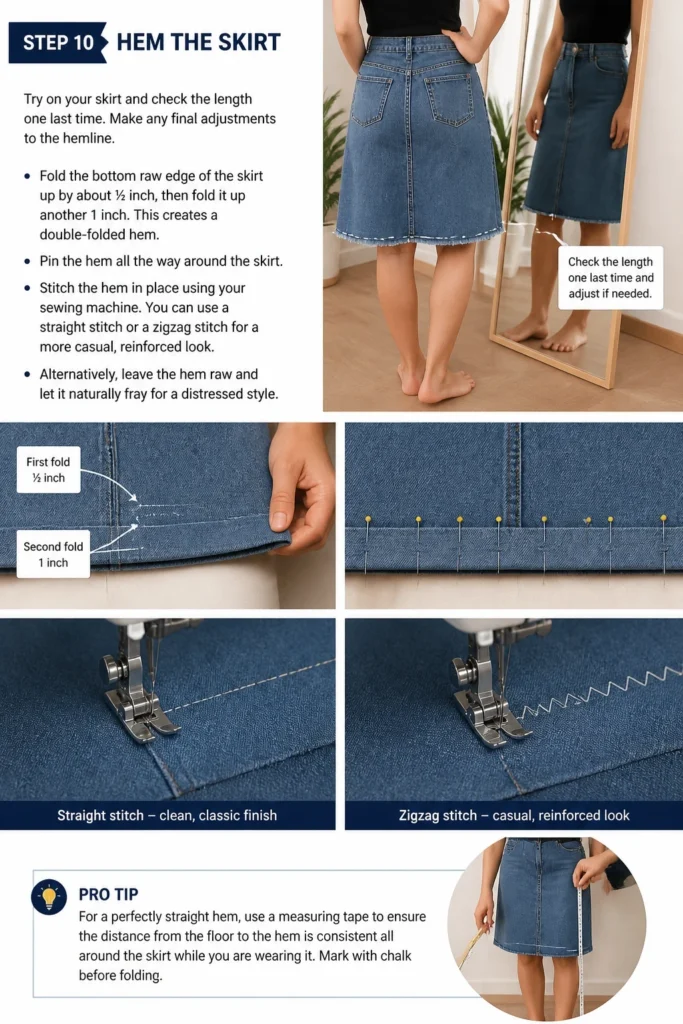
Try on your skirt and check the length one last time. Make any final adjustments to the hemline. Fold the bottom raw edge of the skirt up by about ½ inch, then fold it up another 1 inch. This creates a double-folded hem.
Pin the hem all the way around the skirt. Stitch the hem in place using your sewing machine. You can use a straight stitch or a zigzag stitch for a more casual, reinforced look. Alternatively, leave the hem raw and let it naturally fray for a distressed style.
Pro Tip: For a perfectly straight hem, use a measuring tape to ensure the distance from the floor to the hem is consistent all around the skirt while you are wearing it. Mark with chalk before folding.
Common Mistakes to Avoid
Cutting Too Short
Many beginners get excited and cut the jeans too short in the initial step. This leaves no room for error or for creating a proper hem. Always mark your desired length and then cut a few inches longer; you can always trim more later.
Not Using a Strong Enough Needle
Denim is a thick fabric, and using a standard sewing needle can lead to broken needles or skipped stitches. Always use a denim-specific needle (usually size 16 or 18) in your sewing machine. This ensures clean, strong stitches and protects your machine.
Skipping the Seam Ripping Step
Some might try to force the fabric flat without fully unpicking the inner leg and crotch seams. This will result in a bulky, ill-fitting skirt that doesn’t lay flat. Properly opening the seams is crucial for creating a smooth, A-line silhouette.
Uneven Overlaps
When overlapping the front and back panels, it’s easy for them to become crooked or off-center. This results in a twisted skirt that won’t hang correctly. Take your time to carefully align and pin the panels, ensuring the new center seams are perfectly straight.
Troubleshooting
Skirt Feels Too Tight or Doesn’t Lay Flat
If your skirt feels too tight or bunches up, it might be due to not opening the crotch seams enough or not adding a wide enough patch. Carefully unpick your new center seams and try flattening the fabric more, potentially using a wider denim patch to fill the gap. Ensure the original jeans fit well initially.
Stitches Are Skipping or Breaking
Skipping or breaking stitches usually indicates a problem with your needle or tension. Check that you are using a sharp, new denim needle of the correct size. Also, verify that your sewing machine’s tension settings are appropriate for thick denim fabric; you might need to increase the upper thread tension slightly.
Hem Is Wavy or Uneven
A wavy hem can occur if you stretch the fabric while sewing or if your initial cut was uneven. To fix this, carefully unpick the hem. Lay the skirt flat and re-measure the desired length, making sure it’s consistent all around. Pin the hem meticulously, and sew slowly, without pulling or pushing the fabric too hard. Pressing the hem thoroughly before sewing also helps.
Key Takeaways
- Always start with jeans that fit comfortably at the waist and hips.
- Cut the legs longer than your desired skirt length to allow for adjustments and hemming.
- Carefully unpick all necessary seams to allow the denim to lay flat.
- Use denim-specific needles and strong thread for durability.
- Take your time pinning and stitching the new center seams for a professional finish.
- A denim patch is essential for filling the triangular gaps created by opening the crotch seams.
- Pressing seams as you go improves the overall neatness and quality of your skirt.
Frequently Asked Questions
Can I make this skirt without a sewing machine?
While possible, it will be very challenging and time-consuming. Hand-sewing through thick denim requires significant effort and a strong needle. A sewing machine is highly recommended for durability and ease, especially for the long, strong seams needed.
What kind of jeans work best for this project?
Straight-leg or bootcut jeans often work best as they provide ample fabric in the legs for the necessary patches. Skinny jeans might not have enough fabric to fill the gaps, but it depends on the desired flare. Jeans with a bit of stretch can also be more comfortable to wear.
How do I prevent the denim from fraying excessively?
If you want a neat, non-frayed look, ensure all raw edges are enclosed in seams or finished with a zigzag stitch or serger. For the hem, a double-folded hem will prevent fraying. If you desire a distressed look, simply leave the hem raw and let it fray naturally.
Can I add pockets or other embellishments?
Absolutely! Once the basic skirt is constructed, you can customize it further. You could add patches, embroidery, or even repurpose the back pockets from another pair of jeans onto your new skirt. This is where your creativity can truly shine.
Our Top Recommended Finds
- Heavy Duty Fabric Scissors: Sharp scissors make precise cuts easier and reduce hand strain when working with denim.
- Denim Sewing Machine Needles: Essential for preventing skipped stitches and broken needles on thick fabrics.
- Strong Polyester Thread: A durable thread that can withstand the tension and wear of denim garments.
Unleash Your Inner Fashion Designer
You’ve now learned how to transform an old pair of jeans into a stylish, custom-made denim skirt. This project is more than just sewing; it’s about sustainable fashion and expressing your unique style. Each stitch you make adds character and a personal touch.
Why not pull out those forgotten jeans today and start your upcycling adventure? You’ll be amazed at what you can create with a little time and creativity. Consider making another one in a different length or adding unique embellishments to your new skirt.
Beginner-friendly templates, step-by-step guides,
and weekly project ideas in your inbox.