
🛏️ How To Fold A Blanket Into A Pillow
Beginner-friendly templates, step-by-step guides,
and weekly project ideas in your inbox.
Ever found yourself needing an extra pillow, maybe for a camping trip or an unexpected guest? It’s a common situation, wishing for a soft spot to rest your head when space is tight. This guide shares the exact technique I’ve perfected over many years of travel and home organization, transforming any blanket into a comfortable pillow in minutes.

Quick Overview
This guide will teach you a simple, effective method to transform a standard blanket into a supportive and surprisingly comfortable pillow. You’ll learn how to create a compact, firm cushion perfect for travel, guests, or simply tidying up your space.
- Time needed: 5-10 minutes
- Difficulty: Beginner
- What you’ll need: One medium to large blanket (fleece, wool, or thick cotton works best)
Step-by-Step Instructions
Step 1: Lay Your Blanket Flat and Smooth
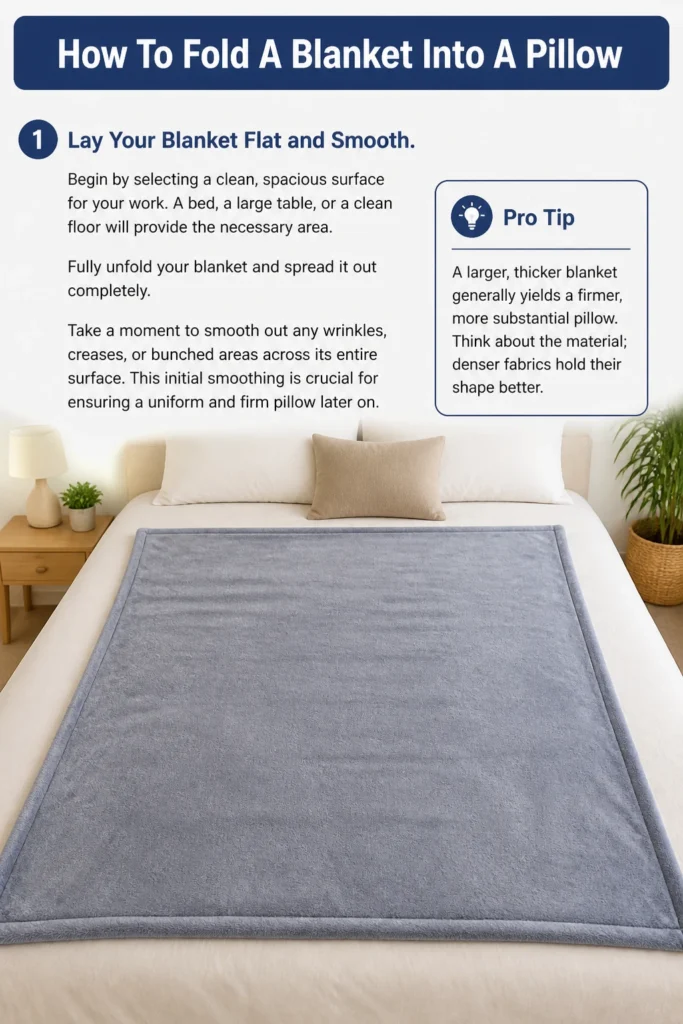
Begin by selecting a clean, spacious surface for your work. A bed, a large table, or a clean floor will provide the necessary area.
Fully unfold your blanket and spread it out completely. Take a moment to smooth out any wrinkles, creases, or bunched areas across its entire surface.
This initial smoothing is crucial for ensuring a uniform and firm pillow later on.
Pro Tip: A larger, thicker blanket generally yields a firmer, more substantial pillow. Think about the material; denser fabrics hold their shape better.
Step 2: Fold into a Long, Consistent Rectangle
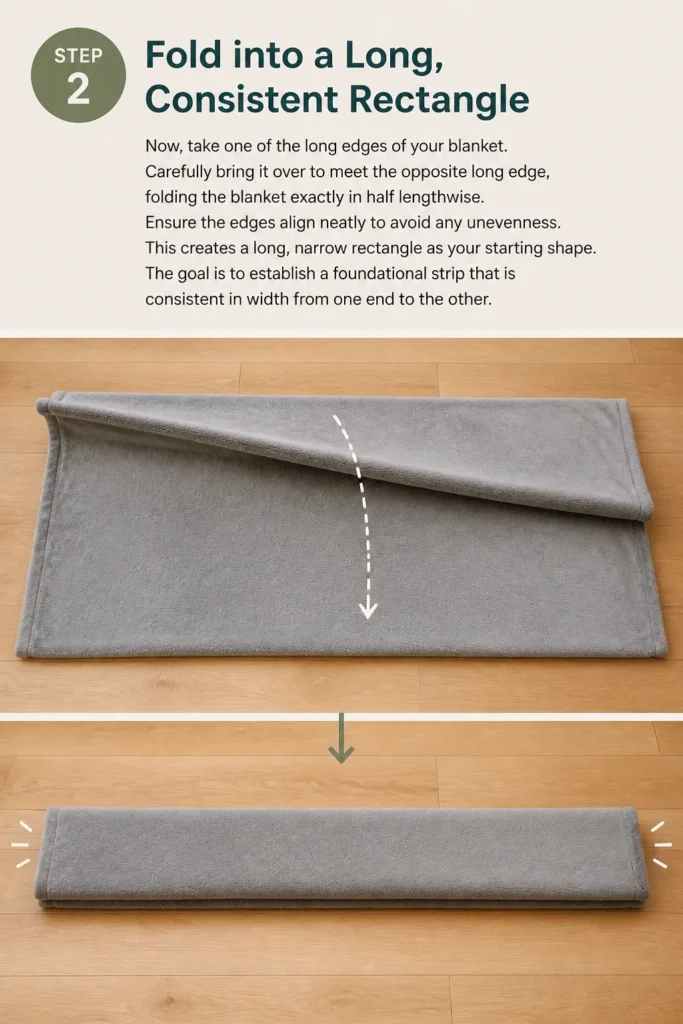
Now, take one of the long edges of your blanket. Carefully bring it over to meet the opposite long edge, folding the blanket exactly in half lengthwise.
Ensure the edges align neatly to avoid any unevenness. This creates a long, narrow rectangle as your starting shape.
The goal is to establish a foundational strip that is consistent in width from one end to the other.
Step 3: Repeat the Lengthwise Fold for Density
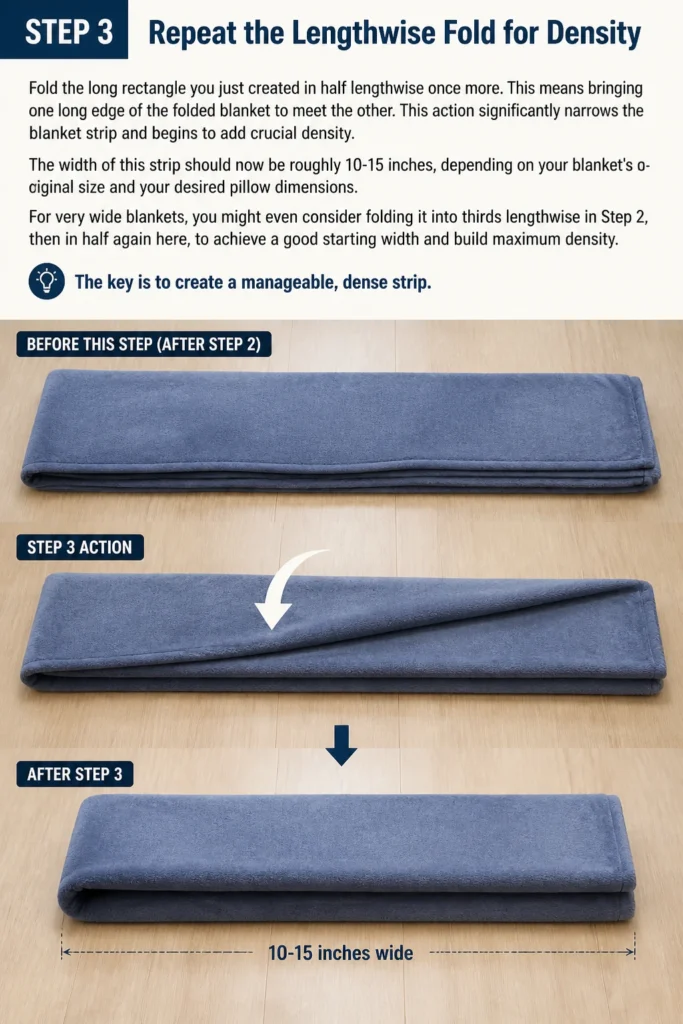
Fold the long rectangle you just created in half lengthwise once more. This means bringing one long edge of the folded blanket to meet the other.
This action significantly narrows the blanket strip and begins to add crucial density. The width of this strip should now be roughly 10-15 inches, depending on your blanket’s original size and your desired pillow dimensions.
For very wide blankets, you might even consider folding it into thirds lengthwise in Step 2, then in half again here, to achieve a good starting width and build maximum density. The key is to create a manageable, dense strip.
Step 4: Create Your Starting Base (First Short Fold)
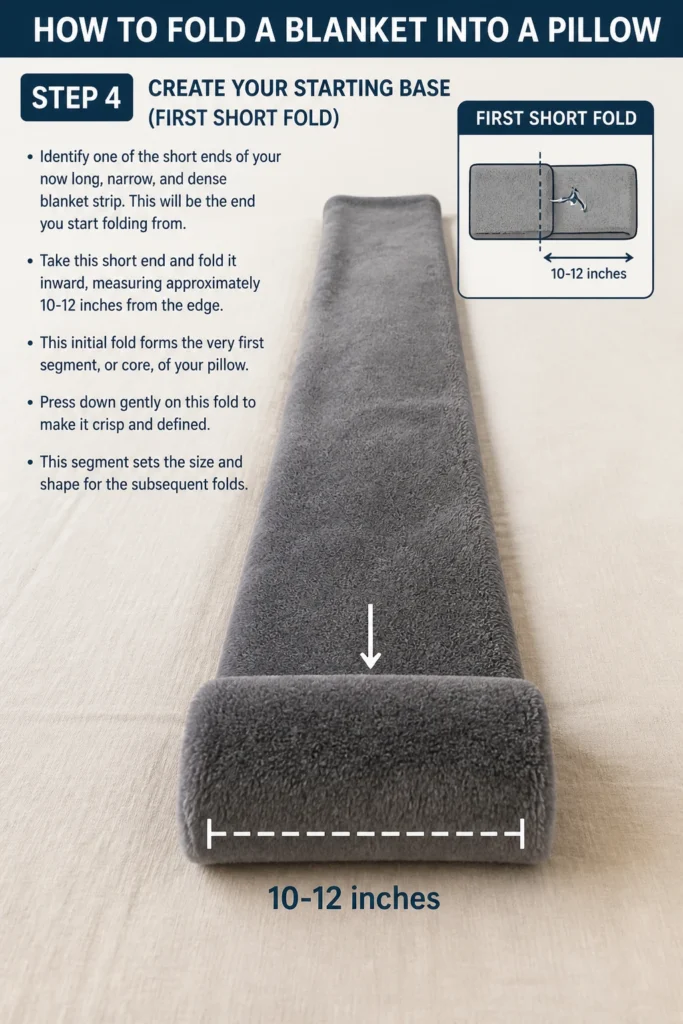
Identify one of the short ends of your now long, narrow, and dense blanket strip. This will be the end you start folding from.
Take this short end and fold it inward, measuring approximately 10-12 inches from the edge. This initial fold forms the very first segment, or “core,” of your pillow.
Press down gently on this fold to make it crisp and defined. This segment sets the size and shape for the subsequent folds.
Step 5: Begin the Rolling/Folding Process
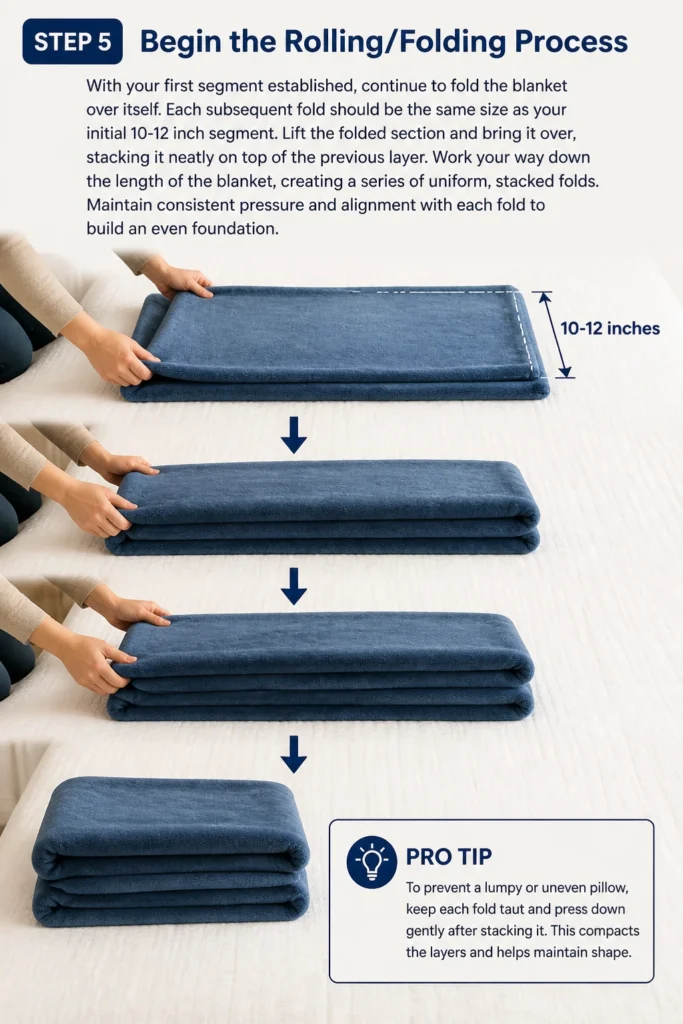
With your first segment established, continue to fold the blanket over itself. Each subsequent fold should be the same size as your initial 10-12 inch segment.
Lift the folded section and bring it over, stacking it neatly on top of the previous layer. Work your way down the length of the blanket, creating a series of uniform, stacked folds.
Maintain consistent pressure and alignment with each fold to build an even foundation.
Pro Tip: To prevent a lumpy or uneven pillow, keep each fold taut and press down gently after stacking it. This compacts the layers and helps maintain shape.
Step 6: Maintain Evenness and Build Firmness
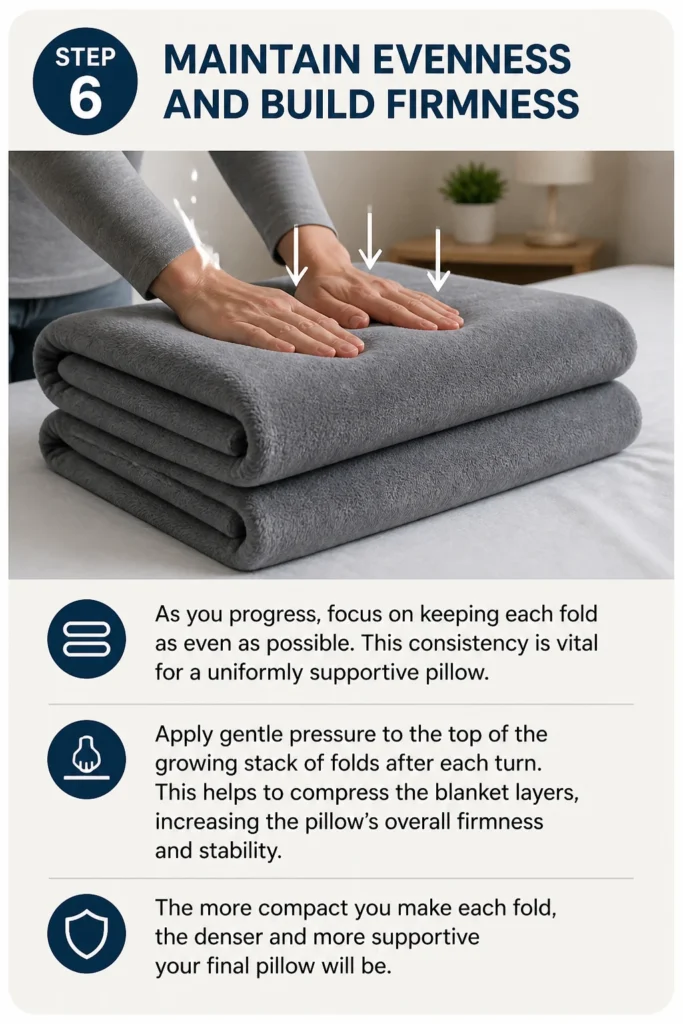
As you progress, focus on keeping each fold as even as possible. This consistency is vital for a uniformly supportive pillow.
Apply gentle pressure to the top of the growing stack of folds after each turn. This helps to compress the blanket layers, increasing the pillow’s overall firmness and stability.
The more compact you make each fold, the denser and more supportive your final pillow will be.
Step 7: Tuck and Secure the End Flap
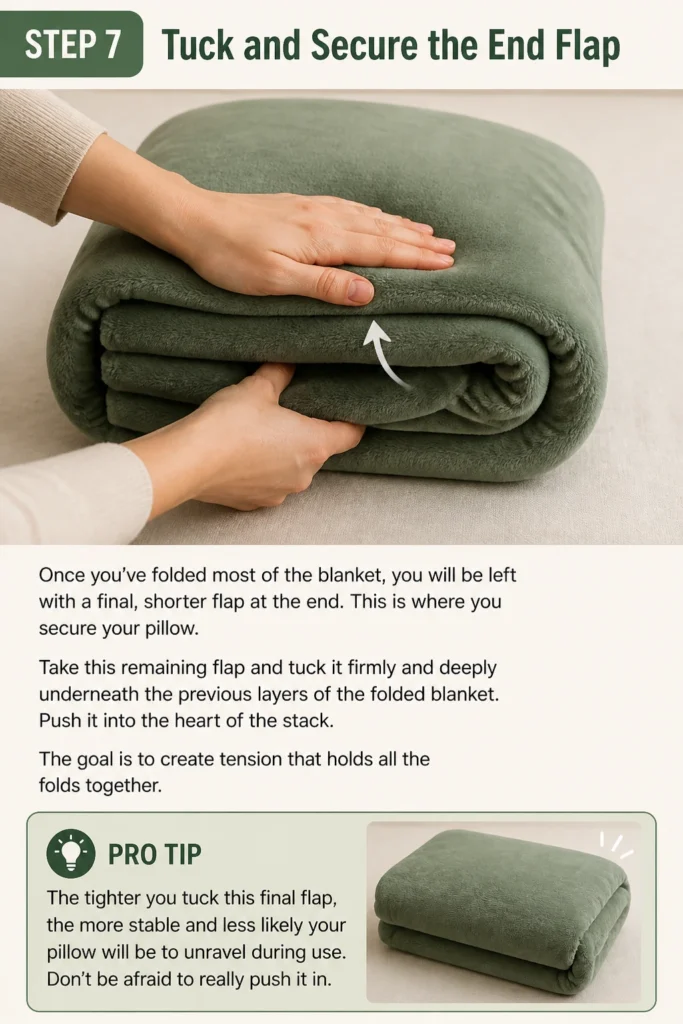
Once you’ve folded most of the blanket, you will be left with a final, shorter flap at the end. This is where you secure your pillow.
Take this remaining flap and tuck it firmly and deeply underneath the previous layers of the folded blanket. Push it into the heart of the stack.
The goal is to create tension that holds all the folds together.
Pro Tip: The tighter you tuck this final flap, the more stable and less likely your pillow will be to unravel during use. Don’t be afraid to really push it in.
Step 8: Shape and Adjust for Optimal Comfort
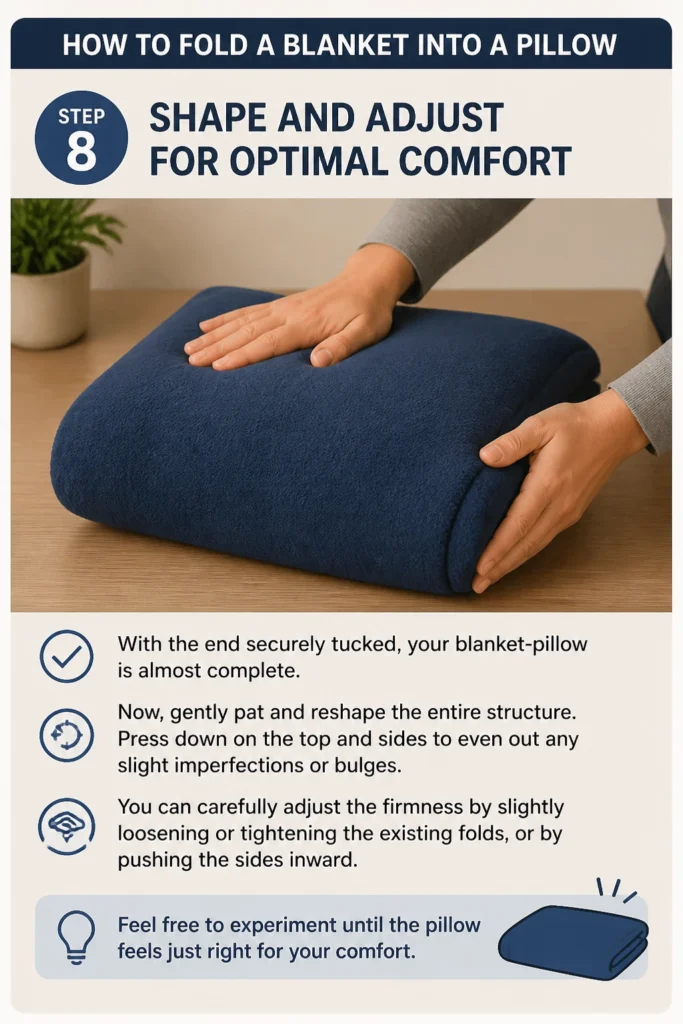
With the end securely tucked, your blanket-pillow is almost complete. Now, gently pat and reshape the entire structure.
Press down on the top and sides to even out any slight imperfections or bulges. You can carefully adjust the firmness by slightly loosening or tightening the existing folds, or by pushing the sides inward.
Feel free to experiment until the pillow feels just right for your comfort.
Step 9: Final Inspection and Deployment
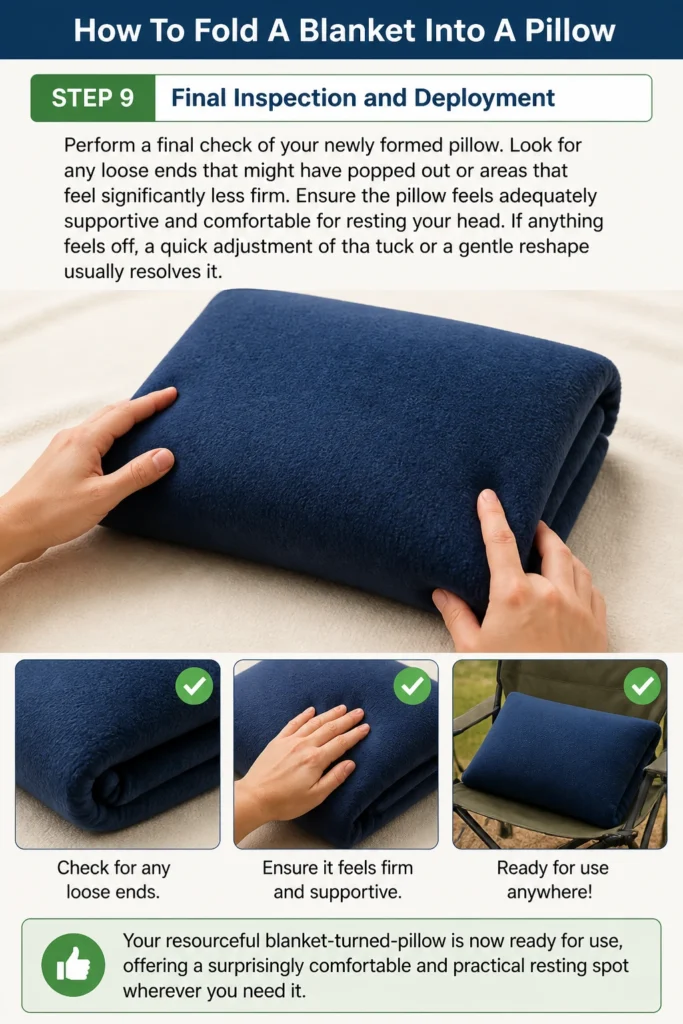
Perform a final check of your newly formed pillow. Look for any loose ends that might have popped out or areas that feel significantly less firm.
Ensure the pillow feels adequately supportive and comfortable for resting your head. If anything feels off, a quick adjustment of the tuck or a gentle reshape usually resolves it.
Your resourceful blanket-turned-pillow is now ready for use, offering a surprisingly comfortable and practical resting spot wherever you need it.
Common Mistakes to Avoid
Not Laying the Blanket Flat Initially
One of the most frequent errors is starting with a bunched or wrinkled blanket. This inevitably leads to uneven folds, which results in a lumpy and unstable pillow. A lumpy pillow offers poor support and isn’t comfortable. Always take the time to spread and smooth your blanket completely before making any folds.
Inconsistent Fold Sizes
When you make your lengthwise folds or your segment folds, inconsistency can ruin the pillow’s shape. If one side is wider or segments vary in size, the pillow will be unevenly dense and potentially lean to one side. Strive for uniform, measured folds throughout the entire process to ensure a balanced and supportive pillow.
Leaving Loose Ends or an Insufficient Tuck
Failing to tuck the final flap securely is a common oversight. If the end is not firmly pushed into the layers, the entire pillow structure can easily unravel with minimal movement. This defeats the purpose of creating a stable pillow. Always ensure that the very last piece of the blanket is tucked deep and tight, creating tension that holds everything together.
Using a Blanket That’s Too Small or Too Thin
While theoretically any blanket can be folded, a very small or extremely thin blanket won’t provide enough material to create a supportive pillow. Small blankets result in tiny, unsupportive lumps. Thin blankets, even when folded many times, often lack the necessary density to be comfortable. Opt for a medium to large blanket, preferably with some thickness or loft.
Troubleshooting
Pillow Feels Too Soft or Lacks Support
If your folded blanket pillow doesn’t offer enough firmness, the issue likely lies in the density of your folds. Your initial lengthwise folds might have been too wide, or your subsequent segment folds too loose.
To fix this, unfold the blanket and start again. This time, ensure your initial lengthwise folds create a narrower, denser strip. Then, make each subsequent segment fold tighter and more compact, applying more pressure as you stack them. Consider using a thicker blanket if available, as material density plays a significant role.
Pillow Keeps Unraveling During Use
An unraveling pillow usually points to an insecure final tuck. The end flap wasn’t pushed deeply enough, or with enough tension, into the layers of the folded blanket.
To resolve this, carefully refold the last few segments of your pillow. When you reach the end, make sure the final flap is not just placed, but actively pushed and wedged deep underneath the previous folds. You might need to make the very last segment slightly smaller to provide more material for a robust, tension-holding tuck.
Pillow is Lumpy or Uneven
Lumpiness or an uneven shape typically stems from a lack of initial smoothing or inconsistent folding throughout the process. If the blanket wasn’t flat to begin with, or if your folds varied in size, the final product will reflect those inconsistencies.
The best solution is to completely unfold the blanket and start over. Pay extra attention to Step 1, ensuring the blanket is perfectly smooth. Then, during Steps 2-6, be meticulous about making each fold uniform in size and stacking them squarely. Pressing down after each fold helps to eliminate air pockets and create a smoother surface.
Key Takeaways
- Always start with a flat, smoothly spread blanket to ensure evenness and stability in your finished pillow.
- Consistency in your lengthwise folds and subsequent segment folds is paramount for creating a uniformly supportive and comfortable pillow.
- Securely tucking the final flap deeply into the folded layers is crucial for preventing the pillow from unraveling during use.
- You can adjust the pillow’s width by modifying your initial lengthwise folds and its firmness by tightening your segment folds.
- This versatile technique allows most medium to large blankets, especially those with some thickness, to be transformed into a practical and comfortable pillow.
- Practice makes perfect; a few attempts will quickly refine your technique for a consistently great result.
Frequently Asked Questions
Can I use any type of blanket for this technique?
While you can technically fold any blanket, results vary significantly with material and thickness. Thicker blankets like fleece, wool, or heavy cotton throws generally work best as they provide more loft and firmness. Thin sheets or very lightweight blankets might require many more folds to achieve adequate density, and still might feel too soft to be truly supportive as a pillow.
How can I make the folded pillow firmer?
To achieve a firmer pillow, focus on two main aspects: the initial lengthwise folds and the subsequent segment folds. First, make your initial lengthwise folds narrower, creating a denser starting strip. Second, when you begin folding segments, make each fold as tight and compact as possible, applying consistent pressure as you stack the layers. This compresses the material, resulting in a much firmer pillow.
Will repeatedly folding my blanket into a pillow damage it?
No, this folding technique is very gentle and will not damage your blanket. It involves no harsh pulling, stretching, or abnormal stress on the fabric. In fact, storing blankets neatly folded can help maintain their shape and condition over time.
Is this technique suitable for travel or camping?
Absolutely, this method is incredibly practical for travel, camping, or any situation where space is at a premium. It allows you to utilize an existing blanket, eliminating the need to pack a separate bulky pillow. The compact, self-contained nature of the folded blanket pillow makes it easy to stow in a bag or a car.
Our Top Recommended Finds
- Soft Fleece Throw Blanket: An excellent choice due to its inherent warmth, loft, and medium thickness. It provides good structure and comfort when folded, making it ideal for a supportive pillow.
- Large Cotton Woven Blanket: These blankets offer a good balance of breathability and weight. When folded, their sturdy weave helps them hold shape well, creating a firm yet comfortable pillow.
- Travel Compression Sack: While not a blanket itself, this accessory is perfect for keeping your newly folded blanket-pillow compact during travel. It helps reduce volume, making your versatile pillow even more portable.
Transform Your Comfort, Anywhere You Go
Mastering the art of folding a blanket into a pillow is more than just a clever trick; it’s a practical skill that enhances your comfort and organization. You now have the power to create a supportive headrest from what you already own, whether you’re at home, embarking on an adventure, or simply tidying up.
This simple technique not only saves space but also adds a layer of resourcefulness to your daily life. Explore other clever folding techniques for laundry or packing to further streamline your routines. Why wait? Try this simple technique today and discover the surprising versatility of your blankets, unlocking new levels of comfort and convenience.
Beginner-friendly templates, step-by-step guides,
and weekly project ideas in your inbox.