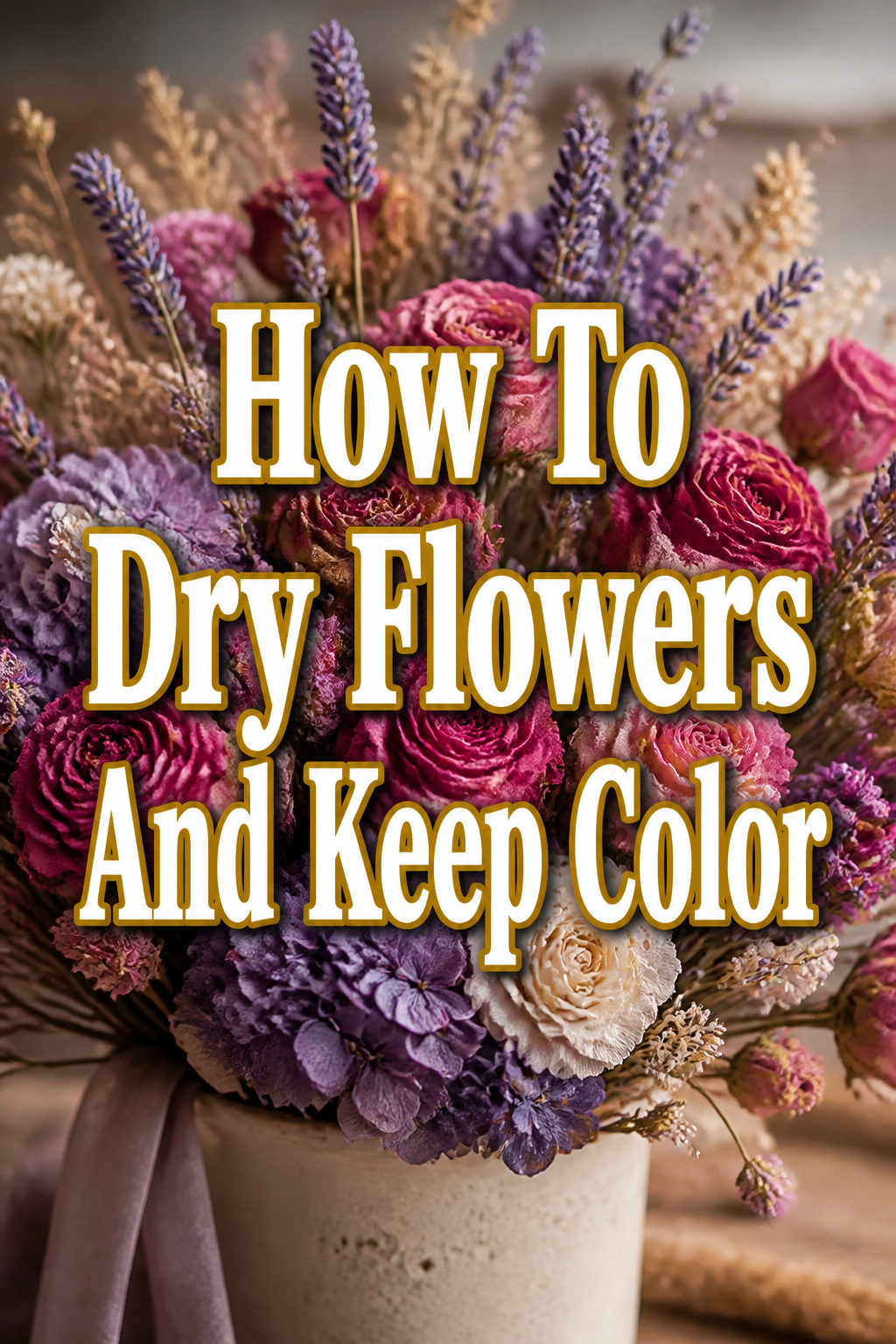
🌸 How To Dry Flowers And Keep Color
Beginner-friendly templates, step-by-step guides,
and weekly project ideas in your inbox.
There’s a unique joy in capturing a moment, especially when it involves the fleeting beauty of fresh flowers.
I’ve spent countless hours experimenting with different methods, learning the secrets to preserving blooms and their vibrant hues.
This guide shares my firsthand experience, ensuring your dried flowers remain as stunning as the day they were picked.
Quick Overview
You’re about to embark on a rewarding journey to preserve your favorite blossoms.
By following these steps, you’ll successfully dry flowers while retaining their natural beauty and brilliant colors.
- Time needed: 1-4 weeks (depending on method and flower type)
- Difficulty: Beginner
- What you’ll need: Fresh flowers, drying agents (silica gel, sand, glycerin) or air drying supplies (string, hangers), sharp scissors, airtight containers.
Step-by-Step Instructions
Step 1: Choose Your Perfect Blooms
The journey to beautifully dried flowers begins with selecting the right specimens.
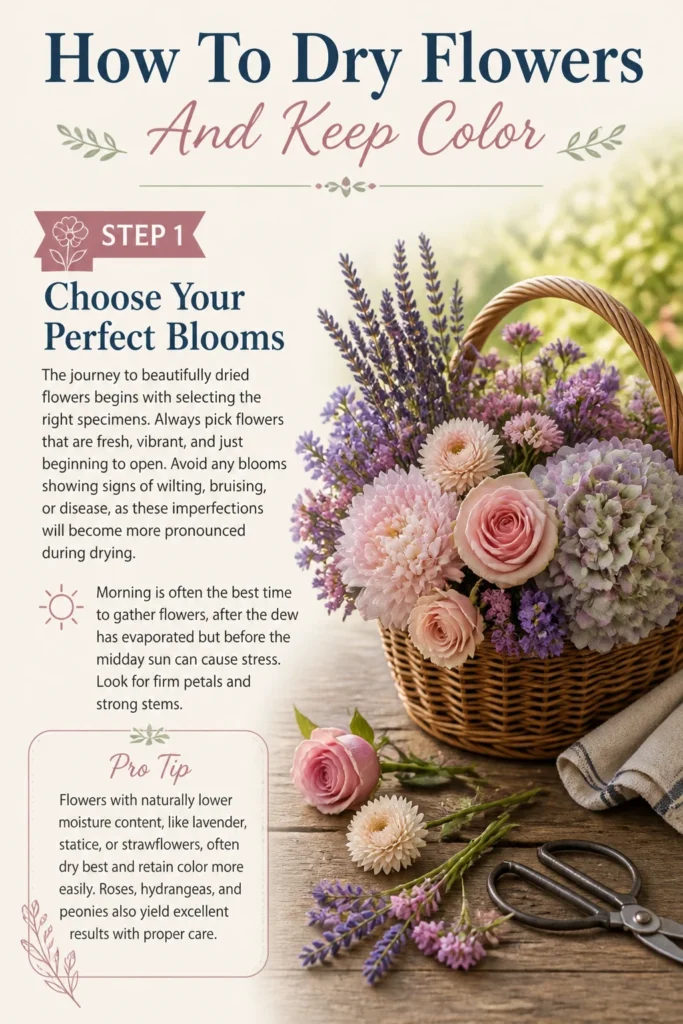
Always pick flowers that are fresh, vibrant, and just beginning to open.
Avoid any blooms showing signs of wilting, bruising, or disease, as these imperfections will become more pronounced during drying.
Morning is often the best time to gather flowers, after the dew has evaporated but before the midday sun can cause stress.
Look for firm petals and strong stems.
Pro Tip: Flowers with naturally lower moisture content, like lavender, statice, or strawflowers, often dry best and retain color more easily. Roses, hydrangeas, and peonies also yield excellent results with proper care.
Step 2: Prepare Your Flowers for Drying
Proper preparation is crucial for successful drying and color retention.
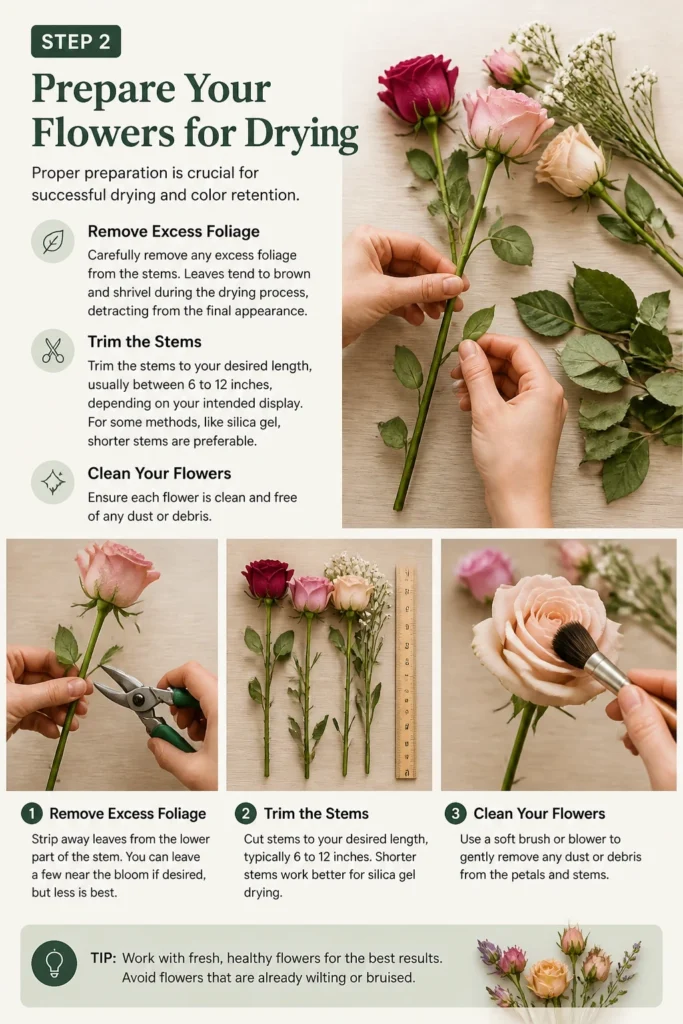
Carefully remove any excess foliage from the stems.
Leaves tend to brown and shrivel during the drying process, detracting from the final appearance.
Trim the stems to your desired length, usually between 6 to 12 inches, depending on your intended display.
For some methods, like silica gel, shorter stems are preferable.
Ensure each flower is clean and free of any dust or debris.
Step 3: Select Your Drying Method
Different drying methods offer varying results in terms of color and form preservation.
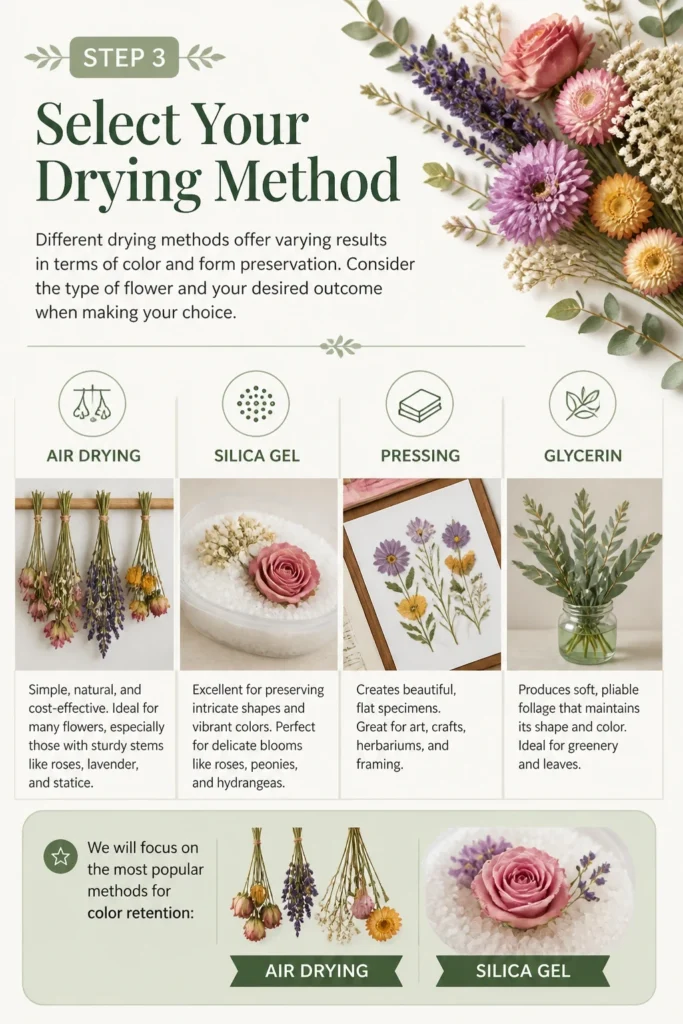
Consider the type of flower and your desired outcome when making your choice.
Air drying is simple and cost-effective, while silica gel excels at preserving intricate shapes and vibrant colors.
Pressing flowers creates beautiful flat specimens, and glycerin can result in soft, pliable dried foliage.
We will focus on the most popular methods for color retention: air drying and silica gel.
Step 4: Air Drying for Natural Beauty
Air drying is perhaps the most traditional and straightforward method.
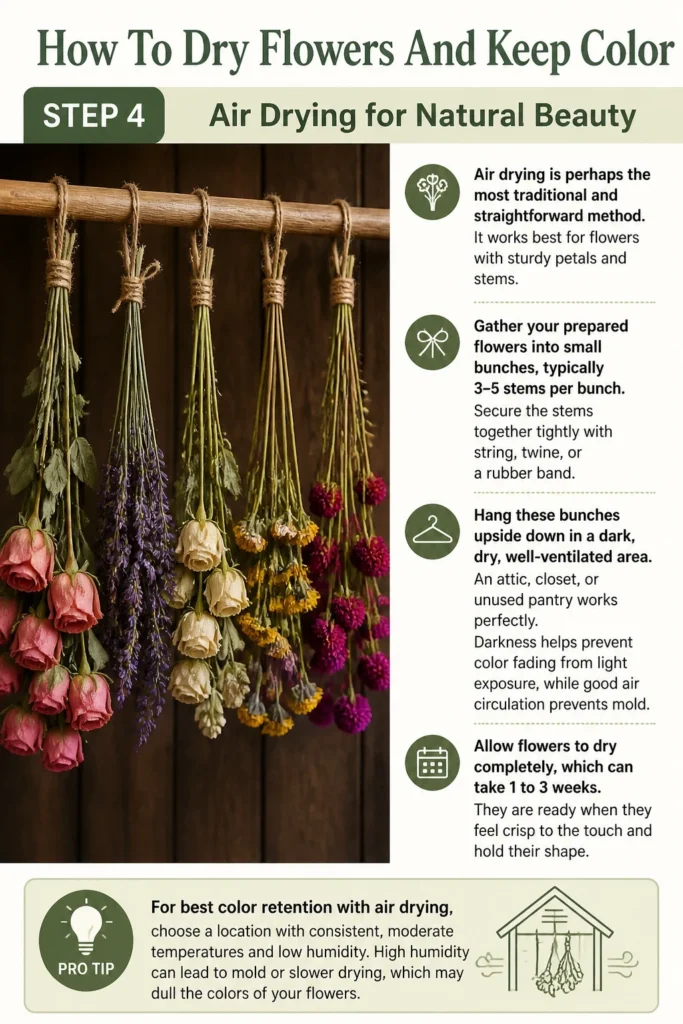
It works best for flowers with sturdy petals and stems.
Gather your prepared flowers into small bunches, typically 3-5 stems per bunch.
Secure the stems together tightly with string, twine, or a rubber band.
Hang these bunches upside down in a dark, dry, well-ventilated area.
An attic, closet, or unused pantry works perfectly.
Darkness helps prevent color fading from light exposure, while good air circulation prevents mold.
Allow flowers to dry completely, which can take 1 to 3 weeks.
They are ready when they feel crisp to the touch and hold their shape.
Pro Tip: For best color retention with air drying, choose a location with consistent, moderate temperatures and low humidity. High humidity can lead to mold or slower drying, causing color loss.
Step 5: Silica Gel for Vibrant Hues
Silica gel is excellent for preserving both the color and three-dimensional shape of delicate flowers.
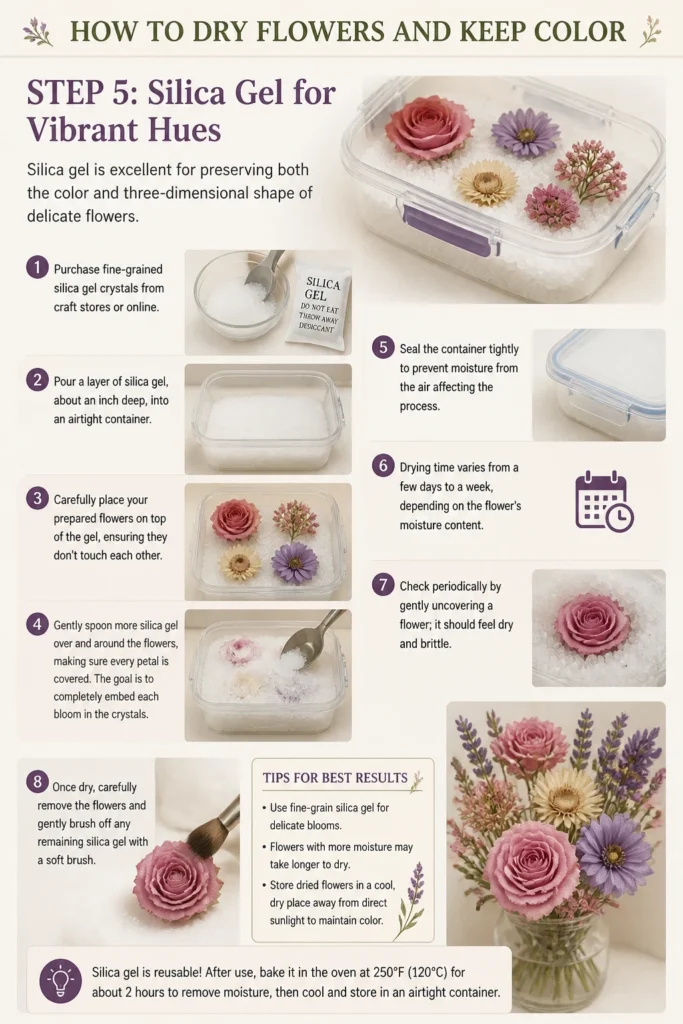
Purchase fine-grained silica gel crystals from craft stores or online.
Pour a layer of silica gel, about an inch deep, into an airtight container.
Carefully place your prepared flowers on top of the gel, ensuring they don’t touch each other.
Gently spoon more silica gel over and around the flowers, making sure every petal is covered.
The goal is to completely embed each bloom in the crystals.
Seal the container tightly to prevent moisture from the air affecting the process.
Drying time varies from a few days to a week, depending on the flower’s moisture content.
Check periodically by gently uncovering a flower; it should feel dry and brittle.
Once dry, carefully remove the flowers and gently brush off any remaining crystals with a soft brush.
Pro Tip: To reuse silica gel, spread the crystals on a baking sheet and heat them in a low oven (around 200°F or 90°C) until they turn blue (if they contain indicator crystals). This reactivates their drying power.
Step 6: Pressing for Flat Keepsakes
Flower pressing is ideal for creating flat, two-dimensional botanical art.
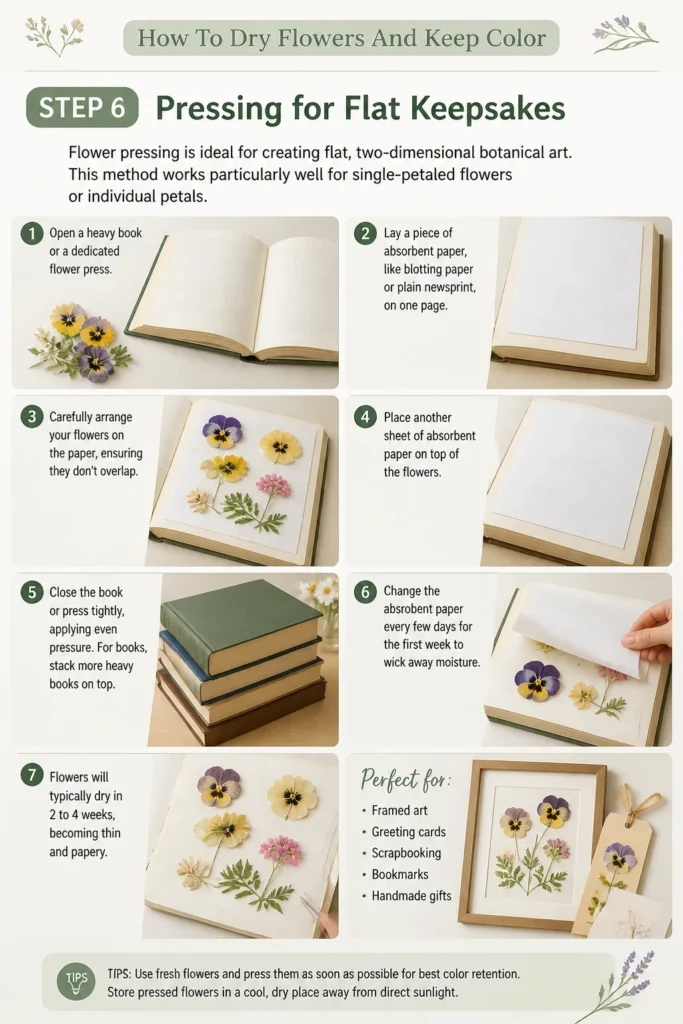
This method works particularly well for single-petaled flowers or individual petals.
Open a heavy book or a dedicated flower press.
Lay a piece of absorbent paper, like blotting paper or plain newsprint, on one page.
Carefully arrange your flowers on the paper, ensuring they don’t overlap.
Place another sheet of absorbent paper on top of the flowers.
Close the book or press tightly, applying even pressure.
For books, stack more heavy books on top.
Change the absorbent paper every few days for the first week to wick away moisture.
Flowers will typically dry in 2 to 4 weeks, becoming thin and papery.
Step 7: Glycerin for Supple Foliage
While not for blooms, glycerin treatment is excellent for preserving leaves and some sturdy foliage.
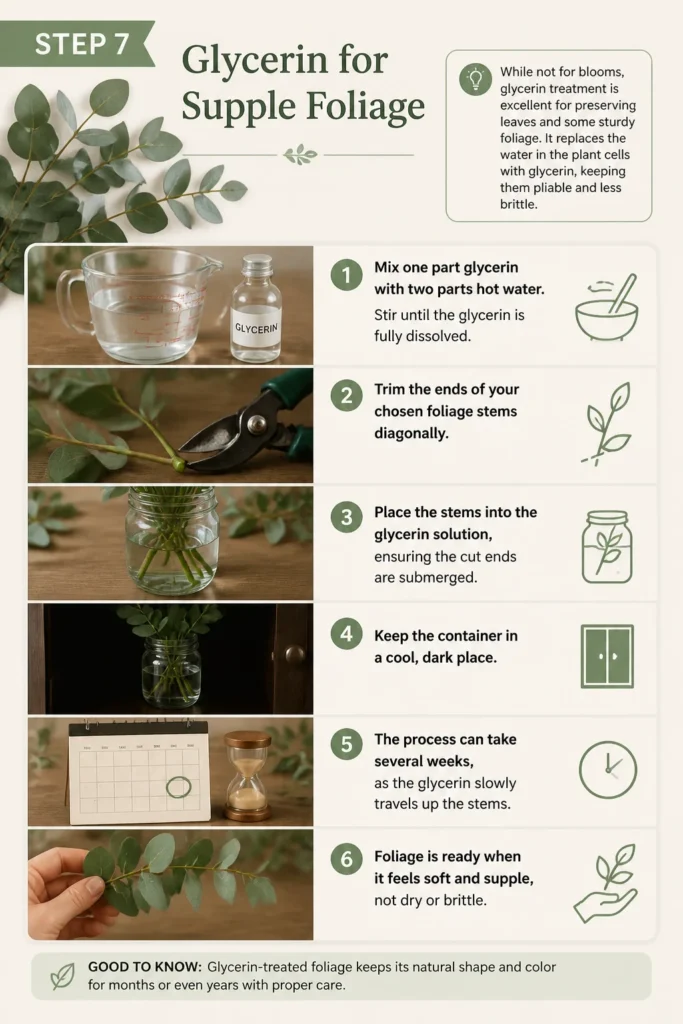
It replaces the water in the plant cells with glycerin, keeping them pliable and less brittle.
Mix one part glycerin with two parts hot water.
Stir until the glycerin is fully dissolved.
Trim the ends of your chosen foliage stems diagonally.
Place the stems into the glycerin solution, ensuring the cut ends are submerged.
Keep the container in a cool, dark place.
The process can take several weeks, as the glycerin slowly travels up the stems.
Foliage is ready when it feels soft and supple, not dry or brittle.
Step 8: Final Touches and Preservation
Once your flowers are completely dry, they are ready for their final treatment.
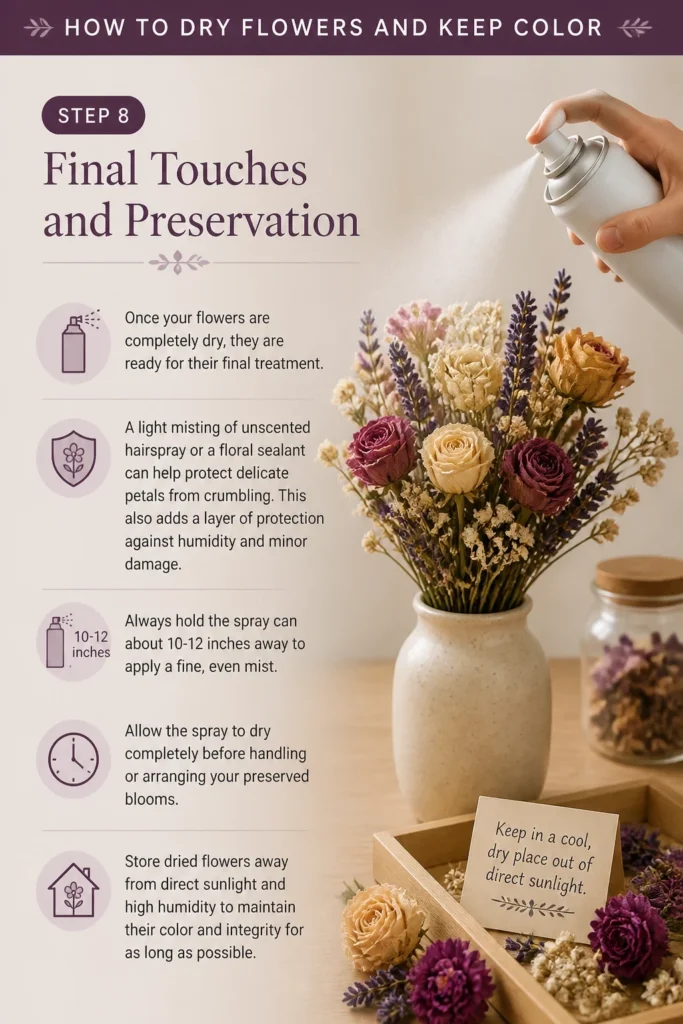
A light misting of unscented hairspray or a floral sealant can help protect delicate petals from crumbling.
This also adds a layer of protection against humidity and minor damage.
Always hold the spray can about 10-12 inches away to apply a fine, even mist.
Allow the spray to dry completely before handling or arranging your preserved blooms.
Store dried flowers away from direct sunlight and high humidity to maintain their color and integrity for as long as possible.
Common Mistakes to Avoid
Picking Over-Mature Flowers
Many beginners wait too long to pick their flowers for drying.
Over-mature blooms, especially those past their prime, have already started to fade and degrade.
They will not retain their color well and may even fall apart during the drying process.
Always aim for flowers that are just opening or at their peak vibrancy for the best results.
Drying in Humid Conditions
Humidity is the enemy of dried flowers.
Attempting to air dry flowers in a damp environment can lead to mold growth and significant discoloration.
The drying process will be prolonged, resulting in dull, muted colors.
Always choose a dry, well-ventilated space for air drying, and ensure silica gel containers are perfectly sealed.
Overcrowding During Drying
Whether air drying or using silica gel, giving your flowers space is vital.
Overcrowding bunches during air drying restricts airflow, leading to uneven drying and potential mold.
In silica gel, flowers touching each other can stick together or dry improperly.
Always allow ample space around each bloom for optimal air circulation or gel coverage.
Exposing to Direct Sunlight
While flowers thrive in sunlight when fresh, dried flowers are highly susceptible to sun damage.
Direct sunlight will quickly bleach and fade the vibrant colors you worked so hard to preserve.
Store and display your dried flowers in areas away from direct windows or strong artificial light sources.
A shaded spot helps maintain their color for years.
Troubleshooting
Flowers Turning Brown or Black
This usually indicates too much moisture or insufficient airflow during drying.
If air drying, ensure your space is truly dry and well-ventilated; consider a fan to improve circulation.
Remove any excess leaves before drying, as they hold a lot of moisture.
For silica gel, ensure the container is airtight and the gel is fully active (blue if it has indicator crystals).
Petals Falling Off After Drying
Fragile petals can sometimes detach once dry, especially with vigorous handling.
This might also happen if flowers were over-mature when picked.
Handle dried flowers with extreme gentleness, as they are very brittle.
A light mist of hairspray or floral sealant after drying can help reinforce delicate petals.
Consider using silica gel for more delicate blooms, as it supports their structure better.
Colors Fading Quickly
Rapid color fading is almost always due to light exposure.
Dried flowers are very sensitive to UV rays, both from the sun and some artificial lights.
Ensure your dried arrangements are displayed in a shaded area, away from direct sunlight.
Using a UV-protective floral sealant can also offer an extra layer of defense against fading.
Key Takeaways
- Start Fresh: Always begin with vibrant, healthy flowers just past their peak for best results.
- Control Environment: Dry flowers in dark, dry, well-ventilated spaces to prevent mold and color loss.
- Choose Wisely: Select the drying method that best suits your flower type and desired outcome (air drying for sturdy, silica gel for delicate).
- Be Patient: Drying takes time; allow flowers to fully dehydrate for optimal preservation and longevity.
- Protect from Light: Display dried flowers away from direct sunlight to prevent premature fading of their beautiful colors.
- Handle Gently: Dried flowers are fragile; use a light touch and consider a sealant for added protection.
Frequently Asked Questions
Can I dry all types of flowers?
While most flowers can be dried, some retain their color and shape better than others. Roses, hydrangeas, lavender, statice, and strawflowers are excellent choices. Succulent or very fleshy flowers can be challenging due to their high water content.
How long do dried flowers last?
With proper care and storage, dried flowers can last for many years, often retaining their beauty for 1-3 years or even longer. Keeping them out of direct sunlight and high humidity is key to their longevity.
Is it safe to use silica gel around pets or children?
Silica gel is generally considered non-toxic, but it is not meant for consumption. Keep it out of reach of pets and small children to prevent accidental ingestion. Always handle it in a well-ventilated area.
Can I rehydrate dried flowers?
No, dried flowers cannot be rehydrated to their original fresh state. The drying process removes the water from the plant cells, fundamentally changing their structure. Attempting to rehydrate them will likely result in mushy or disintegrating petals.
Our Top Recommended Finds
- Fine-Grained Silica Gel: Essential for capturing vibrant colors and intricate shapes, offering superior moisture absorption.
- Heavy-Duty Flower Press: Perfect for creating flat, lasting botanical art pieces from delicate blooms and leaves.
- Unscented Hairspray or Floral Sealer: Provides a protective, invisible barrier to prevent crumbling and helps maintain color integrity.
Embrace the Everlasting Garden
Transforming fresh blooms into lasting keepsakes is a truly rewarding endeavor.
You’re not just drying flowers; you’re preserving memories, celebrations, and the simple beauty of nature.
Each perfectly preserved petal tells a story, adding a timeless elegance to your home.
Why wait for a special occasion? Choose your favorite flowers today and begin your journey into the art of floral preservation.
Beginner-friendly templates, step-by-step guides,
and weekly project ideas in your inbox.